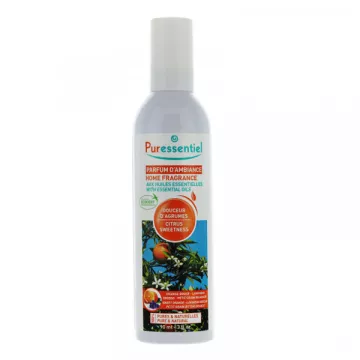
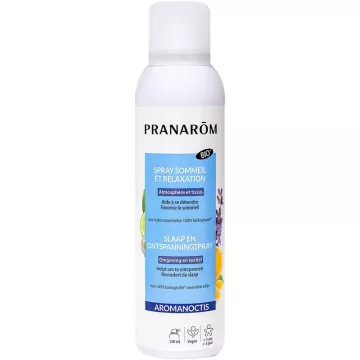
An aromatherapy room spray is an aqueous or hydroalcoholic solution containing essential oils and/or hydrosols, sprayed directly into the air by a pump—without electricity, heat, or water. Unlike electric diffusers, the spray provides instant and localized diffusion—ideal for spaces without electrical outlets, when traveling, and for occasional use. The aromatic molecules remain suspended in the air for 30 to 90 minutes, depending on the size of the room. Vanilla (Vanilla planifolia, vanillin + coumarins) is widely used in “soothing” sprays for its comforting and slightly sedative scent profile—it perfectly complements lavender and mandarin in relaxation formulas.
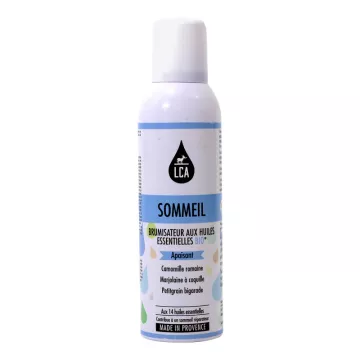
Sleep sprays are the best-selling category of room sprays. The Puressentiel Sleep, Relaxation, and Calm Spray (12 essential oils—lavender, marjoram, bergamot, chamomile, ylang-ylang, cedar, frankincense…) is the gold standard—its blend of essential oils rich in linalool, terpinene-4-ol, and linalyl acetate modulates the GABAergic system through the sense of smell and promotes sleep. The Pranarom Aromanoctis Organic Sleep Spray (fine lavender + bergamot + vetiver) and the LCA Sleep Spray offer simpler alternatives. Apply 2 to 3 sprays to the pillow and around the bed 10 to 15 minutes before bedtime. Cornflower hydrosol (Centaurea cyanus, flavonoids + phenolic acids) is a naturally soothing pillow spray particularly suitable for children ages 2 to 6—its gentle, non-irritating profile makes it a safe alternative to pure essential oil formulas.
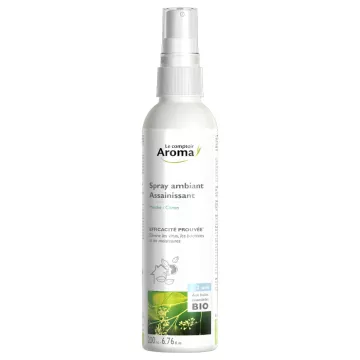
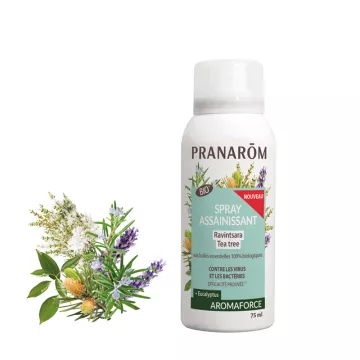
Air-purifying sprays use essential oils with strong antimicrobial activity to reduce the microbial load in indoor air. The Aromaforce Organic Ravintsara & Tea Tree Air-Purifying Spray is the most widely recognized formula—ravintsara (1,8-cineole 50–60%) and tea tree (terpinen-4-ol) have documented antiviral and antibacterial activity. The Organic Lemon Mint Air Purifying Spray (Le Comptoir Aroma, 200 ml) is a dual-action formula: antiseptic and deodorizing. Common sage (thujone + camphor + cineole) is a purifying essential oil traditionally used to sanitize spaces—at 1–2% in a room spray, it provides a distinctive herbaceous note and complementary antimicrobial activity in the air.
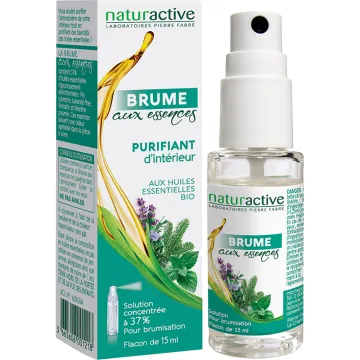
The spray and the electric diffuser serve different purposes. The spray is best suited for: on-the-go use (travel, hotels, cars), instant and localized diffusion, spaces without electrical outlets, and occasional use. The electric diffuser is better suited for: continuous diffusion lasting 20 to 60 minutes, large rooms, regular therapeutic use, and automated programs. The Naturactive Purifying Indoor Essence Mist (15 ml) is an ultra-portable concentrate. Black pepper (β-caryophyllene + myrcene) in a room spray creates an invigorating and focused atmosphere in an office—its spicy note pairs well with bergamot and cedarwood.
Making your own at home is simple and economical. The base: 90 ml of distilled water + 10 ml of 70° alcohol (a necessary solubilizer since essential oils are not miscible with water) + 20 to 40 drops of essential oil in a 100-ml spray bottle. The basic recipes are:
Mountain savory (30–40% carvacrol) is the most powerful antiseptic essential oil for inhalation—use no more than 1–2 drops per 100 ml due to its potential to irritate the respiratory tract.