Mountain savory, compact oregano, thymol thyme: Which one is best for what use?
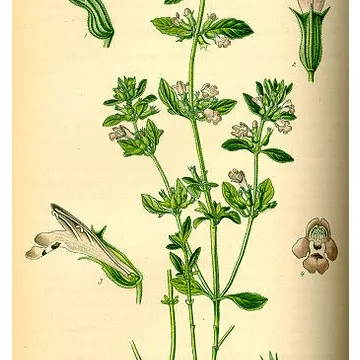
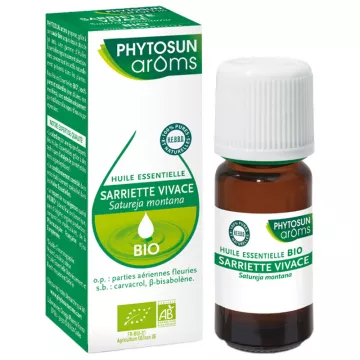
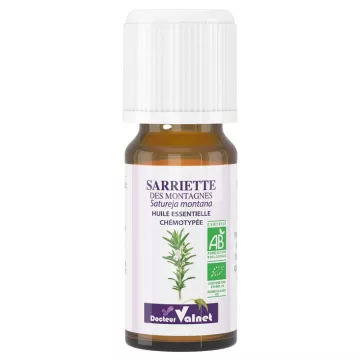
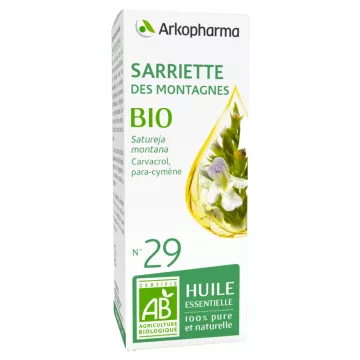
Mountain savory (Satureja montana) belongs to the same group of powerful phenolic essential oils ascompact oregano and thymol-type thyme. All three contain phenols (carvacrol, thymol) in high concentrations—all three are dermocaustic, and all three are intended for adults in short-term treatments. But they are not identical.
- Compact oregano (O. compactum): 60–80% carvacrol—the most potent profile across the anti-infective spectrum—adults, established infections
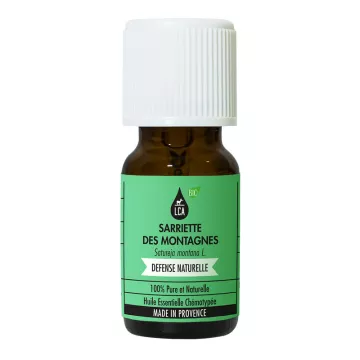
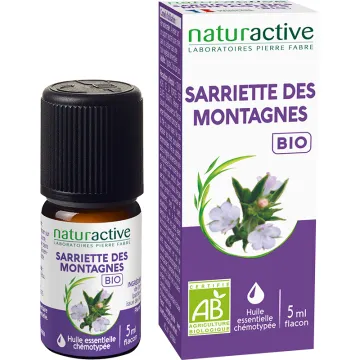
- Mountain savory (S. montana): carvacrol + thymol 30–50%—intermediate profile, slightly more balanced—also used in internal herbal medicine (herbal tea) where compact oregano is rarely used
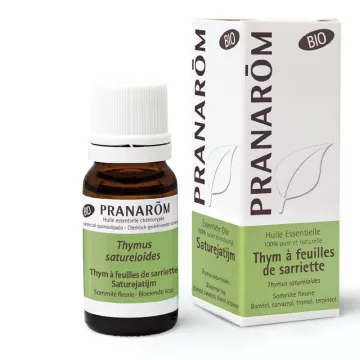
- Thyme CT thymol: thymol-dominant — primarily antibacterial profile — see our thyme page
- Common savory (S. hortensis): annual variety, milder — lower phenol concentration — for a gentle, daily digestive herbal tea
What are the uses of mountain savory essential oil?
Its balanced phenolic profile makes it an essential oil well-suited for mid-season infections—neither as strong as compact oregano nor as limited in scope as linalool CT thyme.
- Winter support: 2–3 drops of a 10% solution in vegetable oil applied to the soles of the feet—a 7–10-day course at the onset of an infection—adults only
- Anti-infectious trio: mountain savory + ravintsara + clove —an alternative to compact oregano for those who have difficulty tolerating it
- Light diffusion: 4–5 drops max blended with milder notes (sweet orange, lavender)—warm, herbaceous-spicy note, purifying
- Seasonalimmune support: less pungent than compact oregano — better tolerated during prolonged diffusion
How to use savory in herbal tea for digestive comfort?
This is a use of common savory rather than mountain savory—but both are sold in bulk at herbal shops under the same name.
- Herbal tea: 1 tsp of dried leaves in 250 mL of water at 90°C, steep for 10 min — 1 cup after meals — carminative, relieves bloating and heaviness
- Digestive blend: savory + thyme + rosemary —a Mediterranean herbal trio for slow digestion
- Mother tincture: a more concentrated remedy for recurrent functional digestive disorders — consultation with a pharmacist recommended
What precautions should be taken with mountain savory?
- Dermocaustic essential oil: dilute to 5–15% in a vegetable oil — never use undiluted, never on the face
- Pregnant and breastfeeding women: contraindicated
- Children under 12: Essential oil contraindicated—very mild herbal tea only under pediatric supervision
- Epilepsy and asthma: consult a doctor—phenols irritate the bronchial tubes and lower the seizure threshold
- Liver failure: consult a doctor—phenols are metabolized by the liver
- Treated hypertension: consult a doctor—phenols may interact with certain cardiovascular treatments
- Essential oil treatment duration: 7–10 days max, mandatory break