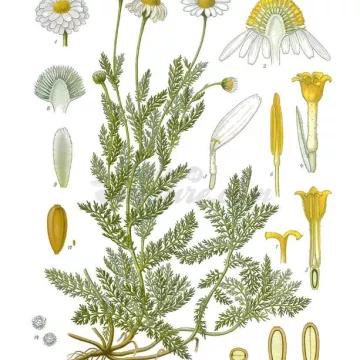
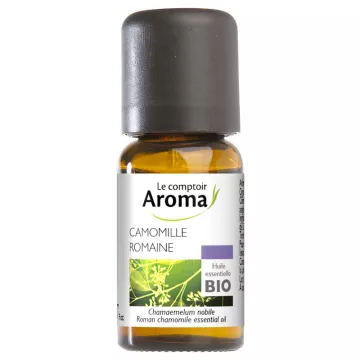
Noble chamomile (Chamaemelum nobile, syn. Anthemis nobilis, English chamomile) is the same species as Roman chamomile—two names for a single plant. A low-growing, fragrant perennial, it differs from German chamomile in its dominant ester profile (angelates 35–50%) and its particularly gentle hydrosol. It is this hydrosol that makes it a preferred active ingredient in natural cosmetics and pediatrics. Explore our relaxation and sleep and aromatherapy product lines.
Noble Chamomile: What Biochemistry Produces Which Effects?
Understanding its composition means understanding why it works the way it does—and how to choose it wisely.
- Angelate esters (isobutyl angelate, isoamyl angelate, 35–50%): powerful antispasmodics for smooth and striated muscles—the primary nervous and digestive actives
- Flavonoids (apigenin, luteolin): bind to GABA-A receptors—mild anxiolytic action, complementing the esters
- Coumarins (herniarin): skin-soothing properties and mild anticoagulant action—use with caution if taking anticoagulant medication
- Monoterpenes (α-pinene, γ-terpinene): characteristic fruity-floral aroma profile — milder than resinous or camphor-scented essential oils
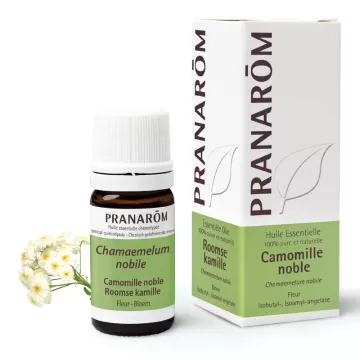
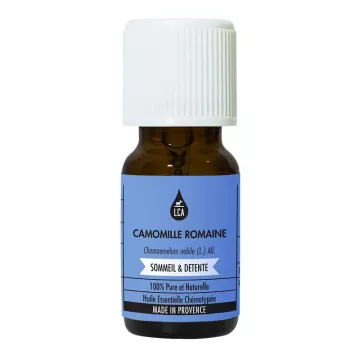
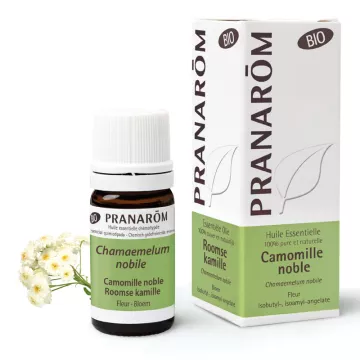
- HECT or HEBBD essential oils, organic and steam-distilled — guaranteed to contain a sufficient ester content (>35% minimum) for clinical efficacy
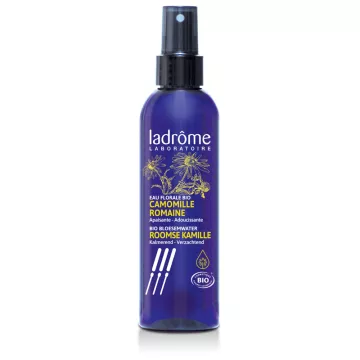
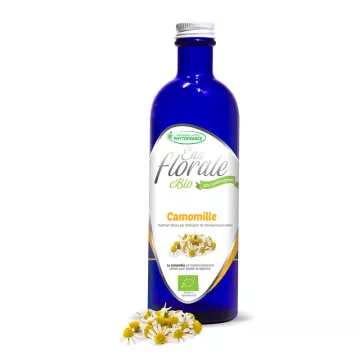
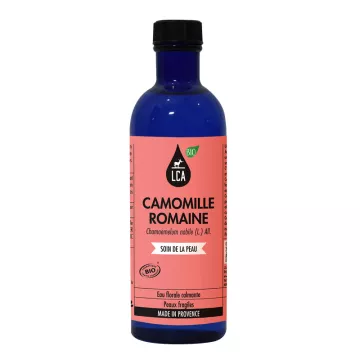
Roman chamomile hydrosol: the most accessible skincare option?
Hydrosol is often overlooked in favor of essential oil—unfairly so, as it combines gentleness, safety, and versatility.
- Obtained through co-distillation during essential oil production—contains water-soluble aromatic compounds (including coumarins and a fraction of the flavonoids)
- Facial toner for sensitive skin: applied in the morning with a cotton pad, it reduces redness and stabilizes the skin’s pH without leaving an oily film or causing allergies
- Baby spray: diluted 50% in purified water—soothes mild diaper rash and cheek irritation without rinsing—one of the most commonly used hydrosols in pediatric aromatherapy
- Must be refrigerated after opening—best before 6 months to 1 year depending on packaging (preservative-free)
- Soothing compress for tired eyes: cotton pad soaked in hydrosol, placed on the eyelids for 5 minutes—fresh and light scent
Roman chamomile and hair care?
Its use in hair care is less well known than that of German chamomile—yet it is just as effective for the relevant hair types.
- Blonde and light brown hair: The flavonoids in Roman chamomile (apigenin) oxidize slightly when exposed to light and enhance golden highlights—final rinse with 500 mL of concentrated herbal tea (3 tablespoons, steep for 15 minutes)
- Sensitive or irritated scalp: Roman chamomile hydrosol sprayed on after shampooing—no rinsing required—relieves itching and balances the scalp’s pH
- Natural conditioner formula: noble chamomile hydrosol + a few drops of Roman chamomile essential oil at 0.5% + aloe vera—a soothing, homemade detangling treatment
- Less photosensitizing than German chamomile — better suited for regular use during daylight hours
German chamomile and nervous relaxation—nervous system?
Its effect on the stress-nervous system axis is its key strength—ideal for incorporating into a long-term stress management routine.
- Herbal tea: 1 tbsp. dried flowers in 200 mL water, steep for 5–10 min — 1 to 2 cups in the evening — apigenin modulates the stress response without causing dependency
- Essential oil in a diffuser: 5–6 drops, 20 minutes at the end of the day — a subtle fruity-floral note, without overwhelming the senses
- Neck-and-shoulder massage: 1% Roman chamomile essential oil + 2% true lavender essential oil in 30 mL of vegetable oil—relief from stress-related muscle tension
- Combine with lemon balm in herbal tea for anxiety and digestive issues—a recognized complementary pairing in herbal medicine
- See our relaxation and sleep product lines and valerian supplements
How to choose and store German chamomile?
Quality varies greatly from one product to another—here are a few key pointers.
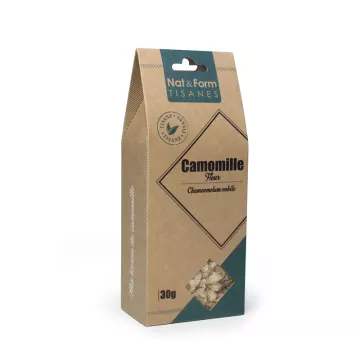
- Dried flowers: golden to white in color, with an intense fruity-floral scent—if the herbal tea has no aroma, the active compounds have degraded. Choose organic, harvested this year
- Essential Oil (EO): ester content > 35% indicated, full botanical name Chamaemelum nobile, labeled HECT or HEBBD, tinted glass bottle — store away from heat and light (best before 2–3 years)
- Hydrosol: 100% pure, alcohol- and preservative-free—refrigerate after opening; shelf life 6 months to 1 year
- Avoid “chamomile” products that do not specify the species—risk of contamination with German chamomile or other less active species
Precautions?
- Allergy to Asteraceae (arnica, calendula, mugwort, daisy): contraindicated — documented cross-reactivity
- Anticoagulants: coumarins (herniarin) may potentiate the effect—inform your doctor if you are currently undergoing treatment
- Pregnant women: A mild herbal tea is generally tolerated after the first trimester; use essential oil only under medical supervision
- Essential oil: Dilute to 0.5–1% for topical use—never apply undiluted to the skin