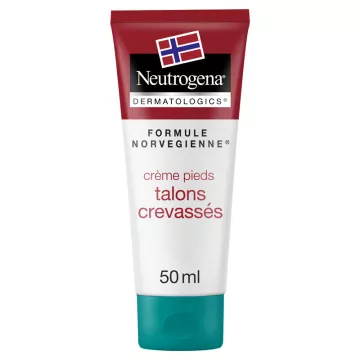
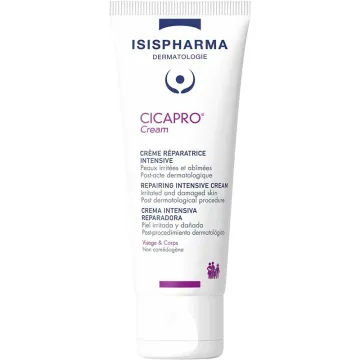
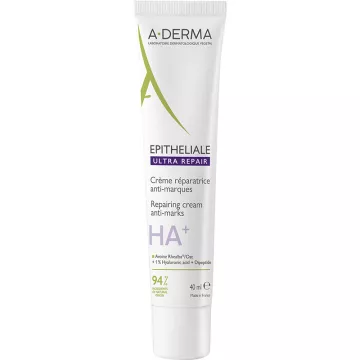
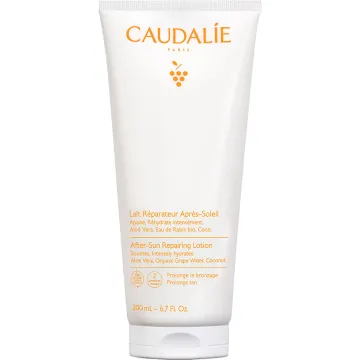
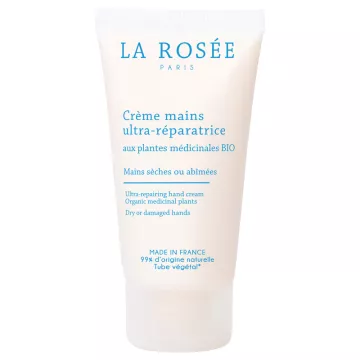
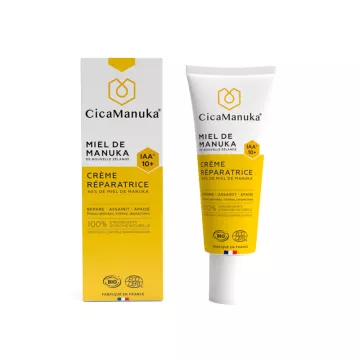
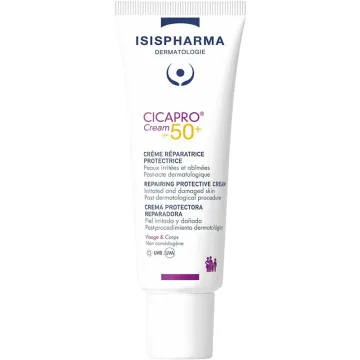
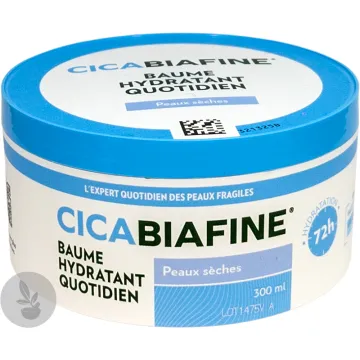
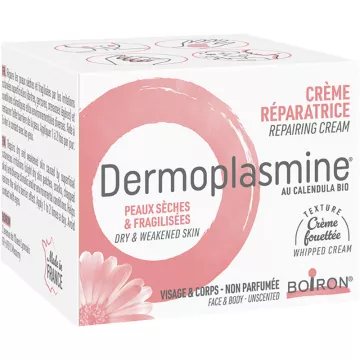
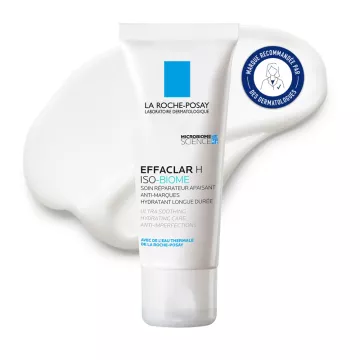
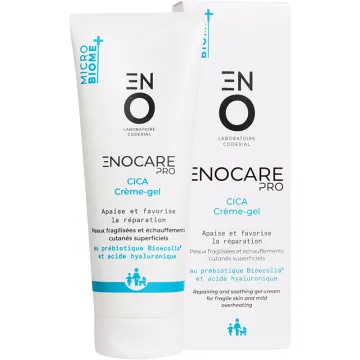
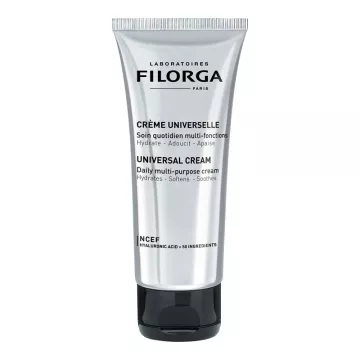
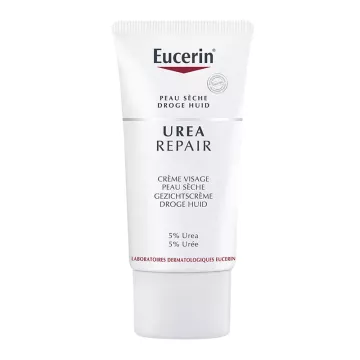
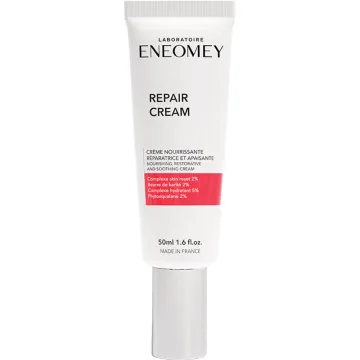
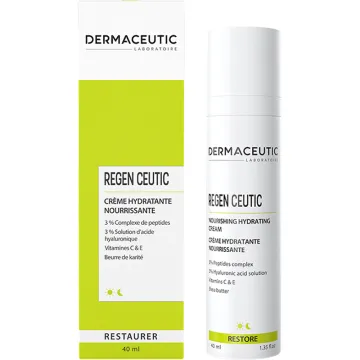
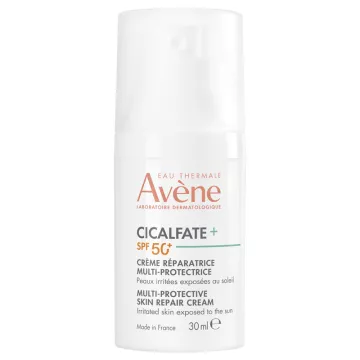
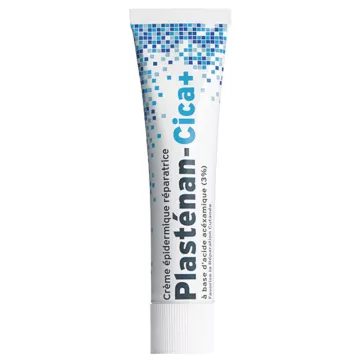
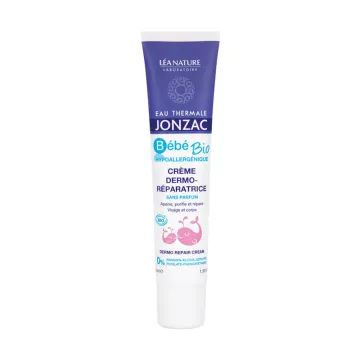
A repair cream is a dermatological treatment designed to restore the skin barrier, soothe irritated skin, and support the epidermis’s natural regeneration.
It contains a high concentration of moisturizing, nourishing, and restorative active ingredients such as hyaluronic acid, shea butter, ceramides, and allantoin.
These ingredients work together to deeply hydrate the skin, reduce redness, and restore the elasticity of a weakened skin barrier.
Its main purpose is to support the skin’s protective function against daily external aggressors.
The Repair Cream is particularly suitable for damaged, dry, sensitive, or reactive skin.
It is suitable for people regularly exposed to environmental stressors such as cold, wind, urban pollution, or a dry environment (air conditioning, intense heating).
It also provides support following certain dermatological procedures (peels, laser treatments) performed by a doctor; post-procedure care must be approved by the prescribing dermatologist.
For atopic skin or skin prone to eczema, choose formulas specifically designed for these conditions and consult a dermatologist during flare-ups.
The key ingredients in an effective reparative cream combine several families of active ingredients with complementary functions:
For optimal effectiveness, apply your repair cream to clean, slightly damp skin after showering or cleansing.
A small amount is enough; gently massage in circular motions until fully absorbed, without rubbing the skin.
Using it twice a day (morning and evening) ensures continuous repair and sustained hydration throughout the day.
For very dry areas (elbows, knees, heels, hands), feel free to reapply throughout the day as needed.
Regular use of a reparative cream provides visible and long-lasting benefits:
Results are generally noticeable after 2 to 4 weeks of regular use, depending on the skin’s initial condition.
The repair cream fits perfectly into a comprehensive and structured skincare routine.
In the morning, apply it after a hydrating serum and before sunscreen with an SPF of at least 30 to protect the skin’s natural repair process.
In the evening, use it as the final step after targeted treatments (anti-aging, active serums) to lock in moisture and support nighttime regeneration.
Check that the products you’re using together are compatible; if in doubt, ask your pharmacist for advice to avoid unwanted skin interactions.
Repair creams and moisturizers serve two distinct skincare purposes.
Repair cream specifically targets damaged, irritated, or weakened skin: it contains active ingredients that restore the skin barrier and support regeneration.
A moisturizer primarily delivers water to the skin’s outer layers through humectants (glycerin, hyaluronic acid) and helps maintain daily hydration in generally healthy skin.
Damaged skin will benefit first from a repair cream and can then switch back to a standard moisturizer once its barrier has been restored.
Some repair creams are formulated for use on both the face and body.
They are gentle enough for the delicate skin of the face while still being rich enough for the driest areas of the body (elbows, knees, heels, hands).
Always check the manufacturer’s instructions: some very rich formulas are intended for the body only, while others, which are lighter, are designed exclusively for the face.
If you’re unsure whether a product is suitable for both the face and body, your pharmacist can help you choose the right formula for each area.
Repair creams are generally formulated to be well-tolerated by sensitive and reactive skin.
They often contain soothing active ingredients such as allantoin, panthenol, bisabolol, or thermal water, which help calm irritation in sensitive skin.
Always perform a patch test on the inside of your elbow 48 hours before your first full application, especially if you have a known history of allergies.
Opt for fragrance-free, hypoallergenic, and dermatologically tested formulas to minimize the risk of adverse reactions.
Choosing the right reparative cream depends on the nature and concentration of its active ingredients.
For very dry skin, opt for formulas rich in shea butter, ceramides, and intensely nourishing agents.
For sensitive or reactive skin, opt for fragrance-free, alcohol-free formulas with a short, easy-to-read ingredient list.
Consult independent recommendations (ingredient analyses, dermatological reviews) and don’t hesitate to ask your pharmacist for advice to find the formula best suited to your skin type.
A reparative cream can help improve the appearance of superficial and recent scars by supporting skin regeneration.
Active ingredients such as allantoin, panthenol, and vitamin E help maintain proper hydration and reduce local inflammation around the scar.
To explore our dedicated selection, browse our scar care section in our online pharmacy.
For deep, old, keloid (hypertrophic), or post-surgical scars, a consultation with a dermatologist is recommended to evaluate appropriate specialized treatments (specific massages, silicone sheets, cosmetic treatments).