When should this SPF 50+ cream be used on sensitive skin?
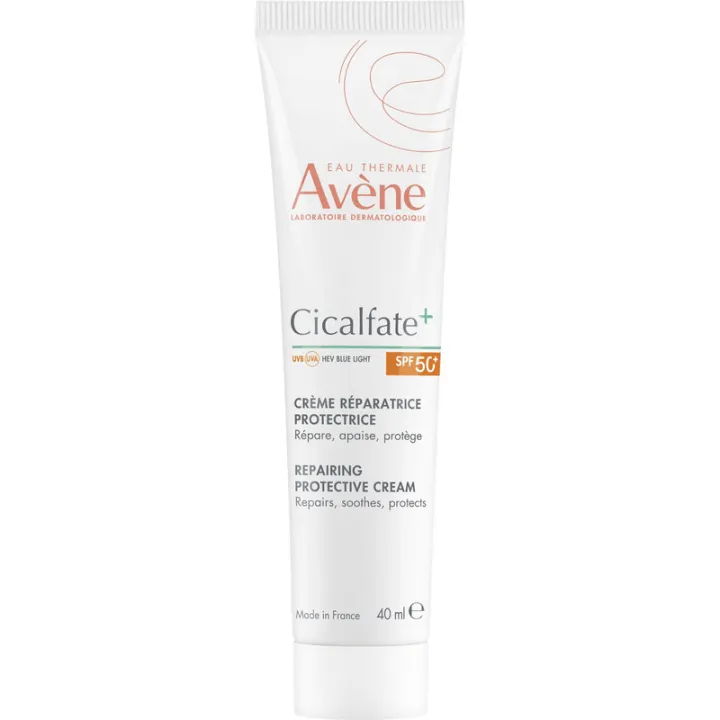
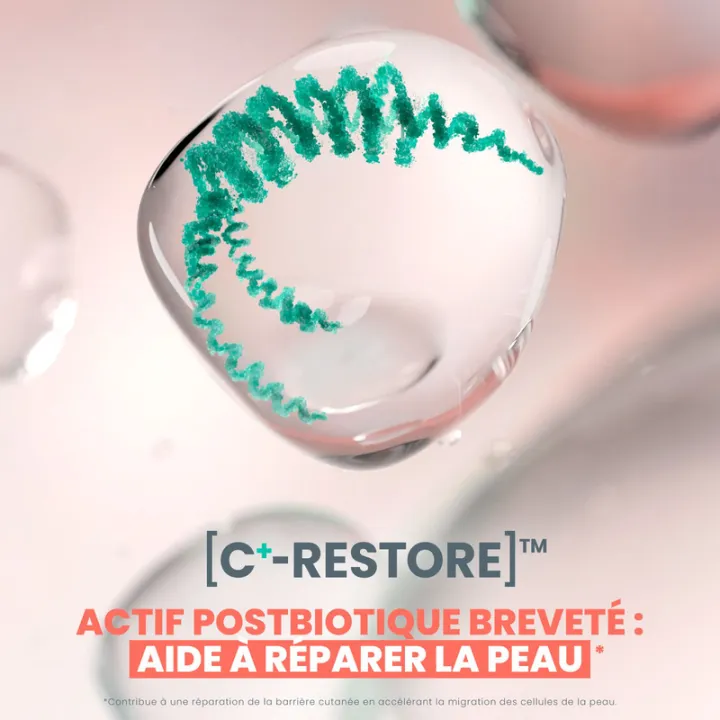
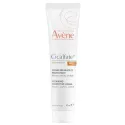
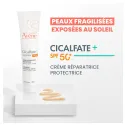
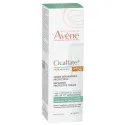
Avène Cicalfate+ Repairing Cream SPF50+, formerly known as Multi-Protective Repairing Cream, is a lightweight formula designed for sensitive and fragile skin exposed to the sun: fragile, sensitive, or irritated skin on the face and body. Its formula combines Avène Thermal Spring Water, the [C+-Restore]™ complex from the Cicalfate+ line, and the patented TriAsorB™ photoprotective system.
Compromised skin does not tolerate the sun well: it reddens more quickly and is more prone to showing signs of sun exposure. TriAsorB™ is a broad-spectrum filter that protects against UVB, UVA, and high-energy blue (HEV) light. With an SPF of 50+, the cream provides daily protection from the sun’s rays during commutes, short outings, and time spent outdoors.
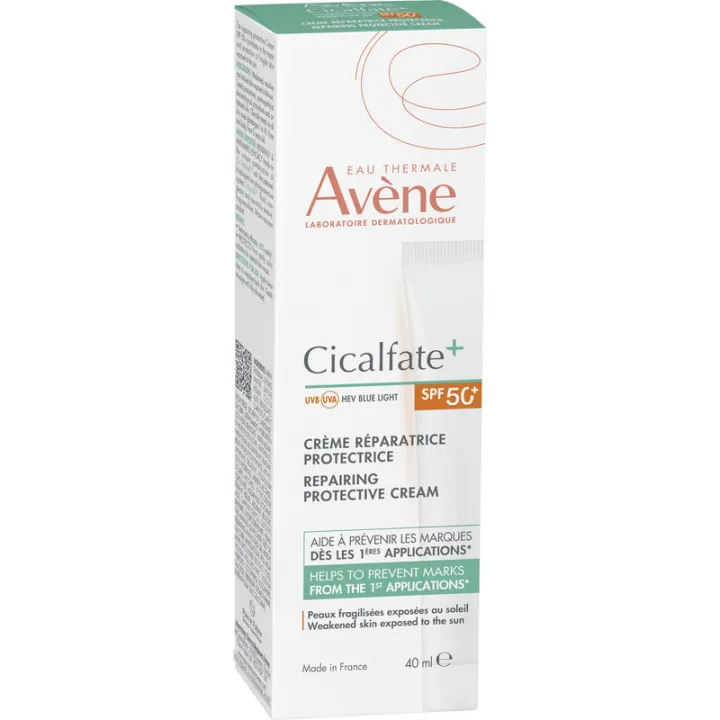
UV rays can leave brown marks on sensitive skin, known as hyperpigmentation marks. Cicalfate+ SPF50+ helps prevent these marks: in a clinical study involving 18 participants, with one to two applications per day for 18 days, the marks decreased by 65%.
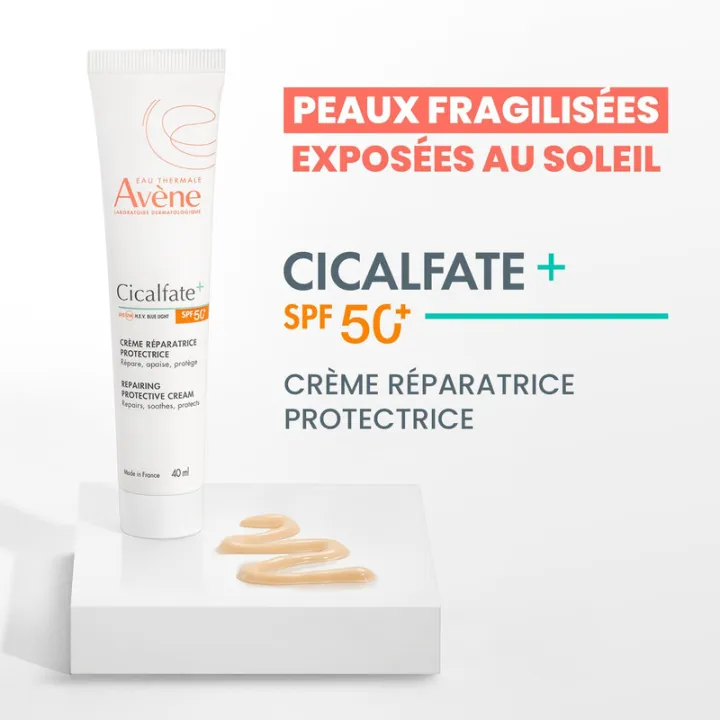
Its fluid, non-greasy, and non-sticky texture spreads easily, even on sensitive areas, and doesn’t leave a greasy film under clothing. The formula is fragrance-free, making it suitable for skin that reacts to fragranced products.
For a day at the beach, hiking, or skiing, we recommend adding La Roche-Posay’s fragrance-free Anthelios UVMune 400 SPF 50+ cream. Designed as a standalone sunscreen, it can be reapplied throughout the day and provides ongoing protection on areas exposed to the sun for extended periods, without adding fragrance to already sensitive skin.
How should you apply this protective cream daily?
Directions for Use
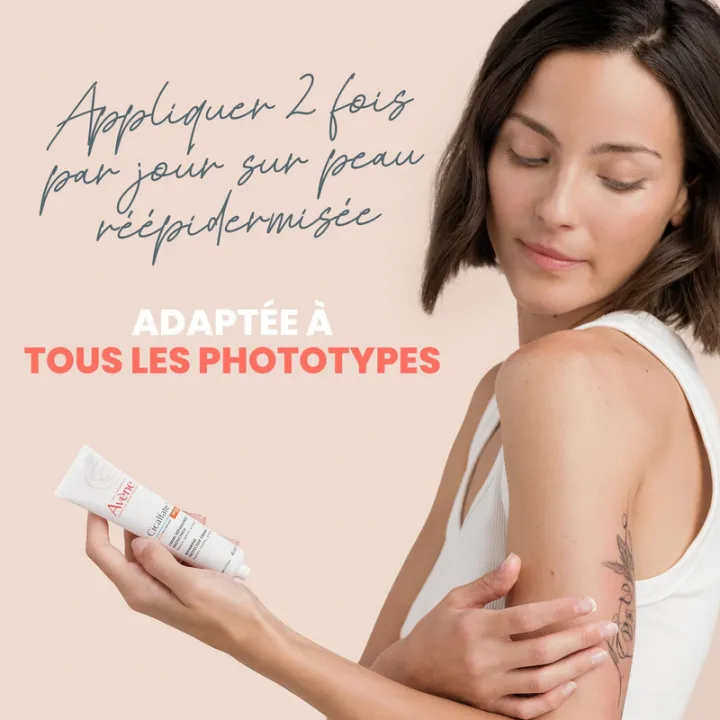
Apply twice daily to skin that has fully healed. Massage until the product is fully absorbed.
Share your feedback on the usage instructions and dosage for Avène Cicalfate+ Repairing Cream SPF50+ with our partner “Verified Reviews” after your purchase.
Precautions
- This product is not a sunscreen. In case of intense or prolonged sun exposure, use a specific sunscreen product.
- Do not use on open or weeping wounds, scabs, or unremoved sutures.
- After a dermatological procedure, laser treatment, chemical peel, or surgery, follow the waiting period and care instructions provided by your healthcare provider before applying the cream.
- Spreading redness, warmth, pain, swelling, discharge, or fever may indicate an infection: consult a doctor immediately.
- A scar that thickens, remains raised, is red, or itches for more than a few weeks requires consultation with a doctor or dermatologist.
- Any spot or mole that changes in size, shape, outline, or color should be shown to a doctor.
- For ages 2 and up. Do not expose babies and young children to direct sunlight.
- The stated SPF is only achieved when a sufficient amount of product is applied: a layer that is too thin significantly reduces it.
- Do not use if you have a known allergy to any of the ingredients, particularly to a sunscreen filter.
- Avoid contact with the eyes; if contact occurs, rinse thoroughly with water.
- Limit contact with clothing.
- Discontinue use if an unusual reaction occurs: increased redness, itching, or a burning sensation.
- Store away from heat, with the tube tightly closed, and use before the date indicated on the packaging. Keep out of reach of children.
What are the ingredients in this SPF 50+ anti-dark spot treatment?
Ingredients
Avene Thermal Spring Water (Avene Aqua), C12-15 Alkyl Benzoate, Caprylic/Capric Triglyceride, Dicaprylyl Carbonate, Glycerin, Diethylamino Hydroxybenzoyl Hexyl Benzoate, Water (Aqua), Ethylhexyl Triazone, Panthenol, Phenylene Bis-Diphenyltriazine, Bis-Ethylhexyloxyphenol Methoxyphenyl Triazine, Potassium Cetyl Phosphate, Myristyl Alcohol, Stearyl Alcohol, VP/Eicosene Copolymer, Aquaphilus Dolomiae Ferment Filtrate, Arginine, Benzoic Acid, Caprylyl Glycol, Glyceryl Behenate, Glyceryl Dibehenate, Helianthus Annuus (Sunflower) Seed Oil (Helianthus Annuus Seed Oil), Myristyl Glucoside, Pantolactone, PPG-1-PEG-9 Lauryl Glycol Ether, Red 33 (CI 17200), Sodium Hyaluronate, Sodium Hydroxide, Tocopherol, Tocopheryl Glucoside, Tribehenin, Tromethamine, Xanthan Gum, Zinc Gluconate.
Packaging
40 ml tube.
Our expert advice on Cicalfate+ SPF50+ for sensitive skin
Among the precautions listed on this page, the first one is the most important to keep in mind before making a purchase: this tube protects sensitive skin in everyday life; it is not a substitute for sunscreen when spending a day in the sun. This is the most common source of confusion at the counter, and it stems from the SPF50+ rating displayed on the packaging.
Another common mistake is putting the tube away at the end of summer. UVA rays penetrate clouds and glass all year round, and sensitive skin remains exposed even in winter. The simplest approach is to apply it as the final step in your morning routine, after washing your face, and then reapply it at midday to exposed areas.
FAQ
Can I apply Avène Cicalfate+ Repairing Cream SPF50+ to a recent tattoo?
Yes, once the skin over the tattoo has fully healed: the scabs have fallen off, the tattoo is no longer oozing, and the peeling phase is over. The product has been tested on tattooed skin. Before reaching this stage, follow the care instructions provided by your tattoo artist. UV rays cause tattoo pigments to fade, which is why SPF50+ protection is especially important for fresh ink.
Can I use Avène Cicalfate+ Repairing Cream SPF50+ on a scar?
On a healed scar, yes. A recent scar remains more sensitive to the sun than the surrounding skin and may develop a lasting tan if exposed without protection during the first few months. Continue using the product as long as the scar retains a pinkish hue, which indicates that it has not yet reached its final appearance.
Is Avène Cicalfate+ Repairing Cream SPF50+ suitable for oily skin?
It can be used on all skin types. However, on combination to oily skin, some users report a slightly shiny finish on the face. A light dusting of loose powder, applied once the cream has been absorbed, mattifies this finish without removing the protective film.