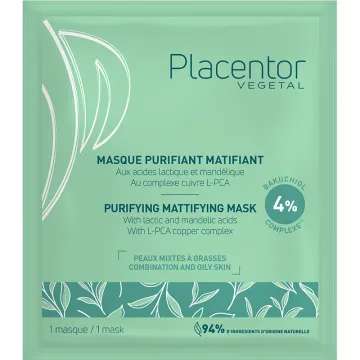
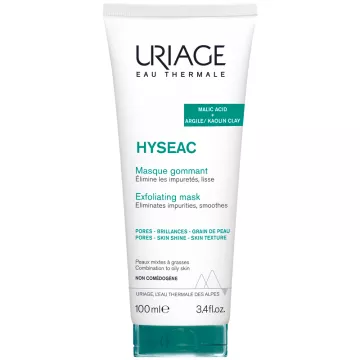
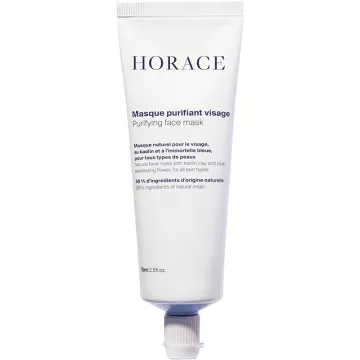
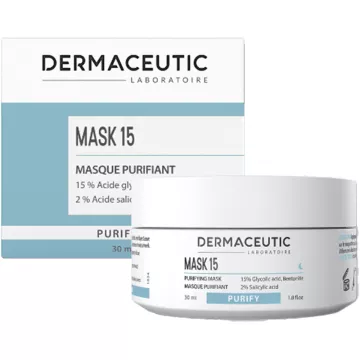
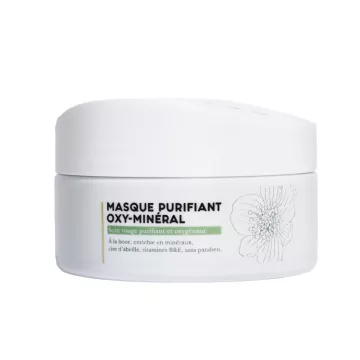
A purifying mask acts as a deep-cleansing treatment that restores balance to the skin’s overall appearance. Its formula targets three key actions: removing impurities, reducing excess sebum, and unclogging pores. The most commonly used active ingredients combine activated charcoal, clay, exfoliating acids such as salicylic acid, and soothing plant extracts. When applied to the face, these ingredients capture toxins and excess oil, leaving the skin visibly refreshed and clarified.
Purifying masks are primarily suited for oily or combination skin prone to excess sebum, as they regulate sebum production and reduce unwanted shine. They’re also particularly beneficial in urban environments, where pollution and fine particles quickly clog pores. Sensitive skin can also benefit from this type of treatment, provided you choose a gentle formula that combines purifying effectiveness with skin tolerance.
To maximize the benefits, apply the purifying mask once or twice a week, depending on your skin type and needs. Spread an even layer over clean, dry skin, avoiding the eye and lip areas. Leave it on for the time recommended on the packaging—usually between 10 and 20 minutes—then rinse with lukewarm water. Finish your routine with a suitable skincare product to maintainyour face’s moisture levels and support the skin barrier.
Purifying masks are generally well tolerated, but some users may experience skin reactions —such as dryness, redness, or irritation—especially if left on longer than the recommended time. Always choose a formula suited to your skin type and perform a patch test (on the inner elbow or behind the ear) before regular use. If severe irritation occurs, rinse immediately, discontinue use, and consult a dermatologist.
Choose your purifying mask based on your skin’s specific needs and the product’s formulation. Oily skin benefits greatly fromclay- or charcoal-based formulas, which effectively absorb excess sebum. Sensitive skin types should opt for masks enriched with soothing ingredients such as aloe vera or chamomile. Read the labels carefully and check user reviews to find the product best suited to your skin type.
The main difference between a purifying mask and a hydrating mask lies in their purposes and formulations. A purifying mask deeply cleanses, removing impurities and excess sebum thanks to active ingredients like clay or charcoal. A hydrating mask, on the other hand, focuses on nourishing the skin: it enriches the skin with hyaluronic acid, glycerin, or emollients to restore the hydrolipid barrier and provide comfort.
Yes: purifying masks offer real benefits for acne-prone skin. They deeply cleanse the pores and limit sebum buildup, which helps reduce the frequency of breakouts. Choose a formula designed for this skin type, containing anti-inflammatory and non-comedogenic active ingredients such assalicylic acid or zinc, to treat the skin without causing further irritation.
The application time depends on the formulation, but most purifying masks are left on for 10 to 20 minutes. Always follow the time indicated on the packaging to avoid drying out or irritating the skin. If you experience a tingling sensation or discomfort before the recommended time is up, rinse the mask off immediately with lukewarm water.
If you have sensitive skin, avoid purifying masks containing denatured alcohol, synthetic fragrances, or harsh preservatives, as these can trigger irritation and allergic reactions. Also be wary of overly abrasive exfoliants (coarse grains, crushed walnut shells) that can damage the delicate skin barrier. Opt for gentle formulas enriched with soothing active ingredients such as aloe vera, chamomile, or centella asiatica.
Incorporate the purifying mask into your routine once or twice a week, adjusting the frequency to suit your skin type. Apply it after cleansing your face, before targeted serums and your moisturizer: this sequence prepares the skin to better absorb the active ingredients in the subsequent steps. For blemish-prone skin, complement your routine with specific treatments for skin imperfections. However, avoid using it too frequently, as this can overstimulate the skin and weaken its protective barrier.