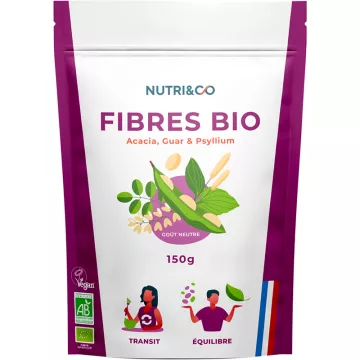
Dietary fiber supplements refer to fibers extracted from specific plant sources—psyllium, oat bran, acacia, konjac, apple pectin, and flaxseed—each with a distinct effect on digestion, the gut microbiome, and blood sugar levels. They supplement the dietary fiber in your regular diet to help you reach the recommended daily intake of 25–30 g/day. Explore our range of products for constipation, bloating, and digestive health.
Blond psyllium: the gold standard in plant-based fiber?
Blond psyllium (Plantago ovata) is the best-documented plant fiber for promoting bowel regularity.
- Its husks contain up to 85% mucilage—soluble, water-loving fibers that absorb 40 times their weight in water and form a voluminous gel
- Documented dual action: regular bowel movements (constipation) and reduced stool consistency (diarrhea)—adaptogenic fiber
- Oat and psyllium beta-glucans: EFSA-approved claim regarding their contribution to maintaining normal postprandial blood glucose levels
- Dosage: 3.5 g in at least 240 mL of water, 2 to 3 times a day—hydration is essential
- Gluten-free and well-tolerated by sensitive digestive systems—start with a low dose to allow for adjustment
Oat bran and beta-glucans?
Oat bran is particularly rich in beta-glucans —soluble fibers with well-documented metabolic properties.
- Beta-glucans form a viscous gel in the small intestine—slowing the absorption of dietary carbohydrates and fats
- EFSA claim: Oat beta-glucans help maintain normal blood glucose levels at 4 g per meal
- They have also been studied for their effect on postprandial blood glucose levels and blood lipid profiles
- Oat bran is naturally gluten-free in its pure form—check for the absence of cross-contamination for people with celiac disease
- Can be easily incorporated into the diet (yogurt, smoothies, soups) or is available in concentrated capsules
Acacia fiber: the gentle prebiotic fiber?
Acacia gum (Acacia senegal) is a soluble plant fiber that is exceptionally well tolerated.
- Slow and gradual fermentation in the colon—production of short-chain fatty acids (butyrate, propionate) without excessive gas or bloating
- Documented prebiotic effect on bifidobacteria and lactobacilli—starting at 5 g/day
- Recommended as a first-line treatment for reactive intestines (irritable bowel syndrome) that cannot tolerate high doses of inulin or FOS
- Neutral flavor, completely soluble in water—easy to incorporate into beverages without altering texture
- Can be combined with traditional prebiotics in mild synbiotic formulations
Konjac and glucomannan?
Glucomannan extracted from konjac (Amorphophallus konjac) is the plant fiber with the most well-documented satiating effect.
- Absorbs up to 200 times its weight in water—forming a highly voluminous gel in the stomach
- Approved EFSA claim: contributes to weight loss as part of a calorie-restricted diet—3 g/day before meals with plenty of water
- Significantly slows gastric emptying—strong, prolonged satiating effect
- Available in capsules, powder, or low-calorie meal replacement formats
- Take with at least 300 mL of water—risk of esophageal obstruction if swallowed without sufficient water
Pectins and flax fiber?
Two other plant fibers with specific action profiles that are of interest for supplementation.
- Apple or citrus pectins: soluble, gelling fibers; prebiotic effect on Akkermansia muciniphila (intestinal mucosal integrity)—available as supplements or through consumption of fruit with the skin
- Ground flaxseeds: mixed fibers (soluble + insoluble) + phytoestrogenic lignans + omega-3 ALA — triple benefits for digestion, hormones, and lipid metabolism
- Whole flaxseeds: minimally active (pass through the digestive tract undigested) — always use ground flaxseeds to release the fiber and omega-3s
- 1 to 2 tablespoons of ground flaxseed per day in yogurt, soups, or smoothies — store in the refrigerator after grinding (risk of omega-3 oxidation)
- See “Digestive Comfort” for our fiber + probiotic combination formulas