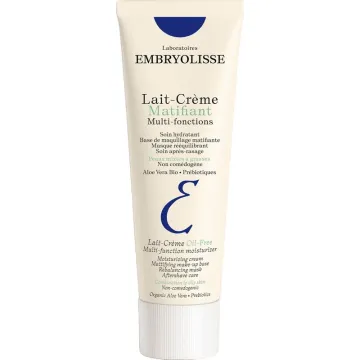
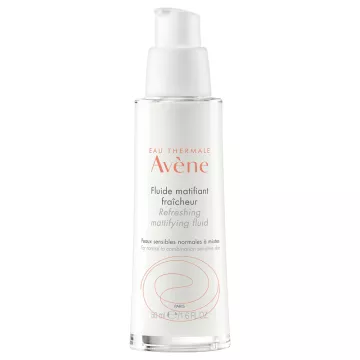
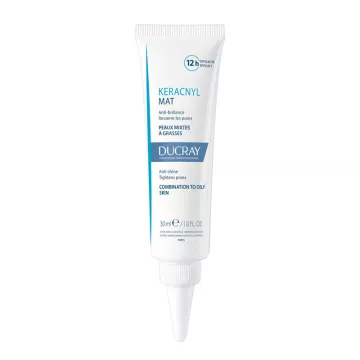
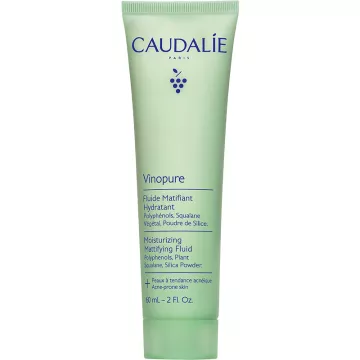
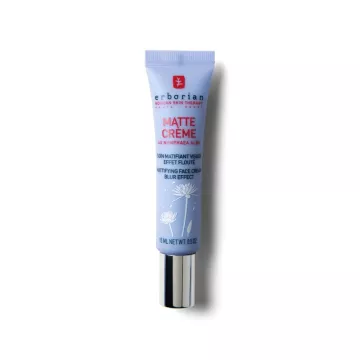
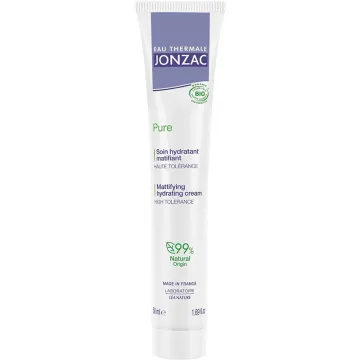
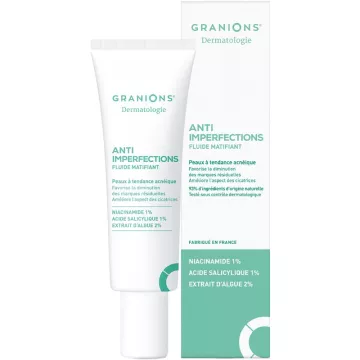
A mattifying cream is a cosmetic product formulated to visually reduce shine on the face, particularly in the T-zone (forehead, nose, and chin).
It works by absorbing excess oil from the skin’s surface, while leaving a smooth, matte finish that’s great for everyday use.
Thanks to ingredients like kaolin or silica, it helps maintain an even complexion and minimize the shiny appearance of skin prone toexcess sebum.
Its lightweight texture allows for application morning and night without weighing down the skin or clogging pores.
The mattifying cream is particularly suitable for people with oily or combination skin.
These skin types produce excess sebum, which can lead to a shiny appearance and promote the development of blemishes.
Using a mattifying cream helps visually control this shine and improve the skin’s overall appearance.
It may also be suitable for normal skin on occasion, such as during hot weather or at events requiring long-lasting makeup.
If you havemoderate to severe or persistent acne, consult a dermatologist for appropriate medical treatment; the mattifying cream should then be used as a complementary skincare product.
Choosing a mattifying cream depends on several factors: skin type, texture preferences, and personal sensitivity.
Opt for non-comedogenic and dermatologically tested products, especially if your skin is prone to breakouts.
Light, fluid formulas are often preferable: they don’t weigh down the skin and minimize feelings of discomfort.
Check the INCI list and choose formulations free of heavy oils and occlusive silicones if you have acne-prone skin.
To maximize the effects of a mattifying cream, apply it after cleansing and after your usual lotion or toner, but before applying makeup.
Take a small amount, warm it between your fingers, and gently pat it onto shiny areas.
Make sure to apply it evenly to avoid using too much product in certain areas.
For combination skin, focus primarily on the T-zone (forehead, nose, chin) while moisturizing the cheeks as usual.
Several mistakes can compromise the effectiveness or tolerability of a mattifying cream.
Avoid applying too much product, as this can create an unflattering “mask-like” effect and clog pores.
Be sure to choose a product suited to your skin type to avoid dryness, irritation, or a rebound in sebum production.
Remove your makeup and cleanse your skin every evening to eliminate any product residue and preventclogged pores.
To effectively incorporate a mattifying cream, start by cleansing your skin with a suitable cleanser.
Then apply a lotion or toner to refresh the skin, followed by a serum if you use one (vitamin C in the morning, for example).
Apply the mattifying cream before sunscreen in the morning, focusing on areas that tend to get shiny throughout the day.
It can be used daily or as needed, depending on your sebum production and the season.
Mattifying cream combines easily with other skincare products, provided you take a few precautions.
To avoid irritation or clogged pores, opt for complementary products that are non-comedogenic and suitable for oily or combination skin.
Combining it with potent active ingredients (retinoids, AHAs, BHAs) requires a gradual introduction and, ideally, a dermatologist’s advice.
Avoid combining several highly exfoliating active ingredients on the same day to prevent weakening the skin barrier.
Several well-known active ingredients enhance the effectiveness of a mattifying cream:
Salicylic acid is not recommended for pregnant or breastfeeding women. Opt for formulas free of heavy oils and comedogenic ingredients.
Mattifying cream is primarily recommended for oily and combination skin types, which benefit the most from it.
Normal skin types can use it occasionally on hot, humid days or for events requiring a long-lasting matte finish.
Those with dry or dehydrated skin should use it with caution: apply only to areas prone to shine, after thoroughly moisturizing the entire face.
Those with sensitive skin should check for tolerance by performing a patch test on the inner elbow 48 hours before first use.
Several natural alternatives exist for minimalist or eco-friendly beauty routines.
Aloe vera provides hydration and a slightly matte finish for combination or oily skin.
Cosmetic clays (green clay, white clay, rhassoul) absorb excess sebum and can be used as a purifying mask 1 to 2 times a week.
Adapt these alternatives to your skin type and test for tolerance before regular use; consult a dermatologist if you have sensitive skin or a chronic skin condition.