What is lumbago, and what causes it?
Lumbago is acute pain in the lumbar region (lower back), often occurring suddenly as a result of a sudden, awkward movement, lifting a heavy object, or maintaining an improper posture for an extended period. It is one of the leading causes of medical consultations and sick leave in France. Anatomically, the pain may originate in the paravertebral muscles (reflex muscle spasm), the intervertebral ligaments, the intervertebral discs, or the facet joints. Common or nonspecific lumbago accounts for more than 85% of cases: there is no structural lesion identifiable on imaging, but rather a musculoskeletal dysfunction that is often reversible within a few days to a few weeks with appropriate treatment.
Should you rest completely if you have lumbago?
No—strict bed rest is contraindicated for common acute low back pain according to current HAS recommendations. Maintaining appropriate physical activity, within pain limits, accelerates recovery and prevents the condition from becoming chronic. Current recommendations advise:
- Continuing daily activities as much as possible, while avoiding identified trigger movements.
- Regular walking (20 to 30 minutes per day): improves local circulation and reduces reflex muscle spasms.
- Physical therapy (postural training, strengthening of the core stabilizing muscles): rehabilitation is the cornerstone of treatment, especially in cases of recurrence or chronic pain.
- Early return to work: Prolonged time off work is a risk factor for chronic lower back pain.
What natural active ingredients can support the management of lumbago?
Several natural active ingredients have been studied for lower back pain and can support pain management as a complement to medical treatment:
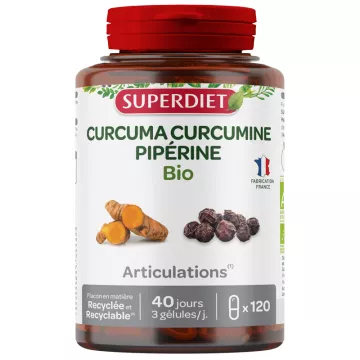
- Turmeric (curcuminoids, 1 to 3 g/day with piperine): inhibits the NF-kB and COX-2 pathways involved in musculoskeletal inflammation. Clinical studies confirm a reduction in chronic lower back pain compared to placebo.
- Harpagophytum (devil’s claw): Meta-analyses confirm that it is more effective than a placebo for chronic lower back pain and comparable to certain nonsteroidal anti-inflammatory drugs (NSAIDs) in reducing pain and improving mobility.
- Arnica montana applied topically (gel, cream): reduces superficial muscle pain and local inflammation, as a complement to oral active ingredients.
Do magnesium and omega-3s help with lumbago?
Magnesium plays a role in regulating muscle contractility and nerve transmission. A deficiency—often caused by stress and an inadequate diet—exacerbates paravertebral muscle spasms that accompany and perpetuate lower back pain. Supplementation with highly bioavailable magnesium (bisglycinate, malate) can support muscle relaxation and reduce neuromuscular hyperexcitability. Omega-3 EPA/DHA reduce the pro-inflammatory mediators that perpetuate chronic pain. Studies on chronic lower back pain show a significant reduction in analgesic use among patients taking omega-3 supplements. These supplements are part of a holistic approach and are not a substitute for medical treatment.
What warning signs require urgent medical attention?
The vast majority of cases of acute lower back pain are benign and resolve spontaneously within 4 to 6 weeks. However, certain signs require prompt medical attention—any warning sign should prompt an immediate consultation:
- Lower back pain radiating down one leg to the foot: suggests nerve root compression requiring medical evaluation.
- Intense nighttime pain that does not improve with rest or gradually worsens: may indicate a serious spinal condition (osteoporotic fracture, tumor, spondylodiscitis).
- Sphincter dysfunction (urinary or fecal incontinence) or saddle anesthesia: surgical emergency (cauda equina syndrome).
- Fever associated with low back pain: suspected disc infection or a distant site of infection.
- Occurrence following trauma in a person with osteoporosis: suspected vertebral compression fracture.
How can recurrent lumbago be prevented?
Lumbago recurs in 70 to 80% of cases without preventive management. The most effective prevention strategies:
- Strengthening the core stabilizing muscles (core training, Pilates, McKenzie method): reduces the risk of recurrence by 40 to 60% according to meta-analyses.
- Postural education: lifting techniques (bended knees, straight back), ergonomic workplace adjustments, and alternating positions.
- Sleep quality: Sleep posture (appropriate mattress, side-sleeping position with a pillow between the knees) and sleep quality influence the recovery of the lumbar musculoskeletal structures.