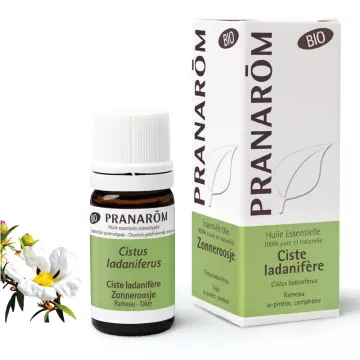
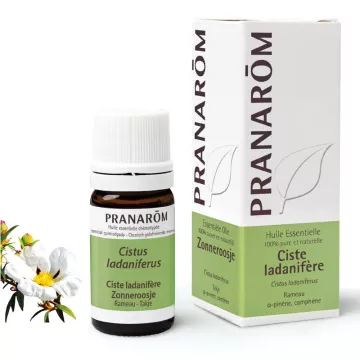
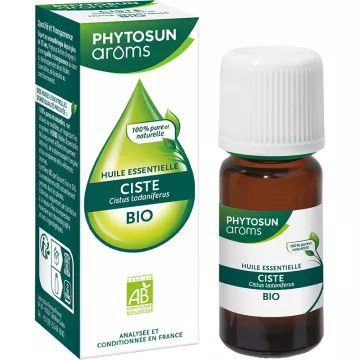
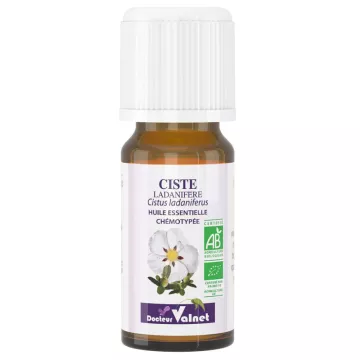
Cistusladanifer is one of the most distinctive essential oils of the Mediterranean garrigue. It is particularly effective for treating small, bleeding wounds and mature skin in need of firming. Its monoterpenes (α-pinene, camphene) give it hemostatic and astringent properties unmatched in the aromatherapy pharmacopoeia. And its scent—balsamic, resinous, and slightly smoky—makes it a prized base note in perfumery and for meditation aromatherapy. Explore our aromatherapy line.
Cistus ladaniferus: Essential Oil or Labdanum Resin—What’s the Difference?
Two products from the same shrub, two completely different uses.
- Cistus ladaniferus essential oil (distillation of stems and leaves): α-pinene 40–60% + camphene + borneol—hemostatic, skin-astringent, and mildly sedative properties—used in aromatherapy and cosmetics
- Labdanum (resin): resinous extract from the stems — diterpene and labdanoid compounds — very rich, balsamic, almost animal-like olfactory profile — base note in natural perfumery, incense, natural frankincense
- The resin is not distillable—labdanum used in perfumery is obtained by steam or solvent extraction from fresh stems and leaves
- EO = therapeutic uses for the skin and circulation. Labdanum = perfumery and incense. Do not confuse the two on a label
- Check for“Cistus ladanifer” on the label—the term “cistus” alone can refer to several species within the genus, each with varying profiles
Cistus and minor bleeding: the go-to hemostatic essential oil?
This is its signature use in aromatherapy—unique among common essential oils.
- The α-pinene and monoterpenes in cistus exert a rapid local vasoconstrictive effect—aromatherapists use it for minor cuts, epistaxis (nosebleeds), and superficial wounds
- Application: Apply 1 drop undiluted (in exceptional cases, on intact skin) using a cotton swab directly to the wound—to stop bleeding while awaiting appropriate medical care
- Do not apply to deep, open, or infected wounds—use only as a first-aid measure; seek medical advice for any persistent bleeding
- Enhanced combination: rockrose + immortelle + calophyllum — the go-to trio for regeneration, hemostasis, and circulation
Its astringent and toning properties make it a complementary anti-aging active ingredient—less well-known than rose or neroli, but highly effective.
- Astringent action on skin vessels: rockrose refines the appearance of enlarged pores and supports the firmness of sagging skin
- Serum for mature skin: 0.5–1% in muscat rose + a few drops of helichrysum macerate —a nighttime treatment for firmness and cutaneous vascular support
- Skin with rosacea: Cistus’s vasoconstrictive action reduces the visibility of small, visible blood vessels—apply 0.5% in calophyllum to the affected areas
- Radiant complexion: rockrose + frankincense in muscat rose—a duo of Mediterranean resins for skin lacking density
- See our anti-aging serums
Cistus in aromatherapy and emotional well-being?
Its balsamic and resinous note creates a rich, comforting atmosphere—distinct from floral or citrus scents.
- Diffusion: 4–5 drops max, 20 min — powerful, balsamic, and slightly smoky note — blend with lighter notes to balance
- Meditation blend: rockrose + frankincense + sandalwood — the three quintessential grounding resins
- Rockrose + true lavender + sweet orange—the perfect balance for a relaxing evening diffusion without overwhelming the senses
- The scent of rockrose ages well—an essential oil that’s 2–3 years old is often rounder and less sharp than a fresh one
Precautions?
- Pregnant and breastfeeding women: not recommended as an essential oil
- Children under 6: not recommended
- Perform a skin test before extensive use—possible allergy to rockrose family plants
- Dilute to 1–3% for daily topical use—may be used undiluted occasionally on small wounds only
- Diffusion: 4–5 drops max—very persistent scent; do not over-saturate the space