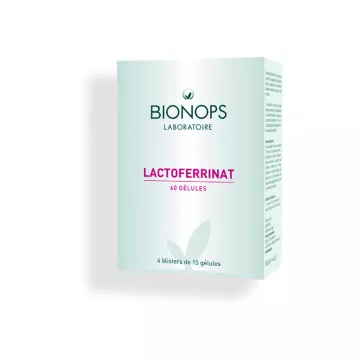
Lactoferrin is a glycoprotein belonging to the transferrin family, naturally found in colostrum, breast milk, saliva, tears, and mucous secretions. It plays a dual role: regulating iron metabolism and modulating mucosal immunity. As a dietary supplement, it is used as a gentle alternative to conventional iron salts and to support natural immunity. Find our iron and immunity product line at your local pharmacy.
What is lactoferrin?
Lactoferrin (Lf) is an 80 kDa iron-transport protein capable of binding up to two ferric ions (Fe³⁺) per molecule. This property underlies its two main actions: by binding free iron in mucous membranes and secretions, it deprives pathogens of a nutrient essential for their proliferation—a direct bacteriostatic and fungistatic action. It is the most abundant protein in maternal colostrum (6–8 g/L)—the primary source of passive immunity transmitted to the infant. For supplemental use, it is extracted from bovine milk (bLf) or produced by fermentation (recombinant forms).
Lactoferrin and Immunity: How Does It Work?
Lactoferrin plays a multifaceted role in both innate and adaptive immunity.
- Bacteriostatic action: by sequestering free iron, it limits the growth ofE. coli, Staphylococcus aureus, Helicobacter pylori, and Candida —which require iron to multiply
- Antiviral action: binds to heparan sulfate proteoglycans on cell membranes, blocking the entry of several viruses at the attachment stage
- Stimulates the maturation of NK cells and neutrophils—supporting the innate immune response
- Modulates the mucosal inflammatory response—supports the health of the respiratory and digestive mucous membranes
- See our range of products to boost natural immunity and immunity
Lactoferrin and iron: an alternative to ferrous salts?
Lactoferrin is particularly valuable as a bioavailable and well-tolerated iron carrier.
- The lactoferrin receptor (LfR) is expressed on the intestinal epithelium—allowing for direct absorption of the lactoferrin-iron complex without passing through the conventional route of ferrous salts
- Better digestive tolerance than ferrous sulfate or fumarate: no nausea, constipation, or black stools—a documented benefit in pregnant women and infants
- Used for fatigue associated with mild to moderate iron deficiency—should be combined with vitamin C to optimize the absorption of non-heme iron
- Iron products available at pharmacies: ferrous supplements, lactoferrin, and multivitamin complexes with iron
- Hemochromatosis (pathological iron accumulation): absolute contraindication—lactoferrin increases iron absorption
Lactoferrin and the gut microbiota?
Lactoferrin has a direct effect on the composition of the gut microbiota.
- Prebiotic-like effect: promotes the growth of bifidobacteria and lactobacilli by limiting the availability of iron to pathogenic species that require it
- Strengthens the intestinal barrier by stimulating the proliferation of enterocytes and supporting the integrity of tight junctions
- Often combined with probiotics in complex formulas for immunity and digestive comfort—documented synergy
- Premature infants or those born via cesarean section: bovine lactoferrin is being studied for its potential to reduce the risk of necrotizing enterocolitis
How to Choose and Use Lactoferrin?
Several criteria determine the quality and efficacy of a lactoferrin supplement.
- Source: bovine lactoferrin extracted from cow’s milk (bLf)—quality guaranteed by chromatographic fractionation, purity ≥ 95%
- Dosage: 100 to 300 mg/day depending on the indication—immunity: 100 mg/day; iron deficiency: 200–300 mg/day combined with vitamin C
- Liposomal form: protection against gastric degradation, improved bioavailability
- Best taken on an empty stomach to maximize absorption before meals
- Cow’s milk protein allergy (CMPA): contraindicated—lactoferrin is a bovine milk protein
- Combine with zinc and vitamin C in winter immunity formulas—a documented synergistic trio