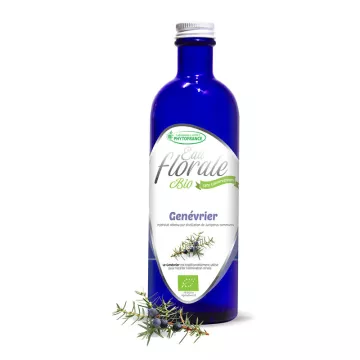
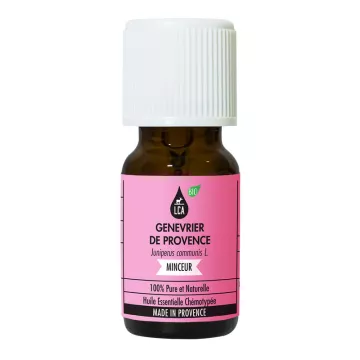
The juniper berry is the fruit of the common juniper (Juniperus communis, Cupressaceae), a resinous shrub found throughout the Northern Hemisphere. Used since ancient times in herbal medicine, it is available in aromatherapy (essential oil from berries or twigs), as a mother tincture, and in dietary supplements. Its main uses in health food stores focus on urinary comfort, drainage, and joint support. Explore our herbal medicine line.
What is a juniper berry?
Juniper berries are actually fleshy female cones—their color changes from green to purplish-blue when ripe (2 to 3 years). Their biochemical composition is rich in monoterpenes (α-pinene, sabinene, limonene 20–40%), sesquiterpenes (caryophyllene), flavonoids (amentoflavone, quercimeritrin), and proanthocyanidins. Juniper berry essential oil is distinct from the essential oil derived from twigs or wood—the berries produce a finer, more floral essential oil, while the twigs yield a more resinous and woody essential oil. In herbal medicine, the berries are used as dried fruit, a hydroalcoholic extract (mother tincture), or a standardized extract in capsules.
Juniper and Urinary Comfort?
The main traditional and ethnopharmacological use of juniper is to support urinary tract comfort.
- Documented diuretic property: monoterpenes (notably terpinene-4-ol) increase urine output by acting on glomerular filtration in the kidneys
- Antiseptic properties for the urinary tract: terpenic compounds exert an effect on urinary flora—traditionally used as an adjunctive support in cases of mild urinary discomfort
- HMPC (EMA): juniper is listed for its traditional use in supporting urinary tract comfort and increasing urine volume
- See our urinary comfort and urinary tract product line
- Confirmed renal insufficiency: contraindicated—the diuretic effect may aggravate severe kidney conditions
Juniper and joint comfort?
Juniper berry essential oil is one of the aromatherapeutic ingredients used to support joint and muscle comfort.
- Used in diluted massage (2–3% in vegetable oil) on areas of joint pain and muscle tension
- The monoterpenes in juniper essential oil penetrate quickly into the skin and subcutaneous tissues—providing a well-tolerated warming and circulatory effect
- Combine with camphorated rosemary essential oil or wintergreen essential oil for massages aimed at joint comfort—formulas available in our fluid extract phytotherapy line
- Always dilute to 2–5% in a vegetable oil (arnica, St. John’s wort)—never apply undiluted to the skin
Juniper and Digestive Comfort?
Juniper berries are also used in herbal medicine to support digestion.
- Traditional HMPC Use: supports normal digestive comfort; helps relieve bloating and post-meal sluggish digestion
- Mechanism: Terpenes stimulate the secretion of gastric and bile juices—supporting digestive motility
- Recommended forms: diluted mother tincture before meals, infusion of crushed berries (5–8 berries, 10 min), or standardized capsules
- See our digestive comfort and bowel regularity product line
How to use juniper berries?
The dosage forms available in herbal medicine and aromatherapy allow for use tailored to each specific condition.
- Infusion: 5–8 lightly crushed berries in 250 mL of simmering water, steep for 10 minutes—1 to 2 cups per day, after meals
- Mother tincture ( Juniperus communis MT): 50 to 100 drops diluted in a glass of water, twice daily before meals
- Capsules and standardized supplements: precise dosage of dry extract or fluid extract—check the monoterpene content
- Juniper berry essential oil (EO): for topical use only, diluted, or for diffusion—never take orally without a specialized aromatherapy prescription
Precautions and contraindications?
Juniper berries are well tolerated at recommended doses—but there are a few important contraindications.
- Pregnant women: absolute contraindication—juniper terpenes have a documented oxytocic effect (uterine contractions)
- Renal insufficiency: contraindicated—the diuretic effect may worsen impaired renal function
- Treatment duration limited to 4–6 weeks—prolonged use may irritate the renal mucosa
- Overdose: possible gastrointestinal and renal irritation—adhere to recommended doses
- Allergy to Cupressaceae (cypress, juniper, thuja): contraindicated due to possible cross-reactivity