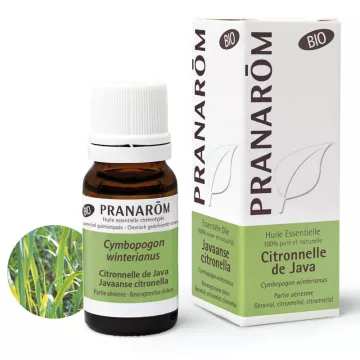
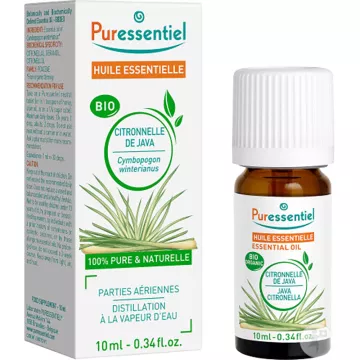
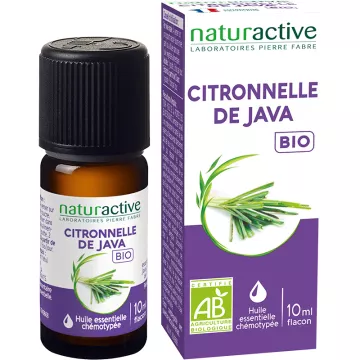
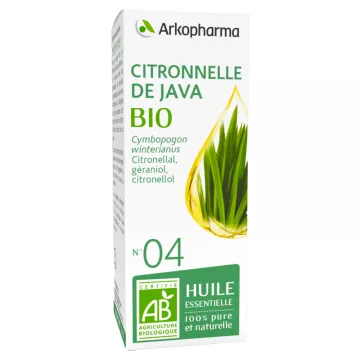
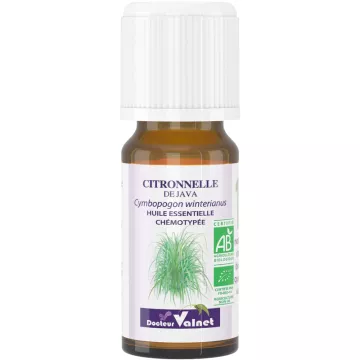
Java citronella (Cymbopogon winterianus) is a tropical grass native to the island of Java in Indonesia, now widely cultivated in Southeast Asia and Madagascar for its essential oil, which has a very distinctive chemical profile. Its composition is dominated by citronellal (35–50%) and geraniol (20–25%), with a trace amount of citronellol. This unique composition makes it the most effective natural repellent against tropical mosquitoes. See the overview page dedicated to citronella for a general overview of the varieties, or lemongrass, which has distinct digestive properties.
There are several varieties within the large Cymbopogon family:
For strict mosquito repellency, Java lemongrass is the top choice in the family.
Several repellent methods are effective. Homemade skin spray: 30 drops of Java lemongrass essential oil + 70 dropsof jojoba oil in a 50-ml spray bottle + alcohol or lemongrass hydrosol to dilute. Spray onto clothing and exposed areas every 2 to 3 hours. Room diffusion: 5 to 10 drops in an ultrasonic diffuser, for 20- to 30-minute sessions indoors. Citronella candles: for outdoor use (patio, balcony, garden) to create a protected perimeter. Supplement with mosquito nets and protective clothing in high-risk areas. For tropical areas with high health risks, see also specific repellent solutions.
Java citronella essential oil has several household uses:
Java citronella combines with other natural repellents for enhanced protection. Withlemon eucalyptus (rich in citronellal and PMD): the most scientifically documented repellent synergy. With rose geranium (rich in geraniol): a gentle topical supplement suitable for sensitive skin. With peppermint: added cooling effect. With tea tree: complementary antibacterial action on existing bites. Typical tropical travel blend: 10 drops of Java citronella + 10 drops of lemon eucalyptus + 5 drops of rose geranium in 100 ml of carrier oil—apply to exposed areas before coming into contact with mosquitoes.
Java citronella essential oil is dermo-caustic due to its aldehyde content (citronellal). Several precautions:
Store in an amber bottle away from light and heat.
If you get mosquito bites despite using repellent, several soothing treatments are effective. Apply aloe vera gel immediately for a cooling effect. Spike lavender (1 drop of undiluted oil applied directly to the bite for adults) is known to relieve itching. A cream containing Centella asiatica to reduce local inflammation. Anti-itch sticks containing ammonia or menthol, available at pharmacies. Oral antihistamines if the reaction is widespread. In tropical areas, watch for any fever or unusual rash in the days following exposure. Support the skin barrier with daily moisturizing.
Several criteria indicate optimal quality. Extraction method: steam distillation of dried leaves. AB Organic or Ecocert certification. The designation HECT (chemotyped) or HEBBD guarantees botanical and chemical traceability with a precise citronellal content (minimum 35–50% for Java). Clearly identified species: Cymbopogon winterianus, not Cymbopogon nardus (Ceylon is less concentrated). Packaged in amber bottles to protect from light. Geographic origin indicated (primarily Indonesia, Vietnam, and Madagascar). Round out your tropical travel kit with a suitable personal insect repellent, SPF 50 sunscreen, and a vitamin C supplement in preparation for your trip.