What is a brightening skincare product?
A brightening skincare product is a cosmetic formulated to enhance the skin’s radiance and even out its complexion. It typically combines active ingredients that target the complexion: stabilized vitamin C, alpha-hydroxy acids (AHAs), niacinamide, alpha-arbutin, or antioxidant plant extracts. It fits into a broader skincare routine and is ideal for skin that appears dull, uneven, or marked by superficial imperfections.
What are the benefits of a brightening treatment?
When used regularly as part of a consistent skincare routine, a brightening treatment can provide several visible cosmetic benefits:
- A more even complexion and a visual reduction in pigmentation irregularities.
- Helpsreduce the appearance of superficial pigment spots.
- Improved skin texture and grain.
- Helps reduce the appearance of fine lines caused by dehydration and signs of aging.
- Hydration and skin comfort, depending on the moisturizing ingredients in the formula.
What active ingredients are found in a brightening skincare product?
An effective brightening skincare product relies on well-researched cosmetic active ingredients:
- Topical vitamin C (stabilized ascorbic acid, derivatives such as ascorbyl glucoside): an antioxidant that supports radiance and helps minimize the appearance of blemishes.
- Alpha-hydroxy acids (AHAs): glycolic acid, lactic acid, and mandelic acid, which promote gentle surface renewal.
- Niacinamide (vitamin B3): a versatile active ingredient that supports skin comfort and improves the appearance of skin texture.
- Alpha-arbutin: a plant-derived active ingredient valued for its effect on the appearance of uneven skin tone.
- Hyaluronic acid: for hydration and comfort.
- Antioxidant plant extracts: green tea, grape, licorice, and aloe vera, which complement the formula’s overall effect.
Important:Hydroquinone is banned in cosmetics in Europe (Regulation (EC) No. 1223/2009) and must not be included in over-the-counter brightening skincare products. Its use is restricted to dermatological prescription only.
Who is the brightening treatment intended for?
The brightening treatment is primarily suitable for people with:
- A dull, tired complexion or one lacking radiance.
- Superficial post-breakout marks or minor skin tone irregularities.
- A desireto address the signs of aging on a daily basis, as a complement to an antioxidant skincare routine.
- Various skin types (dry, combination, oily, sensitive), provided you choose a formula suited to your skin’s sensitivity.
In cases of widespread, irregular, recently developed, or suspicious spots, a dermatological consultation is essential to rule out any skin lesions requiring medical attention.
How to use a brightening skincare product?
For best results:
- Gentlycleanse your face with a suitable cleanser.
- Apply the product to dry skin, avoiding the eye and lip areas.
- Follow with a moisturizer suited to your skin type.
- In the morning, be sure to finish with a broad-spectrum sunscreen with SPF 30 to 50: most brightening skincare products can cause skin photosensitivity.
Products containing AHAs or concentrated vitamin C are often best applied at night.
What are the side effects of a brightening product?
The most common side effects are:
- Mild irritation or redness, especially for sensitive skin or if active ingredients are used in excess.
- Skin photosensitivity: increased sensitivity to the sun with a heightened risk of paradoxical pigmentation if sunscreen is not applied every morning.
- A tightening sensation and mild flaking when first using the product, especially with AHAs.
- Rare but possibleallergic reactions to the formula’s ingredients.
To minimize these effects: introduce the product gradually, start with infrequent use, moisturize consistently, and avoid combining multiple exfoliating active ingredients on the same evening. A widespread reaction (severe redness, itching, swelling) requires discontinuing the product. A systemic reaction (facial swelling, difficulty breathing) requires calling 15 or 112.
What is the ideal frequency for using a brightening skincare product?
The frequency depends on the concentration of the active ingredients and individual skin tolerance. For gentle formulas (vitamin C derivatives, niacinamide, alpha-arbutin), daily or twice-daily application is generally well tolerated. For products containing AHAs or highly concentrated vitamin C, start with 2 to 3 applications per week in the evening, then adjust based on tolerance.
Always monitor your skin’s response after 2 to 4 weeks before increasing the frequency or adding another active ingredient.
How do I choose the right brightening skincare product for my skin?
Here are some criteria to consider:
- Identify your skin type (dry, oily, combination, sensitive) and any specific concerns (dull complexion, blemishes, signs of aging).
- Check the listed concentrations and the order of the active ingredients in the INCI list.
- Opt for formulas that do not list denatured alcohol at the beginning of the INCI list and are free of fragrances that can irritate sensitive skin.
- For highly reactive skin, choose dermatologically tested or hypoallergenic formulas (which means a reduced risk of allergic reactions, not a complete absence of reactions).
- If in doubt, ask your pharmacist or dermatologist for advice.
Brightening skincare: what other products should you pair it with?
A brightening treatment fits naturally into a balanced skincare routine:
- Gentle cleansers to prepare the skin.
- Hydrating and antioxidant serums to complement the routine.
- Moisturizers to lock in the benefits.
- Applysunscreen every morning.
Avoid combining the following on the same night: multiple exfoliating or irritating active ingredients (AHA + BHA + retinol + pure vitamin C), which may weaken the skin barrier. Instead, alternate active ingredients from one night to the next.
What results can you expect, and how long will it take?
Results vary depending on the formulas, consistency of use, and skin type. The first visible effects generally appear:
- Onthe overall radiance and luminosity of the complexion: in 2 to 4 weeks.
- On the appearance of superficial pigmentation marks: in 4 to 8 weeks, or even longer depending on their depth.
- On skin texture and grain: in 4 to 6 weeks.
Results for deeper or long-standing dark spots are significantly more limited with cosmetic products: a dermatologist’s consultation can then help guide you toward appropriate treatments.
Is the brightening treatment suitable for men?
Yes, the brightening treatment is suitable for both men and women. Men’s skin, which is often thicker and has more regulated sebum production, can benefit from a balanced routine that includes gentle cleansing, targeted brightening care, moisturizing, and sun protection. For men who shave, it’s best to apply the product away from shaving times (in the evening, for example), as the skin is more sensitive then.
Can a brightening skincare product be used during pregnancy?
Whether a brightening treatment is safe during pregnancy depends entirely on its ingredients:
- Retinoids (cosmetic retinol, retinaldehyde) and vitamin A derivatives should be avoided during pregnancy and breastfeeding (oral retinoids are teratogenic; caution is advised with topical forms).
- AHAs and BHAs in limited cosmetic concentrations and when applied to small areas are generally considered to pose a limited risk, but medical advice is recommended.
- Topical vitamin C, niacinamide, and hyaluronic acid are generally safe.
- Hydroquinone is banned in European cosmetics and strongly discouraged during pregnancy.
- Certain essential oils found in some formulations should be avoided during pregnancy.
Melasma may appear or worsen during this period: strict sun protection is more important than any cosmetic treatment. Always consult your doctor or pharmacist before introducing a new skincare product during pregnancy or while breastfeeding.
How can you incorporate a brightening product into an anti-aging routine?
For a consistent anti-aging routine:
- Cleanse your skin morning and night with a gentle cleanser.
- In the morning: antioxidant serum (vitamin C, niacinamide), moisturizer, sunscreen with SPF 30 to 50.
- In the evening: Apply the brightening treatment (alternating with another active ingredient if using AHA or retinol) to dry skin.
- Seal in with a nourishing cream rich in peptides, hyaluronic acid, or ceramides.
- Maintain a healthy lifestyle overall: sleep, a balanced diet, and stress management.
What is the difference between a brightening treatment and an exfoliant?
A brightening treatment primarily targets the overall appearance and evenness of the complexion through antioxidants and ingredients that minimize the appearance of marks (vitamin C, niacinamide, alpha-arbutin, plant extracts). It may also contain AHAs.
An exfoliant’s main purpose is to remove dead skin cells from the outermost layer of the skin that have reached the end of their life cycle. It can be chemical (AHAs, BHAs) or mechanical (scrub). The two types of treatments are complementary but are used at different frequencies: the exfoliant as a short-term treatment (1 to 3 times a week), and the brightening treatment as part of a more daily routine tailored to your skin’s tolerance.
What products complement a brightening treatment?
To maximize the benefits of a brightening regimen:
- A gentle cleanser to prepare the skin without causing irritation.
- A radiance-boosting serum to apply before the treatment for an extra boost.
- A nourishing night cream to support skin comfort while you sleep.
- An occasionalradiance mask, once or twice a week, for a sensory radiance boost.
- SPF 30 to 50 sunscreen—essential for daily use.
Are there any brightening products for the eye area?
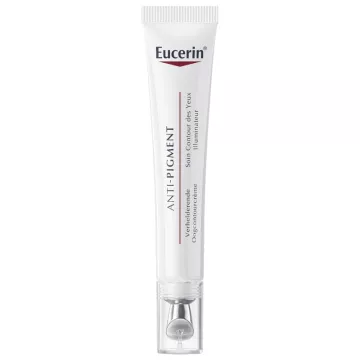
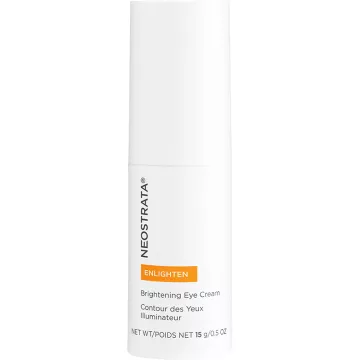
Yes, there are eye contour treatments designed to brighten, formulated with active ingredients specifically tailored to this very thin and sensitive area: caffeine for its sensory decongesting effect, cosmetic peptides for skin comfort, gentle vitamin C for a luminous appearance, and hyaluronic acid for hydration.
Apply with your fingertip (gently patting) while avoiding the outer edge of the eyelid, morning and night depending on the formula. Do not use a standard facial brightening product on the under-eye area: the area is more sensitive, and the concentrations of active ingredients are often unsuitable.