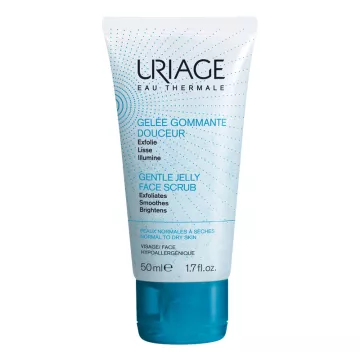
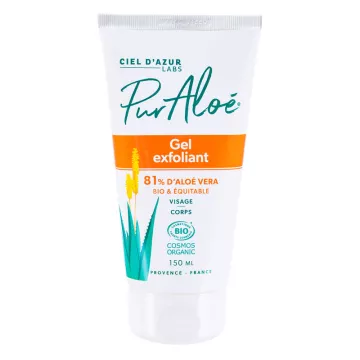
What makes a scrub truly gentle?
The term “gentle exfoliator” is widely used in cosmetics, sometimes incorrectly. To deserve this label, a formula must meet several specific criteria: very fine particles with rounded edges (no crushed seeds or abrasive ground shells), cosmetic active ingredients at low concentrations, a streamlined INCI list, and the absence of major fragrance allergens. Gentleness isn’t visible in the jar—it’s measured by the ingredients and the tolerance observed during use. A truly gentle exfoliant respects the skin barrier and is suitable for skin types that are irritated by conventional exfoliants. It’s also a matter of technique: even the gentlest formula can become harsh if massaged for too long or too vigorously.
Which active ingredients promote gentle exfoliation?
Four families of active ingredients dominate truly gentle scrubs, to be combined with a routine that respects skin tolerance:
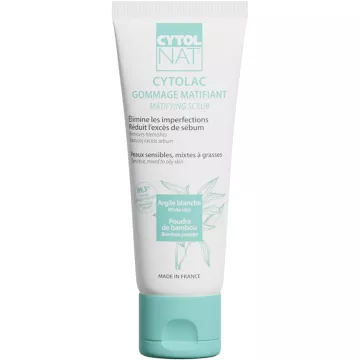
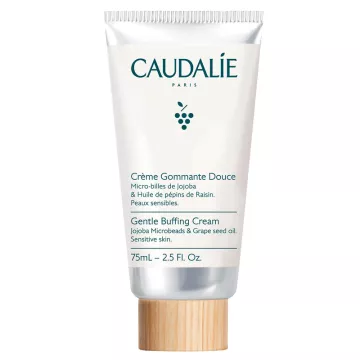
- Very fine particles: bamboo powder, coconut powder, colloidal oatmeal, biodegradable jojoba microbeads;
- PHAs (polyhydroxy acids): gluconolactone, lactobionic acid—molecules larger than traditional AHAs, gradual penetration, optimal tolerance;
- Plant enzymes: papain (papaya), bromelain (pineapple), keratinase—these “digest” the bonds between dead cells without abrasion;
- Mild, low-concentrationAHAs: 5% lactic acid, 5–10% mandelic acid — gentler alternatives to glycolic acid for sensitive skin;
- Combined with soothing ingredients: aloe vera, bisabolol, allantoin, centella;
- Free of fragrance, drying alcohol, and sensitizing preservatives (particularly methylisothiazolinone).
Who is this type of treatment particularly suited for?
Several skin types benefit particularly from a gentle exfoliant:
- Sensitive or reactive skin that reddens easily;
- Thin and mature skin that has lost its resilience;
- People new to exfoliation who need to gradually acclimate their skin;
- Skin in the post-treatment phase (after a medium peel, gentle laser treatment, or skin radiation therapy) as directed by a doctor;
- Pregnant or breastfeeding women who wish to maintain a gentle exfoliation routine;
- People who have experienced adverse reactions to conventional exfoliants;
- Combination skin with dry or dehydrated areas;
- Individuals with identified hypoallergenic skin types.
How can you tell if a formula is truly gentle?
Here are some practical tips to keep in mind when shopping:
- A short INCI list (ideally fewer than 15 ingredients);
- Labeled “fragrance-free” or “allergen-free fragrance”;
- No methylisothiazolinone, formaldehyde, or formaldehyde-releasing agents, and no denatured alcohol at the beginning of the list;
- Exfoliating particles: opt for “bamboo,” “jojoba beads,” or “rice powder” rather than “walnut shell powder” or “apricot kernel powder” (crushed shells are harsher);
- Acids: PHA, low-concentration lactic acid, and low-concentration mandelic acid rather than high-concentration glycolic acid;
- Clinical claims: “tested under dermatological supervision,” “hypoallergenic,” “suitable for sensitive skin”—while not strict certifications, these claims indicate the manufacturer’s approach;
- Presence ofidentifiable soothing ingredients in the middle of the INCI list (panthenol, bisabolol, allantoin, aloe);
- Test on the inner elbow 48 hours before the first application to the face.
What steps should accompany gentle exfoliation?
The technique is half the battle when it comes to gentleness:
- Apply to clean, damp skin—never dry skin;
- Use a small amount (pea-sized for the face, hazelnut-sized for the neck and décolleté);
- Gentlymassage with your fingertips in circular motions without applying pressure;
- Total time: 30 seconds maximum for a gentle exfoliator with particles—no longer;
- Completely avoid the eye and lip areas;
- Rinse withlukewarm water—never scalding hot;
- Gently pat dry with a clean towel;
- Immediately apply a soothing treatment containingaloe vera or centella asiatica;
- Save this treatment for the evening; never use it right before sun exposure.
Can you make a gentle homemade exfoliator?
Yes, as long as you choose the right ingredients and test it first:
- Ground oatmeal + honey + plain yogurt: very gentle, suitable for sensitive facial skin;
- Fine rice powder + milk + honey: an Asian tradition, ideal for delicate skin;
- Fine sugar + sweet almond oil + honey: for the body, gentler than salt;
- Fine coffee grounds + vegetable oil: for more resilient areas of the body (thighs, arms); avoid using on the face;
- Avoid: baking soda (alkaline pH ≈ 9, which permanently disrupts the skin’s pH balance of ≈ 5.5), crushed eggshells, coarse salt (too abrasive), undiluted essential oils (allergenic);
- Always test on the inner elbow for 48 hours before applying to the face.
When should you avoid it, even in its mildest form?
There are several situations that require you to stop exfoliating entirely, even with the gentlest methods:
- Skin experiencing a flare-up of eczema, psoriasis, seborrheic dermatitis, or active rosacea;
- Open wounds, fresh scabs, or areas where a pimple has been squeezed;
- Sunburn or skin recently exposed to intense UV rays;
- Following a dermatological procedure without medical approval;
- While taking oral isotretinoin (Roaccutane® and generics);
- Recent application of prescribed topical retinoids;
- Previously observed intolerance to exfoliants (known to be sensitive skin);
- Appearance of signs of skin reactivity (redness, tingling) to products previously well tolerated;
- Acute phase of stress or fatigue with a compromised skin barrier.
How should you continue your routine afterward?
Exfoliation is just a preparatory step:
- Apply a hydrating serum with hyaluronic acid to skin that is still damp;
- A cream or emulsion rich in ceramides, glycerin, and niacinamide;
- The following morning: strictly use SPF 30 to 50 sunscreen (the skin is more vulnerable to UV rays for 4 to 6 days);
- Do not follow up with a potent active ingredient that same evening (retinol, strong AHAs, concentrated vitamin C);
- The next day: a soothing, moisturizing treatment with no new ingredients;
- Space out the next session by at least 4 to 7 days, depending on your skin type;
- Gradual improvement inskin radiance after 3 to 4 weeks of regular use.