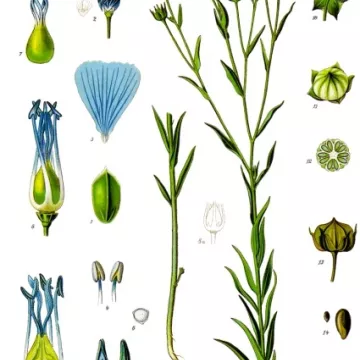
Flaxseeds (Linum usitatissimum) are small brown or golden seeds derived from cultivated flax, a plant that has been used for thousands of years. Rich in fiber and omega-3 fatty acids and packed with nutrients, flaxseeds are a versatile dietary supplement consumed in various forms—whole, ground, or as flaxseed oil.
What is the nutritional profile of flaxseeds?
Flaxseeds are characterized by a remarkable nutritional profile:
- Omega-3: abundant essential fatty acids
- Fiber: a significant amount of both soluble and insoluble fiber
- Vitamin E: naturally present
- Lignans: natural phytochemicals
- Plant-based protein: a source of plant-based protein
The high nutritional density of flaxseeds makes them a valuablenutritional supplement for varied diets.
Where does flax come from, and how is it grown?
Linum usitatissimum is grown worldwide in temperate climates: Canada, France, China, India, and Belgium. It is a herbaceous shrub with delicate blue flowers that produces capsules containing seeds. Harvesting is automated, followed by separation of the seeds from their husks, drying, and cleaning. Optimal growing conditions include temperate climates and well-drained soils.
What are the varieties and forms of flaxseed?
Flaxseeds are available in distinct commercial forms:
- Whole: complete seeds with intact hulls, suitable for long-term storage
- Ground: finely ground, optimized nutrient absorption, easy to incorporate into recipes
- Flaxseed oil: cold-pressed, omega-3 concentrate, for use in cold dishes
How can you incorporate flaxseeds in their different forms into your diet?
- Whole: sprinkle on salads, yogurt, and smoothies; adds a crunchy texture
- Ground: Mix into dishes and beverages; optimized nutrient absorption
- Flaxseed oil: use in cold dishes (dressings, salads), easy to measure, neutral taste
- Infusion: steep in hot water for a mild drink; has a mucilaginous texture
Practical tip: Ground seeds are more easily absorbed than whole ones, as the seed coat is difficult to digest. Grinding them yourself before eating maximizes their nutritional value.
What is the flavor and culinary profile of flaxseeds?
Flaxseeds have a slightly herbaceous flavor with a subtle nutty note. They have a crunchy texture when whole and a softer texture when ground. Culinary uses: green salads and fruit salads, cereals (granola, muesli, porridge), yogurt, smoothies, breads and cookies (baked goods), and salad dressings. Flaxseed oil: cold salads, yogurt sauces, accompaniment to hot dishes (added after cooking).
How should flaxseeds and flaxseed oil be stored?
- Whole seeds: room temperature, in a dry, airtight container; shelf life: 6–12 months
- Ground seeds: refrigeration or freezing recommended; shelf life 3–6 months; prevent rapid rancidity
- Flaxseed oil: Must be refrigerated after opening; avoid heat and light; shelf life: 2–3 months
Can flaxseeds be combined with other foods or supplements?
Flaxseeds pair well with:
- Other seeds: chia, pumpkin, for a balanced omega-6 intake
- Other fiber sources: psyllium, inulin—a complementary fiber blend
- Nuts: walnuts, almonds, raisins—versatile nutrients
- Cooking spices: turmeric, ginger—convenient for cooking
How much flaxseed should you consume daily?
Common recommendation: 1–2 tablespoons of ground seeds per day, adjusted according to personal tolerance. Flaxseed oil: 1 teaspoon daily is sufficient. Important: consume with adequate water and incorporate gradually into your diet.
What commercial forms of flaxseeds are available?
- Whole raw seeds: available year-round, long shelf life
- Packaged ground seeds: convenience, ready to use, store refrigerated
- Flaxseed oil: stored in dark glass bottles in the refrigerator, optimal bioavailability
- Flaxseed powder + additives: a blend of flaxseeds and other fibers available on the market
Are there any practical considerations when consuming flaxseeds?
- Gradual increase: Incorporate gradually to allow the digestive system to adjust
- Water intake: Flax fibers require adequate hydration
- Oil rancidity: Flaxseed oil oxidizes quickly; refrigeration and prompt use are essential
- Freshly ground: Grinding the seeds yourself before consumption preserves nutrients better than pre-packaged versions