What is a facial scrub?
A facial scrub is a treatment that removes dead skin cells accumulated on the surface of the epidermis to reveal smoother, more even, and more radiant skin. Unlike body scrubs, which are applied to thicker, more resilient skin, facial scrubs require specialized formulas, precise techniques, and careful frequency. It is one of the most commonly misapplied treatments: being too harsh creates more problems than it solves. When done correctly, it improves the skin’s ability to absorb subsequent treatments (serums, creams), refines the skin’s texture, and supports cell renewal.
Why does facial skin require specialized care?
Theskin’s anatomy on the face differs significantly from that of the body:
- The facial epidermis is 3 to 4 times thinner than that of the back or arms (50–80 μm vs. 200–300 μm);
- The eyelids are the thinnest area of the body (barely 0.5 mm)—a traditional exfoliator is strictly contraindicated there;
- The density of sebaceous glands and pores is significantly higher in the T-zone (forehead, nose, chin) than on the cheeks;
- The face is constantly exposed to environmental stressors (UV rays, pollution, weather) without the protection of clothing;
- Microcirculation is more dense there, which explains why redness appears so easily.
All these characteristics require products formulated specifically for the face—using a body scrub on the face almost always causes irritation and micro-injuries.
Mechanical or chemical: which should you choose for the face?
There are three types of exfoliation, each with its own recommended uses:
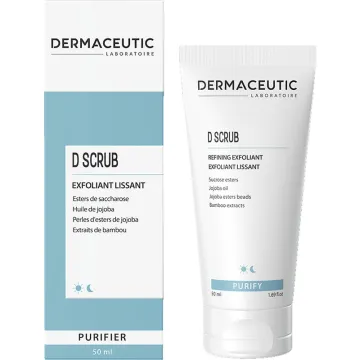
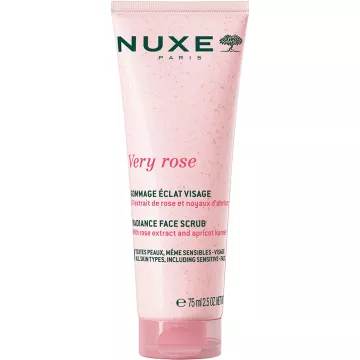
- Mechanical exfoliation: fine particles (biodegradable microbeads, bamboo powder, coconut powder, ground fruit pits). Immediate action, easy to control, but requires very gentle application. Avoid on reactive or inflamed skin;
- Gentle chemical exfoliation: low-concentration cosmetic acids such as AHA (glycolic, lactic), BHA (salicylic), or PHA (gluconolactone). Enzymatic action without scrubbing, better suited for sensitive skin and delicate areas;
- Enzymatic exfoliation: papaya (papain) or pineapple (bromelain) enzymes that “digest” the bonds between dead skin cells. Very gentle, ideal for the most fragile skin;
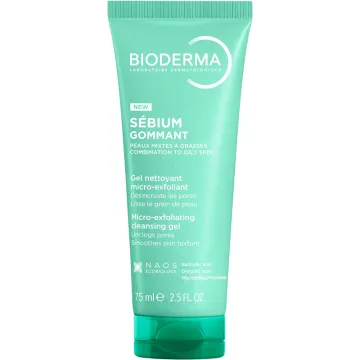
- Hybrid acid scrubs combine very fine particles with low-concentration AHAs for a dual yet controlled action.
For most faces, gentle chemical or enzymatic exfoliation offers the best results without risk.
How can you tailor your exfoliation to different areas of the face?
The face should be treated in zones, not as a single uniform area:
- T-zone (forehead, nose, chin): oilier, with more visible pores—tolerates more intense exfoliation, particularly with BHAs (salicylic acid), which also help with blackheads;
- Cheeks: a thinner, often drier area—opt for gentle AHAs or PHAs;
- Eye area: Do not exfoliate this area; the skin is extremely thin here, so treat it with the utmost care;
- Sides of the nose and nasolabial folds: areas where sebum accumulates; treat these with a cotton swab dipped in a gentle exfoliant for targeted care;
- Neck and décolletage: Skin as thin as that on the face; include these areas in your routine with the same precautions;
- Around the lips: occasional exfoliation with fine sugar and vegetable oil using very gentle motions.
How often should you exfoliate based on your skin type?
There’s no one-size-fits-all rule: the frequency depends on your skin type:
- Normal or combination skin: 1 to 2 times a week;
- Oily or blemish-prone skin: 2 to 3 times a week; use BHA as a first-line treatment to help with mildacne;
- Dry skin: once a week, using a mild AHA or PHA;
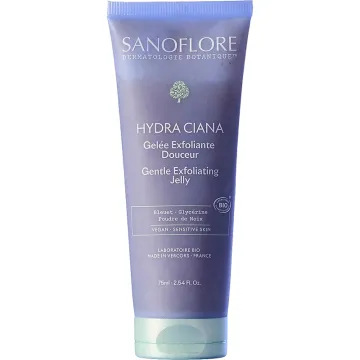
- Sensitive or reactive skin: once every 10–15 days; enzymatic exfoliation is preferred;
- Mature skin: 1 to 2 times a week; AHAs are recommended to support cell renewal, which slows with age;
- In winter: reduce the frequency, as the skin is more fragile due to the cold and indoor heating;
- In summer: Exfoliate in the evening; never right before sun exposure.
What steps should you take to avoid damaging your skin?
The application technique determines the entire result:
- Always apply to skin that has been cleansed and is damp (never dry);
- Take a small amount (about the size of a pea);
- Apply with your fingertips, not with a sponge or brush;
- Use very gentle circular motions, without pressure, moving from the center of the face outward;
- Focus slightly on the T-zone, and lightly touch the cheeks;
- Total time: 30 seconds to 1 minute maximum;
- Rinse with lukewarm water (never scalding hot), then pat dry;
- Immediately apply a soothing treatment (containing aloe vera, centella asiatica, or panthenol);
- Apply SPF 30 to 50 sunscreen the next morning without fail.
How can you incorporate this into your daily routine?
Exfoliation is part of a consistent skincare sequence:
- Makeup removal and gentle cleansing;
- A suitable exfoliation (1 to 3 times a week, depending on your skin type);
- Optional hydrating or purifying mask (once a week);
- Targeted serum (vitamin C in the morning, niacinamide or hyaluronic acid in the evening);
- Moisturizer suited to your skin type;
- Daily SPF 30–50sunscreen in the morning;
- Avoid: combining exfoliation + retinol + AHA in the same routine—this is guaranteed to overload and irritate your skin. Choose one potent active ingredient per night, alternating between them.
What are the signs of over-exfoliation?
Over-exfoliation is the most common mistake—here are the signs:
- Persistent redness after applying your usual skincare products;
- A burning or stinging sensation when cleansing;
- Skin that “shines” abnormally and feels tight;
- Unexpected appearance of fine flakes;
- Increased sensitivity to products that were previously well-tolerated;
- Worsening of blemishes instead of their disappearance;
- Easier sunburn, accelerated photoaging;
- Weakening of the skin barrier, visible dehydration.
Action Plan: Suspend all exfoliation for 2 to 3 weeks, simplify your skincare routine, apply restorative products rich in ceramides and panthenol, and strictly use sun protection. The skin generally recovers in 3 to 4 weeks, andthe complexion’s radiance returns with a more moderateskincare routine. Note: Avoid using homemade baking soda recipes on the face (alkaline pH ≈ 9, which permanently disrupts the skin’s pH balance of ≈ 5.5).