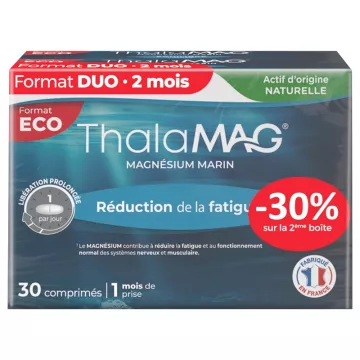
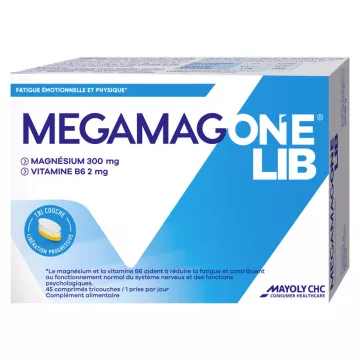
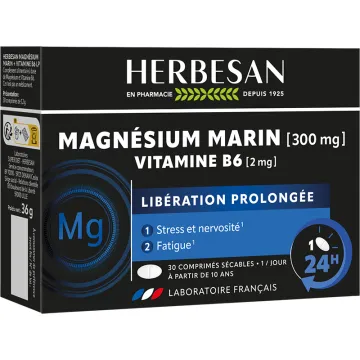
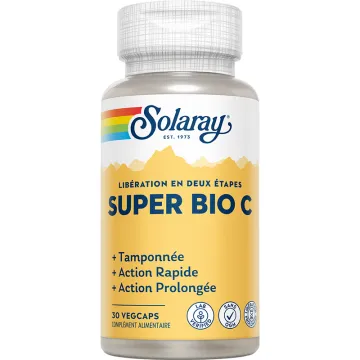
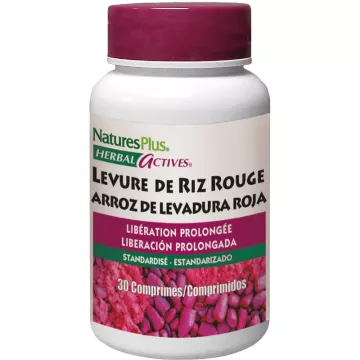
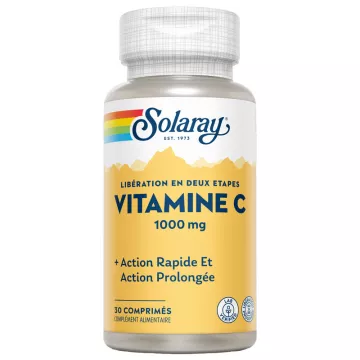
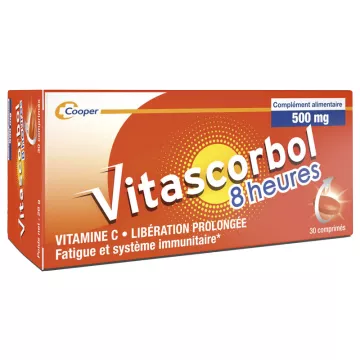
Extended-release (ER) is a pharmaceutical technology that allows an active ingredient to be released gradually over several hours rather than all at once. In health food stores, it is used in many dietary supplements—such as extended-release melatonin, extended-release vitamin C, and extended-release magnesium —to maintain a stable plasma concentration and reduce the number of daily doses.
What is extended-release?
Extended-release technology relies on a special matrix or coating that controls the rate at which the active ingredient dissolves. Upon contact with digestive fluids, this physical barrier gradually breaks down, releasing the contents over 8 to 24 hours, depending on the formulation. This is distinct from immediate-release (IR) forms, which release the entire active ingredient within 1 to 2 hours. Other variants exist: delayed-release (LR, gastro-resistant), modified-release (LM), and pulsatile-release. In dietary supplements, the abbreviations LP, SR (Slow Release), XR (Extended Release), or ER refer to the same concept depending on the brand.
What are the benefits for dietary supplements?
The LP form offers concrete benefits for dietary supplements taken daily.
- Stable plasma levels: prevents concentration spikes followed by dips—particularly useful for vitamin C (rapid saturation with a high single dose) and magnesium
- Fewer doses: 1 dose per day instead of 2 to 3—better adherence during long-term treatment
- Better digestive tolerance: the gradual release of LP magnesium reduces the laxative effects commonly associated with high-dose LI forms
- Nighttime action: sustained-release (LP) melatonin provides coverage throughout the night—useful for nighttime awakenings, unlike the immediate-release (LI) form, which aids in falling asleep
- Omega-3s in enteric-coated capsules (released in the intestine) reduce the fishy taste and belching
Which supplements are available in sustained-release (LP) formulas?
Several nutraceutical ingredients benefit significantly from the sustained-release (LP) form.
- LP Vitamin C: Intestinal absorption of vitamin C becomes saturated at doses of 200 mg or higher—the LP form is released gradually over 6–8 hours, increasing total absorption compared to a single high dose
- LP Magnesium: Slow release reduces accelerated bowel transit and loose stools—the preferred form for long-term treatments at 300–400 mg/day
- LP Melatonin: release over 7–8 hours to cover the entire sleep cycle—vs. fast-acting LI for falling asleep
- Gastro-resistantprobiotics: an enteric coating protects the bacteria from stomach acid until they are released in the intestine
Extended-release vs. immediate-release: how to choose?
The choice between the two forms depends on the purpose of use.
- Difficulty falling asleep → fast-acting melatonin (takes effect in 15–30 minutes)
- Waking up during the night → extended-release (ER) melatonin (all-night coverage)
- Single dose of vitamin C < 200 mg → LI is sufficient and more cost-effective
- Vitamin C regimen > 500 mg/day → sustained-release to maximize fractional absorption
- Well-tolerated magnesium → LI forms (glycinate, malate); magnesium with digestive issues → LP preferred
- Probiotics sensitive to stomach acid → always choose enteric-coated formulations
Practical tips on sustained-release (LP) forms?
A few essential rules for proper use.
- Never crush, break, or chew sustained-release (LP) tablets—breaking the matrix immediately releases the entire active ingredient
- Take with a meal unless otherwise directed—food slows digestion and promotes gradual dissolution
- Check the tablet for damage: a broken LP tablet must be discarded; do not take it in two parts
- Some sustained-release tablets leave a visible residue in the stool (tablet shadow)—this is normal; the active ingredient has been successfully released
- LP formulations are generally more expensive—compare the cost per mg of active ingredient absorbed to assess the true value for money