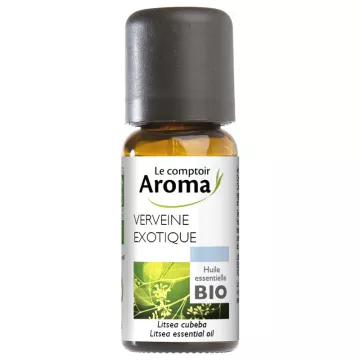
Exotic verbena (Aloysia citrodora, syn. Lippia citriodora) is the same species as lemon verbena, which is consumed as an herbal tea—but in its essential oil form, it has a very different profile from the mild herbal tea.
The essential oil is extracted by distilling the leaves and has a citral (neral + geranial) concentration of 30–40%, which is responsible for its potent aroma and biological activity. This concentration makes it much more potent than the herbal tea—and requires precautions that the herbal tea does not, particularly regarding photosensitization.
The essential oil ofAloysia citrodora belongs to the terpene aldehyde family—a powerful, active profile that must be treated with respect.
Its profile is similar to that of lemon balm (which is also citral-dominant)—but it is much less expensive than lemon balm and less prone to adulteration. It also shares similarities with lemongrass and lemon eucalyptus in its scent, but its use in emotional aromatherapy is gentler.
This is the most accessible and best-tolerated use of this essential oil—its lemony scent is one of the most pleasant in the aromatherapy catalog.
Photosensitization is the first thing to be aware of—and it’s non-negotiable.
Citral and certain minor constituents ofA. citrodora essential oil are photosensitizing: when applied to the skin, they can cause skin reactions (sunburn, pigmentation spots) if exposed to sunlight within 12 to 24 hours after application. This limitation clearly distinguishes it from its herbal tea form, which is completely harmless in this regard.
Both contain citral, but have very different profiles and price points.
Lemon balm (Melissa officinalis) costs 10 to 20 times more than exotic verbena—because it’s one of the most expensive essential oils on the market. It has a slightly different pharmacological profile (phenolic acids, different aldehyde content) and a stronger body of clinical evidence regarding cold sores. Exotic verbena is an attractive, cost-effective alternative for diffusion and relaxation, but it is not a therapeutic substitute for lemon balm for documented antiviral skin applications.