Enzymes are biological proteins that catalyze chemical reactions in the body—without them, vital processes such as digestion, energy metabolism, and cell repair could not occur at rates compatible with life. In the health and beauty sector, digestive enzymes as dietary supplements and active enzymes in cosmetics represent two distinct categories with well-documented applications. Explore our line of digestive enzymes.
What is an enzyme, and how does it work?
An enzyme is a protein whose three-dimensional structure creates an active site specific to a given substrate—a “lock-and-key” recognition mechanism. The enzyme binds to its substrate, lowers the activation energy of the reaction, and is released intact once the reaction is complete—allowing it to catalyze thousands of reactions per second. Each enzyme has its own optimal pH and temperature conditions: human digestive enzymes function at physiological pH and temperature (37°C, pH 2–8 depending on the digestive tract). Coenzyme Q10 is a non-protein enzymatic cofactor that plays a central role in mitochondrial energy production.
Digestive Enzymes: What Do They Do?
Digestive enzymes break down macronutrients into absorbable molecules throughout the digestive tract.
- Amylases (salivary and pancreatic): hydrolyze starch into maltose and glucose—the first enzymes to become active in the mouth
- Lipases (pancreatic and gastric): break down triglycerides into fatty acids and glycerol—essential for the absorption of fats and fat-soluble vitamins (A, D, E, K)
- Proteases (gastric pepsin, pancreatic trypsin and chymotrypsin): break down proteins into amino acids—necessary for protein synthesis and immune function
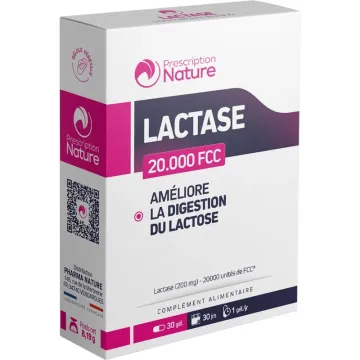
- Lactase: hydrolyzes lactose into galactose and glucose—a deficiency causes lactose intolerance
- Alpha-galactosidase: breaks down the oligosaccharides in legumes that cause bloating
Digestive Enzyme Supplements: When to Use Them?
Digestive enzyme supplements support digestion in several well-documented situations.
- Partial exocrine pancreatic insufficiency: insufficient production of amylases, lipases, and proteases—bloating, fatty stools, slow digestion
- Lactose intolerance: exogenous lactase supplements to enable lactose digestion without digestive symptoms
- Meals high in legumes: alpha-galactosidase to reduce postprandial flatulence
- Aging: production of digestive enzymes decreases with age—multi-enzyme formulas support digestive comfort in older adults
- Combine with probiotics and prebiotics as part of a comprehensive approach to gut health
- See our complete line of products for digestive disorders
Bromelain and papain: leading plant enzymes?
Two plant enzymes are well-established in dietary supplementation.
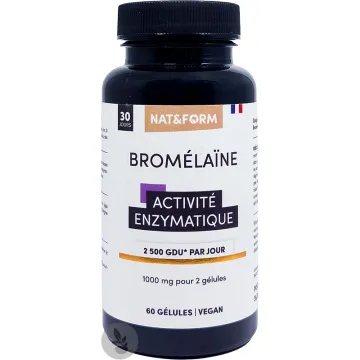
- Bromelain (extracted from pineapple): a plant-based protease with fibrinolytic properties—supports joint comfort and recovery—taken between meals for systemic action
- Papain (extracted from papaya): a digestive protease—aids in the breakdown of dietary proteins, taken with meals to support protein digestion
- These two plant enzymes are used according to timing: with meals for digestion, on an empty stomach for systemic action
- Allergy to pineapple or papaya: a contraindication for concentrated forms of bromelain and papain
Enzymes in Cosmetics: What Are Their Applications?
Certain enzymes are used in dermo-cosmetics for their exfoliating and skin-renewing properties.
- Topical papain: a gentle keratolytic enzyme—enzymatic exfoliation of dead skin cells, an alternative to AHAs for sensitive skin
- Topical bromelain: exfoliating and smoothing effect on skin texture; found in certain masks and serums
- Subtilisin (bacterial enzyme): biological exfoliation in gentle dermatological skincare products
- Advantage of cosmetic enzymes over AHAs/BHAs: no photosensitization—no need for SPF 30 after use (unlike acids)
- Sensitive and atopic skin: Exfoliating enzymes are better tolerated than chemical exfoliants with an acidic pH
How to choose enzyme supplements?
The quality of an enzyme supplement depends on the standardization and stability of the enzymes.
- Guaranteed enzymatic activity: expressed in units of activity (FCC, USP)—not in milligrams of total protein, which does not indicate activity
- Gastric stability: Pancreatic enzymes are sensitive to gastric acidity—opt for enteric-coated formulations for enzymes intended for the small intestine
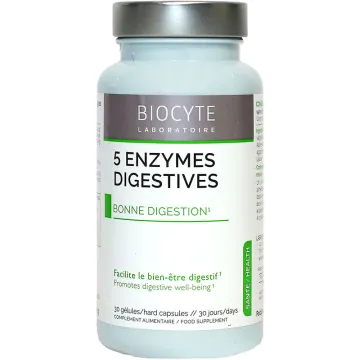
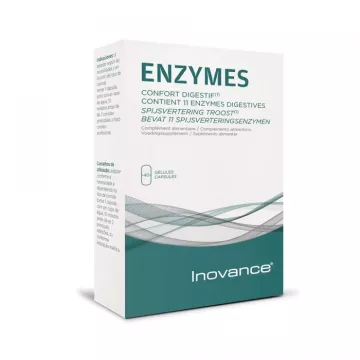
- Multi-enzyme formula: amylase + lipase + protease + lactase — complete coverage of the three macronutrients
- Source: enzymes of plant origin (Aspergillus, papaya, pineapple) or animal origin (porcine pancreatin)—plant-based forms are the only ones suitable for vegans
- Take digestive enzymes at the start of a meal for maximum effectiveness on the food you eat