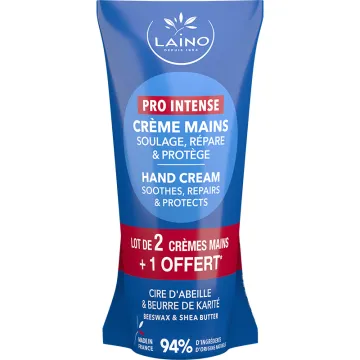
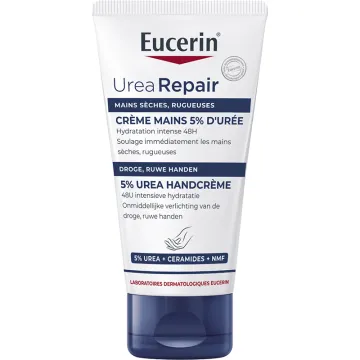
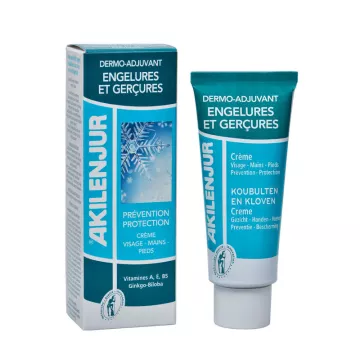
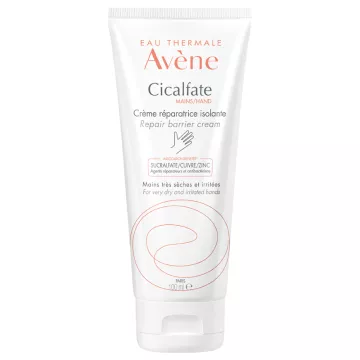
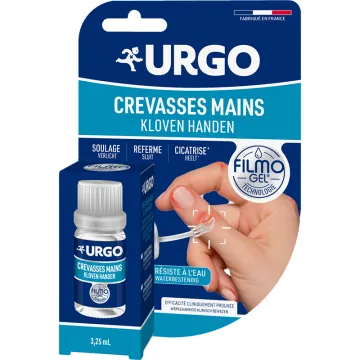
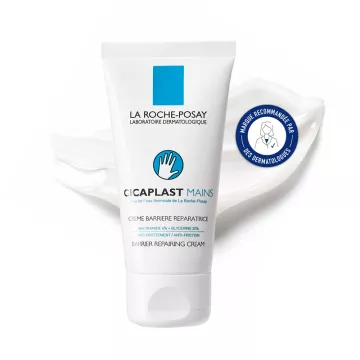
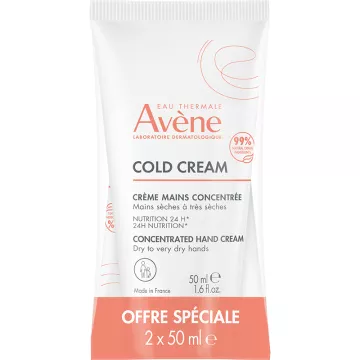
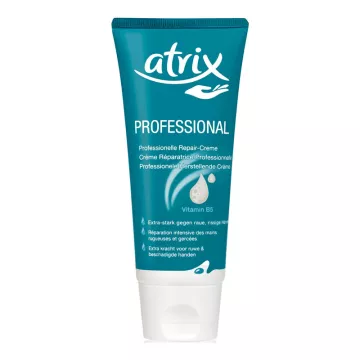
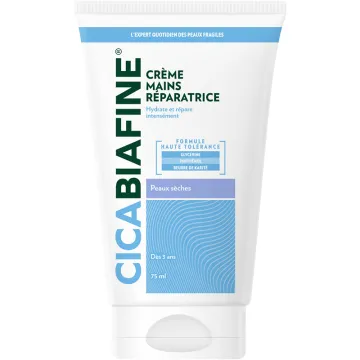
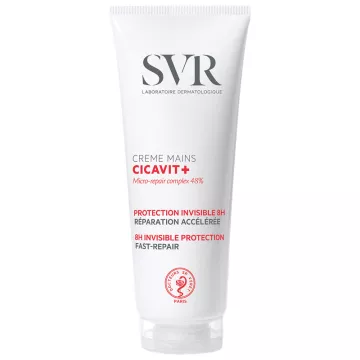
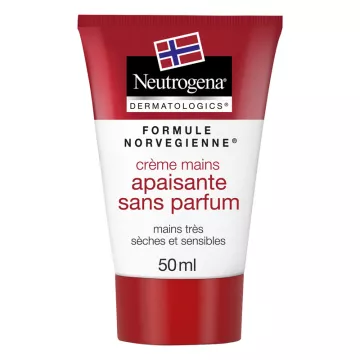
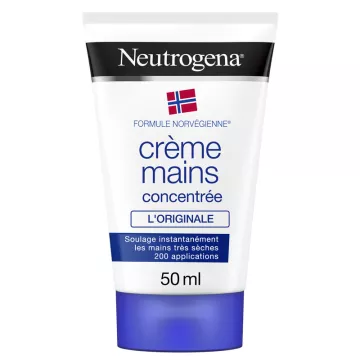
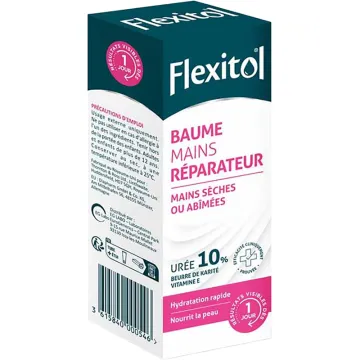
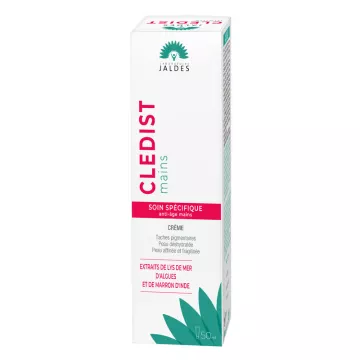
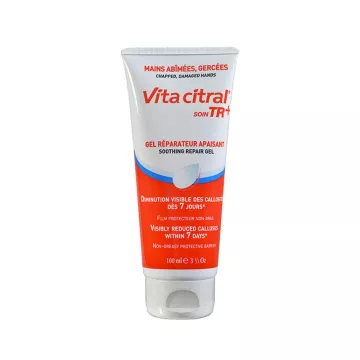
Damaged hands are most often the result of a combination of environmental and behavioral factors. Repeated exposure to water, household products, detergents, and the dry winter cold are among the main causes. Frequent hand washing, which is essential forhand hygiene, can paradoxically weaken the skin’s hydrolipidic film and lead to dryness, tightness, and even cracks. Added to this are certain internal factors: atopic skin, naturally thin skin, general dehydration, or occupational exposure (in the healthcare, hairdressing, culinary, and construction industries).
To soothe damaged hands, it’s best to choose creams that combine three complementary groups of active ingredients:
Preventing damage to your hands starts with limiting repeated exposure to harsh conditions: wear protective gloves for household chores, gardening, or prolonged contact with water and detergents. Applying a nourishing cream after each time you wash your hands and before bedtime helps maintain long-lasting skin comfort. In winter, wearing warm gloves when going outside is essential: dry, cold weather quickly exacerbates dryness, while wind and temperature fluctuations further weaken skin that’s already under stress.
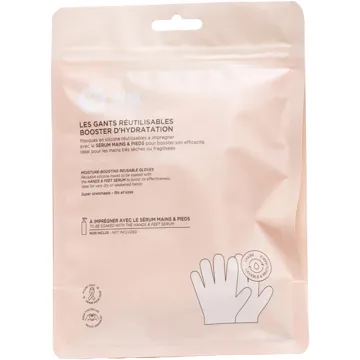
For very dry hands, a weekly intensive treatment helps restore skin comfort. Once or twice a week, massage your hands with a plant-based oil (olive, sweet almond, argan) or a rich balm, then slip on clean cotton gloves and leave them on for 20 to 30 minutes—or, ideally, overnight. This helps the oils penetrate the outer layers of the skin. However, avoid hot oil baths, which can damage delicate oils, and direct application to active or painful cracks, which require professional advice.
If, despite a regular skincare routine, dryness, redness, itching, or cracks persist or worsen, it’s best to see a dermatologist. Several conditions can lie behind “damaged hands”: hand eczema (very common, especially among healthcare professionals, hairdressers, and cleaning staff), palmar psoriasis, and allergic or irritant contact dermatitis. A consultation is particularly necessary in cases of severe redness, swelling, pain, oozing, deep or recurring cracks, or any signs suggestive of an infection. In the event of a severe allergic reaction (facial swelling, difficulty breathing suggestive of angioedema), call 15 or 112.
The principle is simple: a cream for damaged hands should be applied as often as the hands are used. Specifically, after each time you wash your hands, after each exposure to water (housework, doing dishes, showering), at least once midday, and before bedtime. For particularly damaged hands, using a richer cream at night (under cotton gloves) enhances the treatment’s effectiveness overnight, which is the optimal time for superficial skin repair.
Hand creams are formulated for skin that is subjected to more stress than the rest of the body, with the back of the hand often being thin and exposed. They generally contain a higher concentration of emollients and occlusive agents (beeswax, lanolin, plant-based butters) to form a protective film that withstands repeated washing. Body creams, which are lighter and more fluid, are suitable for quick moisturizing after a shower but wear off quickly on hands that are washed several times a day. For hands that are heavily exposed, a dedicated hand cream is still preferable.
Yes, plant-based oils such as sweet almond oil, argan oil, or jojoba oil are excellent for treating dry or uncomfortable hands. They provide intense nourishment without leaving a heavy, occlusive film. They’re particularly useful for people who can’t tolerate certain commercial creams (fragranced formulas or preservative-based products that cause allergies). Conversely, for active cracks or open wounds, it’s best to use a specific medical treatment and seek a dermatologist’s advice.
A few simple daily habits can help protect the skin on your hands:
The choice of protective gloves depends on the situation: