What are cracked heels, and how do they form?
Cracked heels (plantar fissures) are cracks in the skin that develop around the heel when plantar keratosis (thickening of the stratum corneum) is not properly managed. The hyperkeratotic skin, which is stiff and unable to stretch, cracks under the pressure of body weight when walking. These cracks can remain superficial or become deep (cracks reaching the dermis), painful, and bleeding. Specific treatments and creams are available in the dry foot cream line, and exfoliation tools are available in the electric foot file line.
- Main causes: chronic skin dryness (heel skin with few sebaceous glands) — repeated pressure on the heels (prolonged standing, being overweight, heavy walking) — open-backed shoes or those without heel edge protection (flat-soled sandals promote lateral spreading of the fat pad and cracking) — cold, dry air or excessive indoor heating
- Aggravating factors: diabetes (neuropathy and associated dry skin— heel cracks in people with diabetes require immediate medical attention)—hypothyroidism—skin aging—malnutrition or deficiency in essential fatty acids
- Early warning signs not to be ignored: rough, thickened skin around the heel — yellowing or whitening of the keratotic area — a tight, pulling sensation when walking — small, superficial cracks that widen without treatment
How to treat cracked heels with effective active ingredients?
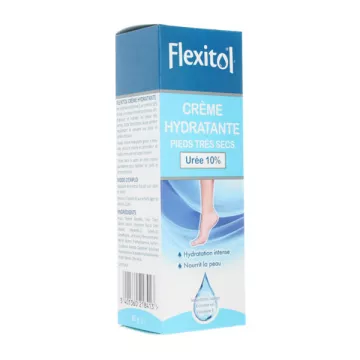
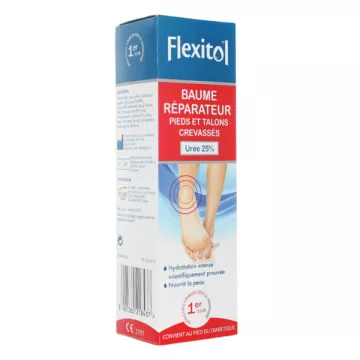
- High-concentration urea (30–40%): the gold standard keratolytic and humectant for heel cracks — gradually softens and loosens rigid hyperkeratosis — apply a generous layer in the evening to clean, slightly damp heels — Cover with a cotton sock to maximize penetration — Visible results within 1 to 2 weeks of treatment
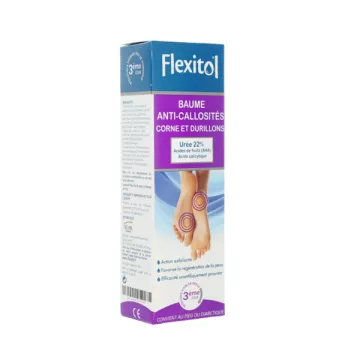
- Salicylic acid (10–20%): a complementary keratolytic agent for the thickest areas — apply topically while protecting healthy skin — can be combined with urea in certain foot cream formulations
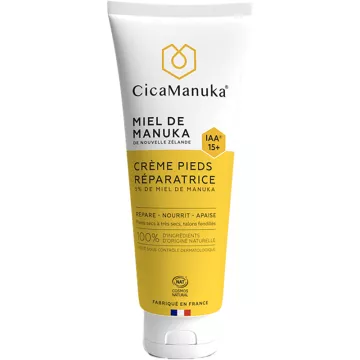
- Honey: deeply moisturizing, a natural antibacterial agent (hydrogen peroxide), and promotes healing — apply as a mask to dry heels, cover with a sock, leave on overnight—particularly suitable for slightly weeping cracks or those at risk of secondary infection—contraindicated in infants under 1 year of age
- Petroleum jelly (petrolatum) and shea butter: powerful occlusive agents — form a waterproof film that traps moisture in cracks and prevents evaporation — apply as a thick balm at night under a sock — shea butter also provides reparative unsaponifiables (vitamins A and E)
- Aloe vera gel: promotes healing and soothes irritated cracks — hydrates dehydrated stratum corneum — apply during the day to complement the nighttime keratolytic treatment
- Preliminary mechanical exfoliation: a 10-minute warm foot bath — followed by using a pumice stone or an electric foot file on thickened areas (never on deep cracks) — 1 to 2 times a week to prepare the skin to receive the keratolytic active ingredients
What diet should you follow, and when should you consult a professional for cracked heels?
- Nutrition and hydration: omega-3 fatty acids (fatty fish twice a week—maintains the fluidity of keratinocyte membranes)—vitamin A (epidermal renewal—liver, egg yolk, carrots) — vitamin C (synthesis of skin collagen — citrus fruits, kiwi) — vitamin E (membrane antioxidant — vegetable oils, oilseeds) — zinc (wound healing and skin barrier integrity — oysters, legumes) — hydration: 1.5 to 2 L/day
- Prevention and daily routine: 10–20% urea cream every evening after showering — cotton socks — closed-toe shoes that protect the heel — avoid walking barefoot on hard surfaces
- Consult a podiatrist if: very deep, bleeding, or recurrent cracks — calluses too thick for effective at-home exfoliation — pain when walking — suspected secondary infection (redness, warmth, pus)
- Medical emergency in people with diabetes: any heel fissure in a diabetic patient must be reported to a doctor immediately—risk of neuropathic ulcers and serious local complications—inadequate self-care; regular podiatric follow-up is essential