Which plant-based oils are best for nourishing a beard?
Effective beard care starts with choosing the right plant oils, as each has a lipid profile suited to a specific beard and skin type:
- Argan oil (Argania spinosa): rich in oleic acid (45%), linoleic acid (35%), and vitamin E. Its lipid profile, similar to that of skin sebum, makes it non-comedogenic—it penetrates the hair quickly, providing shine and suppleness without a greasy residue. Ideal for coarse or thick beards.
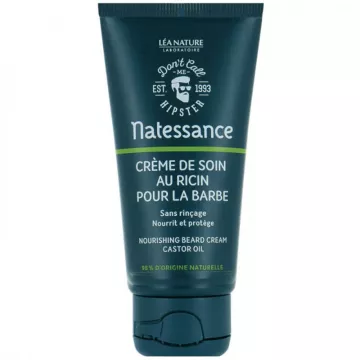
- Castor oil (Ricinus communis): exceptionally rich in ricinoleic acid (85–90%), it forms an occlusive film that locks moisture into the hair shaft, reducing breakage. Its thick texture requires dilution to 20–30% in a carrier oil.
- Sweet almond oil: oleic acid (70%), light and penetrating—for fine beards or sensitive skin beneath the beard.
Does biotin accelerate beard growth?
An essential enzymatic cofactor for keratin synthesis (the protein that makes up 90% of hair), vitamin B8 (biotin) is the nutritional active ingredient most commonly associated with beard growth. In cases of proven deficiency, supplementation (2.5 to 5 mg/day) can improve growth rate and reduce breakage. Its synergy with vitamin B5 and silicon is well established in hair supplements. Caution: supplementation exceeding 5 mg/day may skew laboratory hormone test results—be sure to inform your doctor before undergoing testing.
Does castor oil stimulate beard growth?
As the most popular topical active ingredient for stimulating growth,castor oil works through several mechanisms:
- Its ricinoleic acid activates the EP3 prostaglandin receptor in hair follicles—a mechanism documented in vitro to prolong the anagen phase (active growth) of the hair cycle.
- A mild local vasodilatory effect that improves perifollicular microcirculation—increasing the supply of nutrients to the follicle’s germ cells.
- Reduction of mild follicular inflammation that inhibits growth in thinning areas.
Recommended use: Massage into thinning areas 2 to 3 times a week, diluted to 20–30% in argan oil.
Vitamin B5 and silicon to strengthen the beard hair shaft?
Two nutritionally active ingredients proven to enhance the mechanical strength of hair:
- Vitamin B5 (pantothenic acid) is a precursor to coenzyme A, which is essential for lipid synthesis in the hair shaft. When applied topically (D-panthenol at 0.5–2% in shampoos and beard balms), it penetrates the cuticle and deeply moisturizes, improving elasticity and reducing breakage.
- As a cofactor in the synthesis of keratin chains and follicular collagen, organic silicon (stabilized orthosilicic acid) improves hair strength according to clinical studies—with bioavailability far superior to that of mineral silicon.
Does stinging nettle promote beard density and growth?
A well-documented phytotherapeutic active ingredient for follicular health,stinging nettle (Urtica dioica) offers several mechanisms relevant to beard health. Its phytosterols (β-sitosterol) inhibit 5α-reductase, reducing the conversion of testosterone to DHT at the follicular level. Its high content of minerals (iron, silicon, magnesium, zinc) and vitamins C and B directly nourishes the follicular papillary cells. When applied topically (as an aqueous extract in a beard serum), it improves perifollicular microcirculation and reduces excessive follicular sebum.
How to choose a beard oil or balm based on your skin type?
The choice of product should be tailored to the underlying skin, which is often overlooked:
- Dry skin: oils rich in oleic acid (argan, sweet almond) and shea butter balms—which help restore the skin’s lipid barrier.
- Oily or acne-prone skin: non-comedogenic dry oils (jojoba, hazelnut) instead of pure castor oil. Opt for a water-based moisturizer with hyaluronic acid rather than occlusive balms.
- Sensitive skin: Formulas free of essential oils, containing bisabolol or calendula. Avoid alcohol and synthetic fragrances.
- Thinning or uneven beard growth: Combine castor oil applied via perifollicular massage with biotin, silicon, and zinc supplements—the nutritional triangle for hair growth.