What is abdominal support, and when is it recommended?
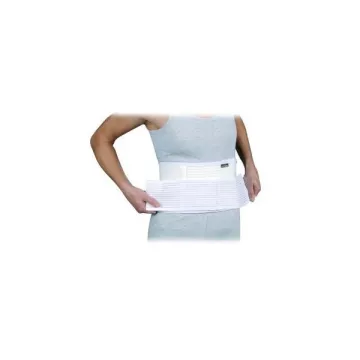
Abdominal support refers to all devices that support the abdominal wall and stabilize the core—support belts, girdles, and compression garments. It plays a complementary role to active muscle strengthening, without replacing it. Explore our range of abdominal supports and lumbar belts tailored to each specific need.
- Post-operative: abdominal support following digestive surgery, inguinal hernia repair, or cesarean section—reduces tension on the incision during movement—worn as prescribed by a surgeon, with duration varying depending on the procedure—see our post-operative page
- Pregnancy: support for the maternal abdomen starting in the 2nd trimester—reduces lumbar and pelvic pressure—breathable and adjustable pregnancy belts—relief from common pregnancy-related lower back pain starting in the 4th month
- Diastasis recti (separation of the abdominal muscles): postpartum—rehabilitation belt to bring the muscles closer together during core exercises—must be used in conjunction with physical therapy
- Abdominal hernia: hernia belt to keep the hernia reduced—while awaiting surgery or if surgery is contraindicated
- Physical exertion and lifting: support during occasional physical work—do not wear continuously (risk of muscle atrophy)
How can you strengthen your abdominal muscles to reduce dependence on support?
Abdominal support is a transitional tool—the ultimate goal is always to strengthen the active “core” muscles to reduce dependence on the device.
- Deep abdominal core (transverse): Contract the transverse abdominis (pull in the navel without holding your breath)—a deep stabilizing muscle of the lumbar spine—master this before any other abdominal exercise
- Front and side planks: activate the transverse abdominis, the obliques, and the paravertebral muscles—3 sets of 20–30 seconds—gradually increase duration—key exercises for preventing back pain
- Pilates and yoga: specific programs for strengthening the deep core — poses adapted to your level — physical therapy supervision recommended after surgery or diastasis
- Hypopressive exercises: a breathing technique that engages the pelvic floor and transverse abdominis through inhalation — particularly recommended postpartum for diastasis and organ prolapse
- Progression: start with the transverse abdominis (breathing + contraction) → isometric core stabilization → dynamic core stabilization → loaded functional exercises
How to choose the right abdominal support based on your needs?
- Breathable materials: cotton blends or microfiber—essential for prolonged wear (pregnancy, post-surgery)—avoid non-breathable synthetic materials (moisture buildup, irritation)
- Adjustability: Velcro closures or laces that allow you to adjust the compression throughout the day (variable swelling, progressing pregnancy)
- Compression level: light (postural support + physical activity) — moderate (post-surgery, late pregnancy) — firm (abdominal hernia, post-major surgery as prescribed)
- Continuous wear not recommended: beyond strict medical indications, continuous wear weakens the abdominal and lumbar muscles—use only during high-risk activities
- Magnesium + abdominal support: Magnesium reduces lumbar muscle spasms that often accompany abdominal weakness — 300–400 mg/day
Ergonomics, Posture, and Abdominal Support: A Holistic Approach
- Sitting posture: Abdominal support alone does not correct poor posture—combine it with a lumbar cushion and an ergonomically designed workstation—see our ergonomics page
- Lifting technique: contract the transverse abdominis before lifting (exhale during the effort)—abdominal support does not replace this technique—lift with your legs, keeping your back straight
- Repeated load-carrying: for physically demanding professions (construction, logistics, healthcare workers)—use a lumbar and abdominal support belt during lifting—remove it between tasks to prevent muscle atrophy
- Post-surgical abdominalcompression bands: an alternative to a rigid belt—gentler and adjustable compression—recommended during the first few weeks after surgery
- Optimal results: abdominal support + progressive muscle strengthening + ergonomics + anti-inflammatory nutrition—a comprehensive approach that significantly reduces recurrences of low back pain and postoperative complications