0
Menu
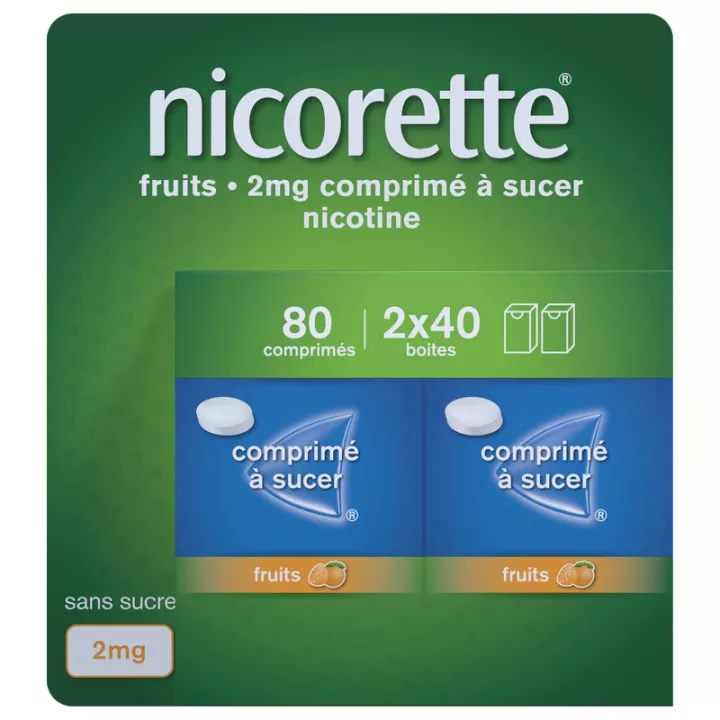
Nicorette Chewing Gum 2mg Fresh Mint Sugarfree Nicorette Chewing Gum 2mg Fresh Mint Sugarfree Nicorette Chewing Gum 2mg Fresh Mint Sugarfree
Over-the-counter medication

Nicorette Chewing Gum 2mg Fresh Mint Sugarfree

Brand : Nicorette Nicorette

Choose Nicorette Chewing Gum 2mg Fresh Mint Sugarfree for effective smoking cessation. Find out more about its use, dosage and composition. Buy it now from our online pharmacy.

€27.81 EXCL. VAT €28.39 INCL. VAT
This product is an over-the-counter medication. Please consult the package insert before ordering online.
In stock Shipped within 24h Secure payment
Reference : 3400937631419
You must be logged in to add this product to a list. Customer login
See delivery conditions

Our doctors of pharmacy advise you

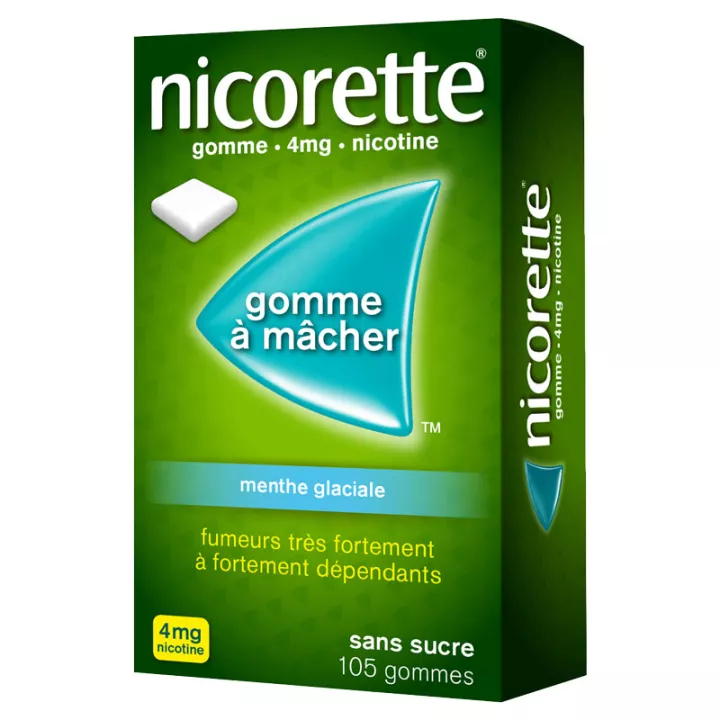
Nicorette Chewing Gum 4mg Glacial Mint Sugarfree 105 gums Nicorette Chewing Gum 4mg Glacial Mint Sugarfree 105 gums
€14.95
Shipped within 24h
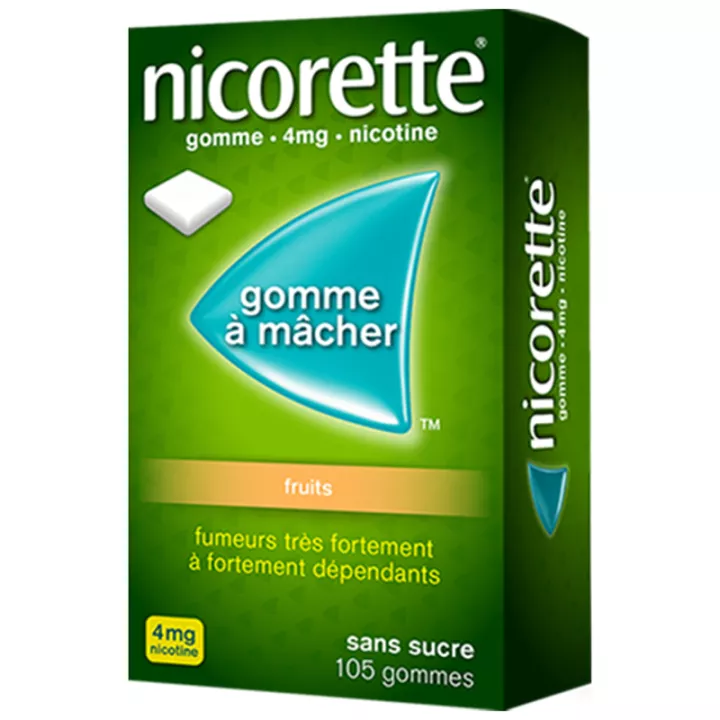
Nicorette Chewing Gum 4mg Fruits Without Sugar 105 gummies Nicorette Chewing Gum 4mg Fruits Without Sugar 105 gummies
€14.95
Shipped within 24h
Homeopathic KIT to stop smoking tobacco Homeopathic KIT to stop smoking tobacco
€13.42
In stock - preparation within 1 to 2 working days
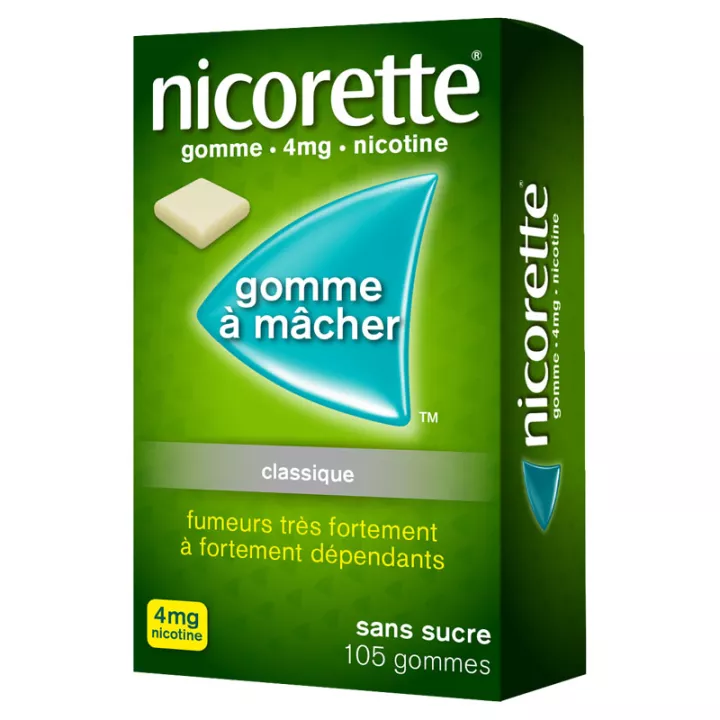
Nicorette Chewing Gum 4mg Classic Sugarfree 105 gums Nicorette Chewing Gum 4mg Classic Sugarfree 105 gums
€14.95
Usually ships in 5-7 business days

What is Nicorette Chewing Gum 2mg Fresh Mint Sugarfree used for?

For warnings, precautions for use and contraindications, please consult the instructions for use.

Find the relief you need to stop smoking with Nicorette Chewing Gum 2mg Fresh Mint Sugar Free. Discover how this product can help you combat the withdrawal symptoms associated with cutting down or stopping smoking. With clear instructions for use and important precautions, you'll be well informed to begin your journey to a tobacco-free life. Don't wait any longer, take the first step towards a healthier life today!

You've made the courageous decision to say goodbye to cigarettes, but nicotine withdrawal symptoms can make this transition difficult. That's where Nicorette Gomme à Mâcher 2mg Menthe Fraiche Sans Sucre comes in. This innovative product contains nicotine in a chewing gum specially designed to help you overcome the withdrawal symptoms associated with cutting down or stopping smoking.

Benefits of Nicorette Chewing Gum 2mg Fresh Mint Sugarfree

  • Reduces withdrawal symptoms: The nicotine in this chewing gum acts quickly to relieve cravings, enabling you to resist temptation.
  • Eases the transition: Nicorette 2mg Fresh Mint Sugarfree Chewing Gum helps to gradually reduce your dependence on nicotine by providing a controlled amount of the substance.
  • Fresh mint: The addition ofpeppermint essential oil provides a pleasantly fresh sensation, helping to neutralize the bad breath often associated with smoking.
  • Sugar-free: Unlike many other chewing gums, Nicorette Gomme à Mâcher 2mg Menthe Fraiche Sans Sucre is sugar-free, making it an ideal option for those watching their sugar intake.
  • Comfortable and discreet: this chewing gum is convenient to use in all circumstances. You can slip it discreetly into your mouth for instant relief, wherever you are.

Nicorette Chewing Gum 2mg Fresh Mint Sugarfree is your ally in giving up smoking. It helps you manage withdrawal symptoms, gradually reduce your nicotine dependency and maintain fresh breath. Don't let cigarettes dictate your life, take back control with Nicorette.

Active ingredients of Nicorette Chewing Gum 2mg Fresh Mint Sugarfree

The key to Nicorette Gomme Mâcher 2mg Menthe Fraiche Sans Sucre's effectiveness lies in its main active ingredient: nicotine. This chewing gum provides a 2mg dose of nicotine in the form of nicotine resinate. Nicotine resinate is a form of nicotine that is rapidly absorbed by your body when chewed.

Nicotine works by binding to nicotinic receptors in your brain, reducing withdrawal symptoms such as irritability, nervousness and cravings. By providing a controlled source of nicotine, Nicorette Gomme à Mâcher 2mg Menthe Fraiche Sans Sucre helps you gradually reduce your dependence on nicotine, bringing you closer to your goal of quitting smoking.

How to use Nicorette Chewing Gum 2mg Fresh Mint Sugarfree?

Using Nicorette Gomme à Mâcher 2mg Menthe Fraiche Sans Sucre is simple, but it's essential to follow the instructions correctly to maximize its benefits while minimizing the risks.

Dosage and administration :

  • For adults only (15 years and over): Nicorette Gomme à Mâcher 2mg Menthe Fraiche Sans Sucre is intended for adults and adolescents aged 15 and over.
  • Chewing gums containing 2 mg are not suitable for smokers who are strongly or very strongly dependent on nicotine (Fagerström test score of 7 to 10 or smoking more than 20 cigarettes a day): If you are a highly nicotine-dependent smoker, it is recommended that you consult a healthcare professional to discuss the best strategy for quitting smoking.
  • Do not exceed 30 x 2 mg gums per day: It is essential to respect this daily limit to avoid any nicotine-related risk.
  • Nicorette Chewing Gum should not be used for more than 12 months: Nicorette Gum 2mg Fresh Mint Sugarfree is designed to be used as a temporary stop-smoking aid. If you require ongoing support beyond 12 months, it is advisable to consult a healthcare professional.
  • Generally speaking, the number of gums to be chewed is between 8 and 12 per day for a 3-month phase, then 1 to 2 gums per day: Follow these recommendations for best results. However, it's crucial to tailor your stop-smoking plan to your individual needs.

Precautions for use :

Before using Nicorette Gomme à Mâcher 2mg Menthe Fraiche Sans Sucre, be sure to consider the following precautions:

  • If you're a non-smoker or occasional smoker: This product is specifically designed for regular smokers looking to quit. If you are a non-smoker or occasional smoker, it is not recommended for use.
  • If you are allergic to any of the ingredients (see Instructions): Be sure to check the list of ingredients to avoid any allergic reaction.

Give your opinion on the advice for use and dosage of Nicorette Gomme à Mâcher 2mg Menthe Fraiche Sans Sucre with our partner Verified Reviews after your purchase.

What is its composition?

Nicorette Gomme à Mâcher 2mg Menthe Fraiche Sans Sucre contains the following ingredients:

  • Nicotine 2 mg (in the form of nicotine resinate).
  • Excipients : Chewing gum base, xylitol, peppermint essential oil, anhydrous sodium carbonate, acesulfame potassium, levomenthol, light magnesium oxide, quinoline yellow aluminium lake (E104).
  • Coating: xylitol, peppermint essential oil, gum arabic, titanium dioxide (E171), carnauba wax, quinoline yellow aluminium lake (E104).

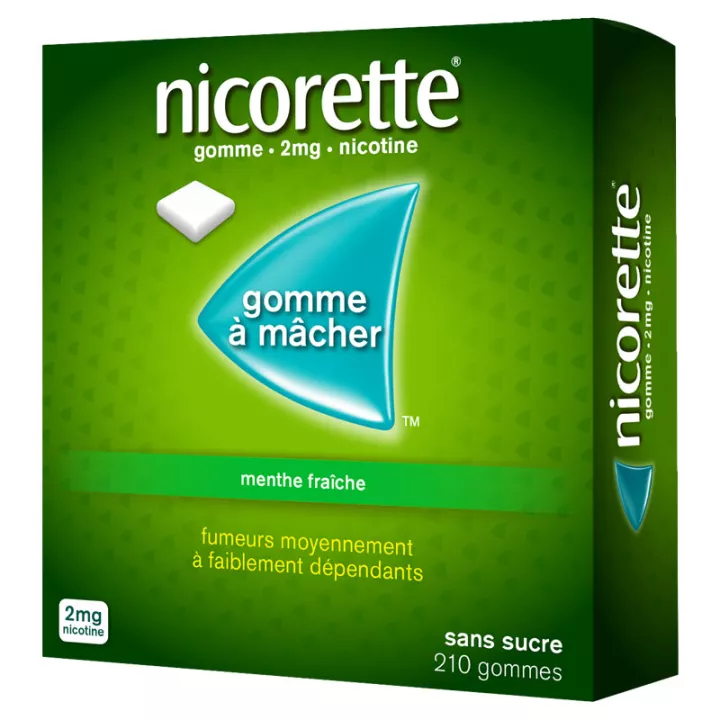
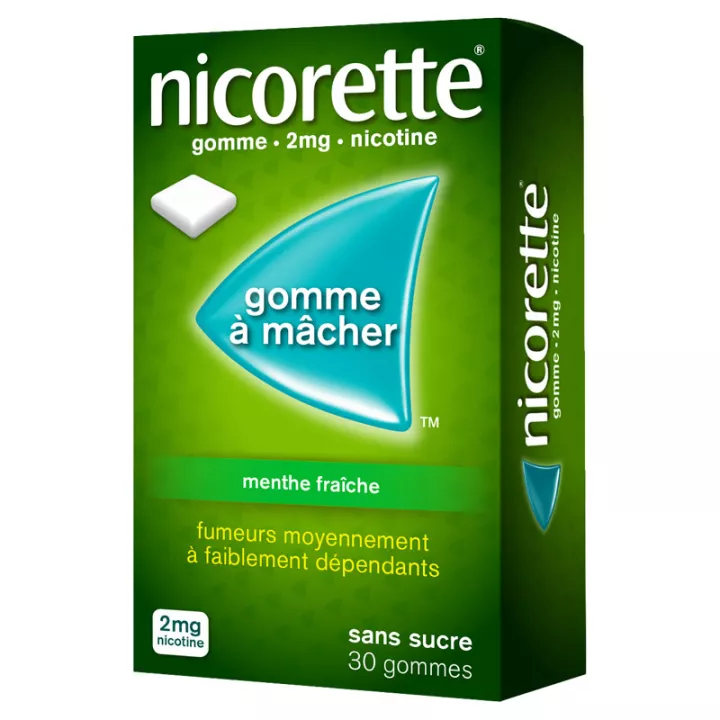
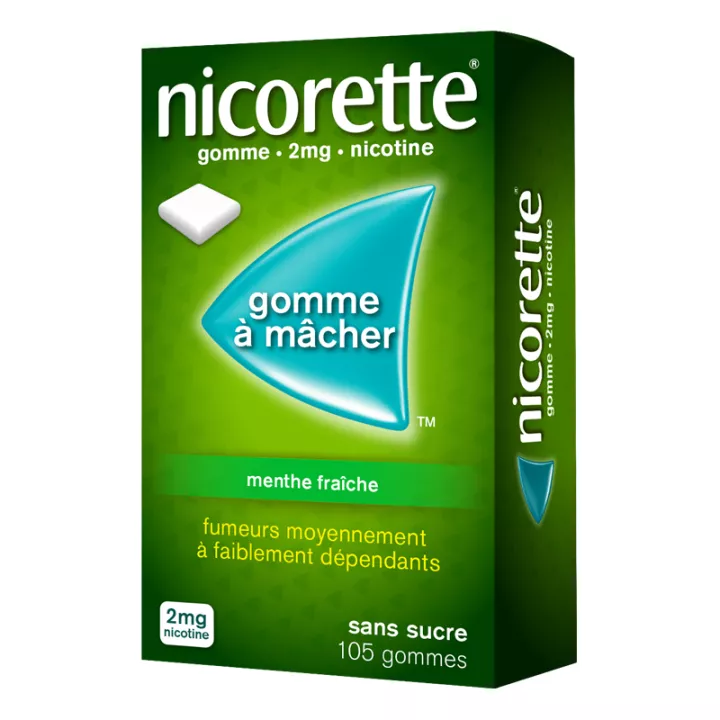
Nicorette Gomme à Mâcher 2mg Menthe Fraiche Sans Sucre comes in a box containing 210, 105 or 30 medicated chewing gums. You can find this product at the best price in your online pharmacy.

Don't let nicotine addiction keep you trapped in cigarettes. Choose Nicorette Chewing Gum 2mg Fresh Mint Sugar Free as your ally to break those chains. You deserve a life without tobacco, and Nicorette is here to help you get there.

Take the first step towards a tobacco-free life today by ordering Nicorette Chewing Gum 2mg Fresh Mint Sugar Free. With an effective formulation, clear instructions and important precautions, you'll be well equipped to succeed on your journey to a healthier, tobacco-free lifestyle. Don't wait any longer - your health deserves this positive decision!

Please note that medication is not like any other product. Read the instructions carefully before ordering. Keep medicines out of the reach of children. If symptoms persist, ask your doctor or pharmacist for advice. Beware of incompatibilities with your current products.

Pharmacovigilance Report an adverse drug reaction(s)

Download PDF leaflet

NOTICE

ANSM - Updated on : 03/07/2023

Name of medicinal product

NICORETTE MENTHE FRAICHE 2 mg SUGAR-FREE, medicated chewing gum sweetened with xylitol and lacésulfame potassique

Nicotine

Box

Please read this leaflet carefully before taking this medicine, as it contains important information for you.

Always take this medicine exactly as it is prescribed by your doctor, pharmacist or pharmacist.

- Keep this leaflet. You may need to read it again.

- Ask your pharmacist for any advice or information you may need.

- If you experience any side effects, talk to your doctor or pharmacist. This also applies to any side effects not mentioned in this leaflet. See section 4.

- You should contact your doctor if you do not feel any improvement or if you feel less well.

What does this leaflet contain?

1. What is NICORETTE MENTHE FRAICHE 2 mg SUGAR-FREE, medicated chewing gum sweetened with xylitol and lacésulfame potassique and what is it used for?

2. What do I need to know before taking NICORETTE MENTHE FRAICHE 2 mg SUGAR-FREE, medicated chewing gum sweetened with xylitol and lacésulfame potassique?

3. How to take NICORETTE MENTHE FRAICHE 2 mg SUGAR-FREE, medicated chewing gum sweetened with xylitol and lacésulfame potassique?

4. What are the possible side effects?

5. How to store NICORETTE MENTHE FRAICHE 2 mg SUGAR-FREE, medicated chewing gum sweetened with xylitol and lacésulfame potassique?

6. Package contents and other information.

1. WHAT IS NICORETTE MENTHE FRAICHE 2 mg SUGAR-FREE, medicated chewing gum sweetened with xylitol and lacésulfame potassique AND WHAT IS IT USED FOR?

Pharmacotherapeutic class: DRUGS FOR NICOTINE DEPENDENCE, ATC code: N07BA01.

This drug is used in the treatment of tobacco dependence to relieve nicotine withdrawal symptoms in subjects wishing to stop smoking.

Although permanent cessation of tobacco consumption is preferable, this drug may be used in :

- when a smoker is temporarily abstaining from smoking,

- a smoking reduction strategy as a step towards permanent cessation.

2. WHAT DO I HAVE TO KNOW BEFORE TAKING NICORETTE MENTHE FRAICHE 2 mg SUGAR-FREE, medicated chewing gum sweetened with xylitol and potassium sulfate?

Never take NICORETTE MENTHE FRAICHE 2 mg SUGAR-FREE, medicated chewing gum sweetened with xylitol and lacésulfame potassique:

- if you do not smoke or if you are an occasional smoker.

- if you are allergic to nicotine or to any of the other ingredients of this medicine, as mentioned in section 6.

IF IN DOUBT, ASK YOUR DOCTOR OR PHARMACIST.

Warnings and precautions

Talk to your doctor or pharmacist before taking NICORETTE MENTHE FRAICHE 2 mg SUGAR-FREE, medicated chewing gum sweetened with xylitol and potassium sulfate.

- Certain diseases require medical examination and monitoring before using this medicine.

It is essential to consult your doctor before taking this medicine if you have any of the following:

- a recent history (< 3 months) of heart attack or stroke,

- chest pain (unstable angina pectoris), or stable angina pectoris,

- a heart problem affecting your heart rate or rhythm,

- high blood pressure not controlled by medication,

- a history of allergic reactions manifested by swelling of the lips, face and throat (angioedema) or an itchy rash (urticaria). The use of NRT can sometimes trigger this type of reaction,

- severe or moderate hepatic impairment,

- severe renal failure,

- diabetes,

- hyperthyroidism,

- a tumor of the adrenal gland (pheochromocytoma),

- an evolving stomach or duodenal ulcer,

- chronic throat disease,

- asthma,

- a history of seizures or convulsions.

- Chewing gum must be kept out of the reach of children .

The therapeutic dose intended for adults could cause serious or even fatal intoxication in children.

Precautions for use

- Certain signs indicate underdosing. If, despite treatment, you feel a sensation of "craving", such as

- urge to smoke

- irritability, sleep disorders,

- agitation or impatience,

- difficulty concentrating.

Consult your doctor or pharmacist. It may be necessary to change the dosage of your medication.

- Certain signs may indicate overdosage: if signs of overdosage appear, i.e.:

- nausea, abdominal pain, diarrhea,

- hypersalivation,

- sweating, headache, dizziness, hearing loss,

- general weakness.

It is essential to adapt the treatment with the help of your doctor or pharmacist.

When combining NICORETTE 2 mg medicated chewing gum with NICORETTESKIN transdermal device, refer to the package leaflet for each medication.

IF IN DOUBT, ASK YOUR DOCTOR OR PHARMACIST FOR ADVICE.

Children and adolescents

Not applicable.

Other medicines and NICORETTE MENTHE FRAICHE 2 mg SUGAR-FREE, medicated chewing gum sweetened with xylitol and lacésulfame potassique

Tell your doctor or pharmacist if you are taking, have recently taken or may take any other medicines.

This is particularly important if you are taking clozapine (an antipsychotic), methadone (an opiate substitution treatment), ropinirole (a treatment for Parkinson's disease) or theophylline (used to treat asthma).

NICORETTE MENTHE FRAICHE 2 mg SUGAR-FREE, medicated chewing gum sweetened with xylitol and lacésulfame potassique with food and drink

Not applicable.

Pregnancy and breast-feeding

If you are pregnant or breast-feeding, think you may be pregnant or are planning to become pregnant, ask your doctor or pharmacist for advice before taking this medicine.

Pregnancy

It is very important to stop smoking during pregnancy, as it can slow down your baby's growth. It can also lead to premature delivery or late fetal death. It is advisable to stop smoking without using nicotine-containing medication.

If you are unable to stop smoking without nicotine replacement therapy, NICORETTE may be used in consultation with the healthcare professional monitoring your pregnancy, your family doctor, or a doctor at a center specializing in helping people stop smoking.

Breast-feeding

If you are a heavy smoker and do not intend to stop smoking, you should not breast-feed your child, but resort to artificial feeding.

If you wish to stop smoking and breastfeed your child, take the advice of your doctor or a doctor at a center specializing in smoking cessation.

Use of this medicine should be avoided while breast-feeding, as nicotine passes into breast milk and may affect your child. If your doctor has recommended that you use NICORETTE MENTHE FRAICHE 2 mg SUGAR-FREE, medicated chewing gum sweetened with xylitol and lacésulfame potassique, the dose should be taken just after feeding or more than 2 hours before the next feeding.

Driving and use of machinery

NICORETTE MENTHE FRAICHE 2 mg SUGAR-FREE, medicated chewing gum sweetened with xylitol and lacesulfame potassium has no or negligible effect on the ability to drive vehicles and use machines.

This medicine contains less than 1 mmol (23 mg) of sodium per chewing gum, i.e. it is essentially "sodium-free".

3. HOW DO I TAKE NICORETTE MENTHE FRAICHE 2 mg SUGAR-FREE, medicated chewing gum sweetened with xylitol and potassium sulfate?

Always take this medicine exactly as instructed in this leaflet or as directed by your doctor or pharmacist. Check with your doctor or pharmacist if in doubt.

For adults only (15 years and over).

Dosage

2 mg chewing gum is not suitable for smokers who are strongly or very strongly dependent on nicotine (Fagerström test score of 7 to 10 or smoking more than 20 cigarettes a day: see "Health education advice").

Complete cessation of smoking

Nicotine dependence is usually treated in 2 phases.

1st phase:

Chew gum every time you feel the urge to smoke.

The number of chewing gums containing 2 mg is generally 8 to 12 per day, and should never exceed 30 per day.

The duration of this phase is around 3 months, but may vary according to individual response.

2nd phase:

When the urge to smoke is completely overcome, gradually reduce the number of gum chews per day.

Treatment should be stopped when consumption has been reduced to 1-2 gum chews per day.

It is recommended not to use chewing gums beyond 12 months.

If you continue to experience cravings during treatment, or if your treatment has failed, ASK YOUR DOCTOR OR PHARMACIST FOR ADVICE. He or she may advise you to combine NICORETTE 2 mg medicated chewing gum with a form that delivers nicotine throughout the day: NICORETTESKIN transdermal devices.

Temporary abstinence from smoking

Chew one gum each time you feel the urge to smoke.

The number of chewing gums containing 2 mg is generally 8 to 12 per day, and should never exceed 30 per day.

Reducing tobacco consumption

As far as possible, alternate nicotine gums with cigarettes.

Chew gum as soon as you feel the urge to smoke, to reduce cigarette consumption as much as possible and remain smoke-free for as long as possible.

The number of gum chews per day is variable and depends on your needs. However, it should not exceed 30 gums a day.

If a reduction in cigarette consumption has not been achieved after 6 weeks of treatment, it is advisable to seek advice from a healthcare professional.

Reducing tobacco consumption should gradually lead to complete cessation. This should be attempted as soon as possible within 6 months of starting treatment. If, more than 9 months after the start of treatment, the attempt to stop smoking completely has failed, it is advisable to seek advice from a healthcare professional.

It is recommended not to use gum beyond 12 months.

To increase the chances of success in quitting smoking completely, it is important to aim for a reduction of more than 50% in consumption during this reduction phase. NICORETTE chewing gums help you achieve this goal before you stop smoking for good.

Method and route of administration

By mouth.

To be active, the nicotine contained in the gum and released by chewing must be absorbed by the buccal mucosa.

If nicotine is swallowed with saliva, it has no effect. It is therefore important not to chew the gum too vigorously.

First, chew the gum until the taste becomes strong or a slight tingling sensation is felt; then hold it between the cheek and gum for around 10 minutes: the gum softens, allowing the nicotine to be gradually released and absorbed by the oral mucosa, thus passing into the circulation.

Then, when the taste has faded, chew the gum very slowly (around 20 times in 20 minutes).

Chewing gum should be kept in the mouth for about 30 minutes. After 30 minutes, the gum will no longer deliver nicotine.

Duration of treatment

For complete smoking cessation:

Use is limited to 12 months.

In the event of persistent craving or difficulty in quitting, consult your doctor.

If you have taken more NICORETTE MENTHE FRAICHE 2 mg SUGAR-FREE, medicated chewing gum sweetened with xylitol and lacésulfame potassique than you should have done

Consult your doctor or pharmacist immediately.

In case of accidental overdose or if a child swallows one or more chewing gums: CONTACT A PHYSICIAN OR EMERGENCY SERVICE.

Serious intoxication may occur, manifested by hypotension, weak and irregular pulse, respiratory distress, prostration, cardiovascular collapse and convulsions.

If you forget to take NICORETTE MENTHE FRAICHE 2 mg SUGAR-FREE, medicated chewing gum sweetened with xylitol and lacésulfame potassique

Not applicable.

If you stop taking NICORETTE MENTHE FRAICHE 2 mg SUGAR-FREE, medicated chewing gum sweetened with xylitol and lacésulfame potassique

Not applicable.

If you have any further questions about the use of this medicine, please ask your doctor or pharmacist.

4. WHAT ARE THE POSSIBLE SIDE EFFECTS?

Like all medicines, NICORETTE may cause undesirable effects, but these do not always occur in everyone.

NICORETTE may cause undesirable effects similar to nicotine administered by other means; these effects are mainly dose-dependent and appear at the start of treatment.

Gum may stick, and in rare cases there is a risk of dental damage.

The following adverse reactions have been reported:

Very common: affecting more than 1 in 10 patients

- headaches

- hiccups

- throat irritation

- nausea

Common: affects 1 to 10 patients in 100

- diarrhea

Uncommon: affects 1 to 10 patients in 1000

- palpitations (unusual sensation in your heartbeat), or rapid heartbeat (tachycardia)

- throat pain

- abnormal dreams

- wheezing (bronchospasm) or difficulty breathing (dyspnea), change in the sound of your voice

- blocked nose, sneezing

- excessive sweating, itching/rash (pruritus/urticaria), hot flushes

- fatigue, malaise, chest pain/discomfort

- hypertension

Rare: affects 1 to 10 patients in 10,000

- difficulty swallowing, decreased sensitivity in the mouth

Unknown frequency: cannot be estimated on the basis of available data

- blurred vision, increased tears (lacrimation)

- dry throat, lip pain, abdominal pain/discomfort

- allergic reaction including swelling of the face and mouth (angioedema), reddening of the skin

- convulsions

Dizziness, headaches, sleep disturbances, mouth ulcers may be related to smoking cessation and not to your treatment.

Due to the presence of xylitol, digestive disorders and diarrhea may occur.

If you are taking NICORETTE MENTHE FRAICHE 2 mg SUGAR-FREE chewing gum in combination with NICORETTESKIN transdermal device, please refer to the package leaflet for each product.

Reporting side effects

If you experience any side effects, please tell your doctor or pharmacist. This also applies to any side effects not mentioned in this leaflet. You can also report adverse reactions directly via the national reporting system: Agence nationale de sécurité du médicament et des produits de santé (ANSM) and the network of Centres Régionaux de Pharmacovigilance - Website:https://signalement.social-sante.gouv.fr/

By reporting adverse reactions, you are helping to provide more information on drug safety.

5. HOW TO CONSERVE NICORETTE MENTHE FRAICHE 2 mg SUGAR-FREE, medicated chewing gum sweetened with xylitol and lacésulfame potassique?

Keep out of sight and reach of children.

Do not use this medicine after the expiration date indicated on the packaging. The expiration date refers to the last day of that month.

Store at a temperature not exceeding 25°C.

Do not dispose of any medicine down the drain or in the household waste. Ask your pharmacist to dispose of any medicines you no longer use. These measures will help protect the environment.

6. CONTENTS AND OTHER INFORMATION

What NICORETTE MENTHE FRAICHE 2 mg SUGAR-FREE, medicated chewing gum sweetened with xylitol and potassium sulfate, contains

- The active substance is :

Nicotine............................................................................................................................. 2 mg

In the form of nicotine resinate................................................................................... 10 mg

For medicated chewing gum.

- The other components are :

Chewing gum base, xylitol, peppermint essential oil, anhydrous sodium carbonate, sodium bicarbonate, acesulfame potassium, levomenthol, light magnesium oxide.

Coating: Xylitol, peppermint essential oil, gum arabic, titanium dioxide (E171), carnauba wax.

What is NICORETTE MENTHE FRAICHE 2 mg SUGAR-FREE, medicated chewing gum sweetened with xylitol and potassium sulfate, and what does it contain?

This medicine comes in the form of chewing gum. Boxes of 10, 12, 15, 24, 30, 36, 40, 45, 90, 96, 105 or 210 chewing gums.

Not all presentations may be marketed.

Marketing authorization holder

JOHNSON & JOHNSON SANTE BEAUTE FRANCE

43 RUE CAMILLE DESMOULINS

92130 ISSY-LES-MOULINEAUX, FRANCE

Marketing authorization holder

JOHNSON & JOHNSON SANTE BEAUTE FRANCE

43 RUE CAMILLE DESMOULINS

92130 ISSY-LES-MOULINEAUX

Manufacturer

McNEIL AB

NORRBROPLATSEN 2

SE-25109 HELSINGBORG

SWEDEN

Product names in member states of the European Economic Area

Not applicable.

The last date on which this leaflet was revised was :

[to be completed subsequently by the holder].

Other

Detailed information on this drug is available on the ANSM (France) website.

Health education advice :

Quitting smoking as soon as possible has immediate health benefits. It's never too late to quit, even if you've smoked a lot for a long time.

As soon as you stop smoking :

- You will no longer absorb the irritating and toxic substances in cigarettes,

- You'll notice some improvements: gradual disappearance of headaches, coughing, throat irritation and shortness of breath,

- You'll often enjoy the satisfaction of better sleep, the taste of food and smells, and improved physical performance,

- You'll reduce your risk of developing lung cancer or cardiovascular disease.

Moreover, in the case of heart or arterial disease (angina pectoris, arteritis of the lower limbs), it is particularly imperative to succeed in quitting smoking.

What is tobacco dependence?

Tobacco addiction is twofold:

- Psychological dependence :

Smoking a cigarette involves a ritual of automatic, repetitive gestures associated with particular circumstances (pleasure, response to stress, intellectual stimulation, support for morale, need for the gesture of conviviality). This is psychological and behavioral dependence.

- Physical dependence :

The body's need for nicotine is due to the effects of this substance on the nervous system. This is physical dependence. Failure to satisfy this need leads to a feeling of craving (see description in the chapter"How to overcome your physical dependence ").

Nicotine substitutes are designed to treat this dependence.

How to overcome your psychological dependence?

- Stopping smoking altogether is necessary to increase your chances of success:

o Choose a day in the year that seems most favorable to you.

o Throw away your last pack of cigarettes, your lighter and put away your ashtrays.

o In the case of a smoking couple, it's best for both partners to quit at the same time.

- Let your family and colleagues know that you are quitting smoking. Ask them to respect your decision (not to smoke near you, not to offer you any more cigarettes).

- Be prepared for the urge to smoke. It can come on suddenly and intensely, especially in the first few weeks after you stop smoking, but it shouldn't last more than 3 or 4 minutes.
You need to plan what you will do in this case and act very quickly to avoid "cracking", for example:

o drink a large glass of water,

o chewing gum,

o count to 100,

o take a few deep breaths,

o leave the room,

o change activity...

- Avoid situations associated with smoking (coffee, aperitifs, etc.), avoid temptations (sit with non-smokers).

- Find ways to compensate for smoking (hobbies, sports, cultural activities, etc.).

How can you overcome your physical dependence?

If you're addicted to nicotine, you may need to use nicotine substitutes to succeed.

To assess your level of dependence, we suggest you take the Fagerström test.

FAGERSTROM TEST

How soon after waking up do you smoke your first cigarette?

- within 5 minutes: 3

- from 6 to 30 minutes: 2

- from 31 to 60 minutes: 1

- after 60 minutes: 0

Do you find it difficult not to smoke in places where it's forbidden?

- yes : 1

- no : 0

Which cigarette of the day would you find most difficult to give up?

- the first : 1

- another : 0

How many cigarettes do you smoke a day?

- 10 or less: 0

- 11 to 20: 1

- 21 to 30 : 2

- 31 or more: 3

Do you smoke more in the morning than in the afternoon?

- yes : 1

- no : 0

Do you smoke when you're so sick you have to stay in bed most of the day?

- yes : 1

- no : 0

TOTAL POINTS

score from 0 to 2 : you are not addicted to nicotine.

You can stop smoking without needing a nicotine substitute.

However, if you're worried about quitting, ask your pharmacist or doctor for advice.

score of 3 to 4 :you are mildly dependent on nicotine.

score 5 to 6 : you are moderately dependent on nicotine.

The use of nicotine substitutes will increase your chances of success.

Ask your pharmacist or doctor for advice on the best treatment for you.

score of 7 to 10 :you are strongly or very strongly dependent on nicotine.

The use of nicotine substitutes is recommended to help you overcome this nicotine dependence. This treatment must be used in sufficient and appropriate doses.

Ask your pharmacist or doctor for advice, possibly in the context of a specialized smoking cessation consultation.

Withdrawal symptoms may persist for a long time, and treatment should be of sufficient duration, usually one to three months.

If, despite treatment, you experience a persistent sensation of "craving", such as :

- urge to smoke

- irritability, sleep disturbances,

- agitation or impatience,

- difficulty concentrating.

Consult your doctor or pharmacist, as dose adjustments may be necessary.

How can I help?

- Support from healthcare professionals

The support, advice and follow-up provided by your doctor or pharmacist will be invaluable during the first six months of quitting smoking. You can also turn to a specialized smoking cessation consultation, especially if you've already failed.

- Psychological support

Quitting smoking requires a supportive family and social environment. If you're worried that the difficulties are too great, psychological support or temporary treatment can help.

- Diet

In the months following smoking cessation, you may notice a moderate weight gain.
If you have any concerns in this area, you can speak to a health professional who will be able to advise you.

Why have you started smoking again?

Consider this relapse as an accident along the way, as a normal event that helps you learn: relapse is not a failure.

Analyze the reasons why you started smoking again.

- Because of physical dependence
This may not have been properly taken into account, or it may have reappeared after several months, for example, during prolonged stays in smoky atmospheres.

- Because of excessive weight gain
It may be necessary to modify your eating habits a little before your next attempt to stop smoking.

- Because of a drop in motivation, a painful event or difficult period, psychological difficulties (depression, anxiety), or a very tempting situation. Understand the reason for this relapse, so you can prevent it if possible the next time you try.

In all cases, don't hesitate to ask a health professional for advice, or seek specialized help in quitting smoking.

If you've started smoking again, don't be discouraged. Experience shows that your chances of success increase after one or more attempts to quit.

VIDAL DE LA FAMILLE

NICORETTE gomme à mâcher

Fiche révisée le : 16/09/2024

Substitut nicotinique

nicotine

.Présentations. Composition.Indications.Contre-indications.Attention.Interactions médicamenteuses.Grossesse et allaitement.Mode d'emploi et posologie. Conseils.Effets indésirables.Lexique

PRÉSENTATIONS  (sommaire)

NICORETTE 2 mg : gomme à mâcher ; boîte de 30.
Non remboursé - Prix libre -

NICORETTE 2 mg : gomme à mâcher ; boîte de 105.
Remboursé à 65 %. - prix : 11,24 euro(s).

NICORETTE 2 mg : gomme à mâcher ; boîte de 210.
Remboursé à 65 %. - prix : 22,42 euro(s).

NICORETTE FRUITS 2 mg : gomme à mâcher (blanche) ; boîte de 30.
Non remboursé - Prix libre -

NICORETTE FRUITS 2 mg : gomme à mâcher (blanche) ; boîte de 105.
Remboursé à 65 %. - prix : 11,24 euro(s).

NICORETTE FRUITS 2 mg : gomme à mâcher (blanche) ; boîte de 210.
Remboursé à 65 %. - prix : 22,42 euro(s).

NICORETTE MENTHE FRAÎCHE 2 mg : gomme à mâcher (blanche) ; boîte de 30.
Non remboursé - Prix libre -

NICORETTE MENTHE FRAÎCHE 2 mg : gomme à mâcher (blanche) ; boîte de 105.
Remboursé à 65 %. - prix : 11,24 euro(s).

NICORETTE MENTHE FRAÎCHE 2 mg : gomme à mâcher (blanche) ; boîte de 210.
Remboursé à 65 %. - prix : 22,42 euro(s).

NICORETTE MENTHE GLACIALE 2 mg : gomme à mâcher (blanche) ; boîte de 30.
Non remboursé - Prix libre -

NICORETTE MENTHE GLACIALE 2 mg : gomme à mâcher (blanche) ; boîte de 105.
Remboursé à 65 %. - prix : 11,24 euro(s).

NICORETTE MENTHE GLACIALE 2 mg : gomme à mâcher (blanche) ; boîte de 210.
Remboursé à 65 %. - prix : 22,42 euro(s).

NICORETTE 4 mg : gomme à mâcher ; boîte de 105.
Remboursé à 65 %. - prix : 11,24 euro(s).

NICORETTE FRUITS 4 mg : gomme à mâcher (crème) ; boîte de 105.
Remboursé à 65 %. - prix : 11,24 euro(s).

NICORETTE MENTHE FRAÎCHE 4 mg : gomme à mâcher (crème) ; boîte de 30.
Non remboursé - Prix libre -

NICORETTE MENTHE FRAÎCHE 4 mg : gomme à mâcher (crème) ; boîte de 105.
Remboursé à 65 %. - prix : 11,24 euro(s).

NICORETTE MENTHE GLACIALE 4 mg : gomme à mâcher (crème) ; boîte de 30.
Non remboursé - Prix libre -

NICORETTE MENTHE GLACIALE 4 mg : gomme à mâcher (crème) ; boîte de 105.
Remboursé à 65 %. - prix : 11,24 euro(s).

Laboratoire Johnson & Johnson Santé Beauté France

COMPOSITION  (sommaire)
 p gomme p gomme 
Nicotine 2 mg 4 mg 

INDICATIONS  (sommaire)
Ce médicament aide les fumeurs à se désintoxiquer du tabac. La gomme à mâcher apporte dans le sang, par l'intermédiaire de la salive, la nicotine, principale substance active du tabac, responsable de l'accoutumance.
Il est utilisé soit pour arrêter définitivement de fumer, soit pour arrêter temporairement.
CONTRE-INDICATIONS  (sommaire)
Ce médicament ne doit pas être utilisé chez le non fumeur ou le fumeur occasionnel.
ATTENTION  (sommaire)
Dans l'optique d'une désintoxication définitive, l'arrêt du tabac est une condition nécessaire au succès du traitement.
Des précautions sont nécessaires en cas de maladie cardiovasculaire (infarctus du myocarde, angine de poitrine ou arythmie grave, accident vasculaire cérébral, hypertension artérielle non contrôlée par un traitement...), de diabète, d'inflammation de œsophage, d'ulcère de l'estomac ou du duodénum, d'insuffisance rénale grave, insuffisance hépatique, de phéochromocytome, d'antécédent d'épilepsie. Dans ces situations, une consultation médicale préalable est indispensable avant d'utiliser ce médicament ; une surveillance plus étroite peut être recommandée et un arrêt du tabac sans traitement de substitution doit parfois être envisagé.
N'utilisez pas d'autres médicaments contenant de la nicotine, notamment les dispositifs transdermiques sans avis médical.
La nicotine est une substance toxique. Ne laissez pas les gommes à mâcher à la portée des enfants.
Le port d'une prothèse dentaire peut entraîner des problèmes lors de la mastication des gommes : consultez votre dentiste.
INTERACTIONS MEDICAMENTEUSES  (sommaire)
Les produits contenus dans la fumée du tabac peuvent accélérer la vitesse d'élimination de certains médicaments, la théophylline notamment. Lors de l'arrêt du tabagisme, ces médicaments peuvent voir leur effet renforcé et des signes de surdosage peuvent apparaître. Contactez votre médecin au moindre doute.
GROSSESSE et ALLAITEMENT (sommaire)
Grossesse :
Le tabagisme chez la femme enceinte peut être à l'origine d'un retard de croissance du fœtus. L'arrêt du tabac est donc toujours souhaitable. Chez les femmes fortement dépendantes à la nicotine, l'usage de ce médicament peut être une aide, mais les effets de la nicotine seule sur le fœtus sont mal connus. Ce médicament a l'avantage de ne pas exposer le fœtus aux autres toxiques présents dans la fumée du tabac. En résumé : si l'idéal est de ne pas fumer et de ne pas exposer le fœtus à des apports de nicotine, l'usage de ce médicament est un moindre mal par rapport au tabac.

Allaitement :
La nicotine passe dans le lait maternel, l'allaitement est déconseillé pendant le traitement.
Si l'allaitement maternel est néanmoins choisi, prendre de préférence les gommes après la têtée.
MODE D'EMPLOI ET POSOLOGIE  (sommaire)
Le choix du dosage est fonction de la dépendance initiale à la nicotine : les gommes à 4 mg sont adaptées aux fumeurs fortement ou très fortement dépendants. Elles peuvent également être utilisées par les fumeurs peu dépendants qui préfèrent limiter le nombre de gommes mâchées quotidiennement.
En pratique, il est utile de connaître les signes de sous ou surdosage pour adapter la posologie après quelques jours de traitement :
  • le surdosage aboutit à l'état du fumeur qui a trop fumé et se traduit principalement par un état nauséeux et des maux de tête. Des troubles de la vue ou de l'audition, un tremblement, des vertiges sont également possibles ;
  • un sous-dosage provoque des symptômes de manque : irritabilité, nervosité, crampes d'estomac (sorte de faim douloureuse), difficulté de concentration.
Dès que le désir de fumer est surmonté, réduire progressivement le nombre de gommes ou passer au dosage inférieur, jusqu'à désaccoutumance complète.
Mâcher très lentement chaque gomme afin de permettre l'absorption lente et régulière de la nicotine par les vaisseaux sanguins de la langue : après une première mastication, garder la gomme contre la joue pendant 10 minutes pour la ramollir. Mâcher ensuite le chewing-gum chaque minute (environ 20 fois en 20 minutes). Au bout de 30 minutes de mastication, la gomme n'est plus efficace.

Posologie usuelle:

  • Adulte :
    • Arrêt complet du tabac : dans cet objectif, le traitement de la dépendance à la nicotine suit habituellement 2 phases : pendant 3 mois, mâcher une gomme à chaque fois que le besoin de fumer se fait sentir, sans dépasser 30 gommes à 2 mg ou 15 gommes à 4 mg par jour. Cette période de 3 mois peut varier d'une personne à l'autre et sa fin correspond à une forte diminution ou une disparition de l'envie de fumer. La deuxième phase, qui dure 6 à 8 semaines, correspond à une diminution progressive du nombre de gommes journalières, jusqu'à l'arrêt. Le traitement ne doit pas dépasser 6 mois au total.
      Les gommes peuvent être utilisées seules ou en association avec les dispositifs transdermiques Nicorette. Dans ce cas, conformez-vous aux recommandations de votre médecin.
    • Arrêt temporaire du tabac : le principe est le même, mais la durée du traitement est fonction du contexte ayant nécessité un arrêt temporaire du tabagisme.
    • Réduction de la consommation du tabac : mâcher une gomme dès que l'envie de fumer se fait sentir afin de réduire au maximum la consommation de cigarettes et rester aussi longtemps que possible sans fumer. Le nombre de gommes à utiliser par jour est variable mais ne doit pas être supérieur à 30 gommes à 2 mg ou 15 gommes à 4 mg. Si une forte diminution de la consommation de cigarettes n'a pas été obtenue après 6 semaines de traitement, il est recommandé de prendre conseil auprès d'un médecin. L'objectif de la réduction du nombre de cigarette est de parvenir à terme à un arrêt complet du tabac, qui devra être tenté le plus tôt possible, nécessairement dans les 6 premiers mois de traitement. Il n'est pas recommandé de poursuivre le traitement plus de 12 mois.
CONSEILS (sommaire)
Les boîtes de 30 comprimés peuvent être en accès libre (ou accès direct) dans certaines pharmacies et être utilisées sans consultation médicale. Néanmoins, n'hésitez pas à faire valider votre choix par votre pharmacien. Ses conseils sont précieux. Il pourra vous aider à déterminer le meilleur moment pour arrêter de fumer et vous expliquera les causes d'échec.
La nicotine prise par voie orale en remplacement de la cigarette présente la même nocivité cardiovasculaire que celle qui est contenue dans le tabac. Seul le risque de cancer du poumon disparaît. Lorsque l'arrêt du tabac est motivé par des raisons médicales urgentes : infarctus récent, artérite, gastrite ou ulcère, il est préférable d'arrêter l'absorption de nicotine sous toutes ses formes.
Comme toutes les méthodes antitabac utilisées pour aider les fumeurs, ce médicament ne peut être efficace que lorsque la volonté d'arrêter de fumer est personnelle et s'accompagne d'une forte motivation. C'est cette motivation qui permettra de lutter contre l'envie de fumer, sans être forcé de faire en permanence appel à la volonté qui s'émousse avec le temps. Un arrêt du tabac durable chez le fumeur suppose que celui-ci considère le tabac comme un poison, une dépendance inacceptable. Il doit se faire à l'idée qu'il ne fumera plus jamais, dès le début du sevrage. Chaque jour sans tabac doit être vécu comme une libération, et non comme un calvaire. Le fumeur qui est dans cet état d'esprit est un bon candidat au sevrage définitif.
L'arrêt du tabac, qui est une véritable drogue, induit de nombreux problèmes : une prise de poids est fréquente, des troubles de la concentration peuvent durer plusieurs semaines. Un état dépressif léger est possible. La prise de poids doit être combattue par un régime, et si possible par un programme sportif qui a l'avantage de réconcilier le fumeur avec son corps.
N'hésitez pas à consulter votre médecin en cas de difficulté ; ses conseils et son expérience seront précieux pour lutter contre les rechutes.
EFFETS INDÉSIRABLES POSSIBLES  (sommaire)
Très fréquents (plus de 10 % des personnes) : maux de tête, toux, hoquet, irritation de la bouche ou de la gorge s'atténuant habituellement à la poursuite du traitement, nausées.
Fréquents (1 à 10 % des personnes) : trouble du goût, douleur abdominale, sécheresse de la bouche, diarrhée, digestion difficile, flatulence, stomatite, vomissements, brûlure d'estomac, fourmillements, fatigue.
Peu fréquents (moins de 1 % des personnes) : éternuements, gorge serrée, mal de gorge, enrouement, essoufflement, nez bouché, renvois, sueurs, démangeaisons, urticaire, éruption cutanée, malaise, rêves anormaux, palpitations, tachycardie, troubles du rythme cardiaque, hypertension artérielle.
Fréquence indéterminée : réaction allergique, vision floue, larmoiement, gorge sèche.


LEXIQUE  (sommaire)


artérite
Maladie des artères favorisée par le tabagisme et le plus souvent localisée aux jambes. Elle se caractérise par un épaississement des parois artérielles qui gêne la circulation du sang et entraîne des douleurs au cours de la marche (claudication intermittente). L'artérite des membres inférieurs augmente le risque de survenue d'infarctus du myocarde et nécessite un traitement médicamenteux. À un stade évolué, elle peut être traitée chirurgicalement.
Synonyme : artériopathie oblitérante des membres inférieurs.


dépendance
Besoin psychique ou physique entraîné par la prise de certaines substances naturelles ou médicamenteuses. Cet état peut s'accompagner, à l'arrêt des prises, de symptômes variés, regroupés sous le terme de syndrome de sevrage.


diarrhée
Le sens médical strict de diarrhée est « émission de selles trop fréquentes et trop abondantes ». En fait, le sens commun assimile la diarrhée à la notion de selles liquides et fréquentes. Normalement, les selles sont pâteuses, mais l'émission de selles liquides ou à peine formées, sans douleur ou trouble particulier associé, n'est pas pathologique. On peut parler de diarrhée lorsque les émissions de selles liquides se répètent dans la journée, et que les besoins sont impérieux ou douloureux.
Beaucoup de médicaments peuvent accélérer le transit intestinal et rendre les selles plus liquides, sans que cet effet indésirable soit réellement préoccupant.
Les antibiotiques peuvent altérer la flore digestive, indispensable à la digestion, et provoquer des diarrhées plus ou moins gênantes mais bénignes. L'effet apparaît immédiatement ou après quelques jours de traitement. Une forme de diarrhée grave et exceptionnelle, la colite pseudomembraneuse, peut être observée après un traitement antibiotique ; cette affection se traduit par l'émission de glaires et de fausses membranes (ressemblant à des lambeaux de peau) associées à des douleurs abdominales ; une constipation peut remplacer la diarrhée initiale. La colite pseudomembraneuse peut survenir plusieurs jours après l'arrêt du traitement antibiotique et nécessite un avis médical urgent.


dispositifs transdermiques
Système, parfois appelé timbre ou patch, permettant l'absorption d'un médicament au travers de la peau : il assure la diffusion de la substance active vers les vaisseaux sanguins du derme. La substance circule ensuite dans le sang et peut agir comme si elle avait été avalée ou injectée. Ce dispositif permet d'éviter l'effet de premier passage hépatique.


duodénum
Partie de l'intestin dans laquelle pénètrent les aliments issus de l'estomac.


état dépressif
État de souffrance morale associant une démotivation, une fatigue, un sentiment d'inutilité, d'autodépréciation. En l'absence de traitement, l'état dépressif risque d'évoluer vers une dépression grave avec sensation d'incurabilité, de culpabilité, et un risque suicidaire.


gastrite
Inflammation de l'estomac favorisée par le stress, le tabac, l'alcool et certains médicaments tels que l'aspirine ou les anti-inflammatoires.


infarctus
Destruction d'une partie du muscle cardiaque (myocarde), privé de sang par obstruction de ses artères.


insuffisance hépatique
Incapacité du foie à remplir sa fonction, qui est essentiellement l'élimination de certains déchets, mais également la synthèse de nombreuses substances biologiques indispensables à l'organisme : albumine, cholestérol et facteurs de la coagulation (vitamine K, etc.).


insuffisance rénale
Incapacité des reins à éliminer les déchets ou les substances médicamenteuses. Une insuffisance rénale avancée ne se traduit pas forcément par une diminution de la quantité d'urine éliminée. Seuls une prise de sang et le dosage de la créatinine peuvent révéler cette maladie.


palpitations
Perception anormale de battements cardiaques irréguliers.


posologie
Quantité et répartition de la dose d'un médicament en fonction de l'âge, du poids et de l'état général du malade.


réaction allergique
Réaction due à l'hypersensibilité de l'organisme à un médicament. Les réactions allergiques peuvent prendre des aspects très variés : urticaire, œdème de Quincke, eczéma, éruption de boutons rappelant la rougeole, etc. Le choc anaphylactique est une réaction allergique généralisée qui provoque un malaise par chute brutale de la tension artérielle.


surdosage
La prise en quantité excessive d'un médicament expose à une augmentation de l'intensité des effets indésirables, voire à l'apparition d'effets indésirables particuliers.
Ce surdosage peut résulter d'une intoxication accidentelle, ou volontaire dans un but de suicide : il convient alors de consulter le centre antipoison de votre région (liste en annexe de l'ouvrage). Mais le plus souvent, le surdosage est la conséquence d'une erreur dans la compréhension de l'ordonnance, ou de la recherche d'une augmentation de l'efficacité par un dépassement de la posologie préconisée. Enfin, une automédication intempestive peut conduire à l'absorption en quantité excessive d'une même substance contenue dans des médicaments différents. Certains médicaments exposent plus particulièrement à ce risque, car ils sont considérés (à tort) comme anodins : vitamines A et D, aspirine, etc. L'arrêt ou la diminution des prises médicamenteuses permettent de faire disparaître les troubles liés à un surdosage.


symptômes
Trouble ressenti par une personne atteinte d'une maladie. Un même symptôme peut traduire des maladies différentes et une même maladie ne donne pas forcément les mêmes symptômes chez tous les malades.


troubles du rythme cardiaque
Anomalie grave ou bénigne de la fréquence des contractions du cœur. L'extrasystole est une contraction survenant juste avant ou après une contraction normale, souvent perçue comme un léger choc dans la poitrine. La fibrillation est une contraction irrégulière et désordonnée. D'autres troubles existent : torsades de pointes, syndrome de Wolf-Parkinson-White, maladie de Bouveret, tachysystolie, flutter et bloc auriculoventriculaire, etc.


ulcère
Lésion en creux de la peau, des muqueuses ou de la cornée.
  • Ulcère de jambe : plaie chronique due à une mauvaise circulation du sang.
  • Ulcère gastroduodénal : plaie localisée de la muqueuse de l'estomac ou du duodénum, due à un excès d'acidité et très souvent à la présence d'une bactérie (Helicobacter pylori). L'ulcère est favorisé par le stress, l'alcool, le tabagisme et la prise de certains médicaments (aspirine, AINS, etc.).


voie
  • Chemin (voie d'administration) utilisé pour administrer les médicaments : voie orale, sublinguale, sous-cutanée, intramusculaire, intraveineuse, intradermique, transdermique.
  • Ensemble d'organes creux permettant le passage de l'air (voies respiratoires), des aliments (voies digestives), des urines (voies urinaires), de la bile (voies biliaires), etc.

RELATED SEARCHES WITH ANTI TOBACCO DRUG

Advice from our naturopaths

November and the month without tobacco !!! November and the month without tobacco !!!

Whether you have decided to quit smoking or to support your loved ones in quitting smoking , Bravo! And thank you ! Not only do you contribute to the establishment of a healthy life , but you also take care of those around you and even future generations. Nowadays, this initiative is a most appreciated act of benevolence, in this world celebrating the return to a balanced hygiene of life thanks to the…

Read the article on the blog
The month without alcohol The month without alcohol

New year rhymes with good resolutions, the time dreamed to redo and reinvent yourself. This change of schedule marks a new beginning for all. Eat healthier, exercise more, or even start weaning , everyone sets their goals to change their life. In this aim of good resolutions, January is put under the sign of the month without alcohol . This challenge called “ Dry January ” or “ Dry January ” consists…

Read the article on the blog
Quitting smoking: How do you choose between gum and patches? Quitting smoking: How do you choose between gum and patches?

The terrible consequences of the bad habit of smoking are reason enough to stop and improve your quality of life. However, quitting smoking is not always easy, and people who are addicted to cigarettes do not succeed so easily. Whatever the case, it's never too late to stop smoking and benefit almost immediately from the positive effects on your health.…

Read the article on the blog
Natural Health Advice

Order a selection of products frequently purchased by our customers