When should you use Dr. Scholl's Callus Cream?
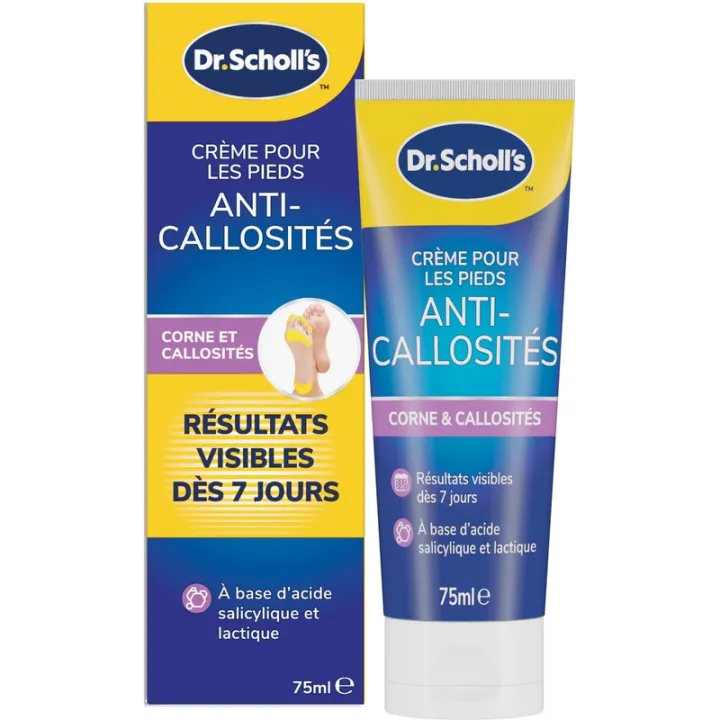
Dr. Scholl's Anti-Callus Foot Cream, also known as the Intensive Anti-Callus Treatment, is a cream formulated with salicylic acid and lactic acid in a base of glycerin, shea butter, and peach kernel oil, enriched with allantoin. Its texture is designed for calloused areas under the heel and on the sole of the foot, where walking and body weight concentrate pressure.
In these areas, repeated pressure and friction—caused by ill-fitting shoes or long hours of standing—cause the epidermis to thicken, resulting in calluses that are yellowish, rough, and sometimes uncomfortable. The salicylic acid in the formula helps soften stubborn areas of hardened skin by acting on the surface layers of the thickened skin.
Glycerin and shea butter support this softening process, helping to restore soft, supple, and smooth skin with each application. Intended solely for callused areas, it does not replace moisturizing the rest of the foot, which is best addressed with a nourishing cream for dry feet.
It’s ideal after summer and weeks spent in sandals, before resuming running or hiking, or for those in professions that require standing for long periods. The principle is simple: regularly soften and remove hard skin with a daily application, rather than waiting for it to become thick and bothersome.
For best results, we recommend using the cream in combination with the Scholl Double Action Diamond Crystal Foot File. The two steps complement each other: the cream softens the calluses on the surface, the rough side of the file mechanically removes the softened skin, and its smoothing side finishes the job—without a blade.
How do you apply this foot cream?
Directions for Use
Apply daily directly to areas of hardened skin and massage in.
Share your feedback on the usage instructions and dosage of Dr. Scholl’s Anti-Callus Foot Cream with our partner “Verified Reviews” after your purchase.
Precautions
- For external use only, intended for the skin of the feet. Apply only to areas of calluses and corns, avoiding the surrounding healthy skin and the spaces between the toes.
- Not suitable for people with diabetes and/or those suffering from venous circulatory disorders.
- Lower limb arteritis, neuropathy, loss of sensation in the feet: do not use without consulting a doctor or podiatrist.
- Do not use if you have a known allergy to salicylic acid, salicylates, or aspirin.
- Do not apply to broken, irritated, cracked, or chapped skin, wounds, infected areas, moles, or warts.
- Do not use in combination with any other product that softens hard skin (corn remover, salicylic acid bandage, high-urea cream, fruit acids) on the same area.
- If you have a painful callus or corn that bleeds or changes in appearance, consult a podiatrist or doctor before use.
- Avoid sun exposure while using this product. It is recommended to apply sunscreen after using the product.
- Avoid contact with the eyes; if contact occurs, rinse thoroughly with water. Wash your hands after application.
- Discontinue use if burning, severe redness, or irritation occurs.
- Product intended for adults. Do not use on children under 3 years of age. Pregnancy and breastfeeding: consult a healthcare professional before use.
- Contains fragrance and cetearyl alcohol, which may cause a reaction in sensitive skin.
- Allow the cream to absorb before walking barefoot: smooth surfaces may become slippery.
- Close the tube tightly after use. Store at a temperature not exceeding 25 °C; use within 12 months after opening. Keep out of reach of children.
What are the ingredients in this anti-callus cream?
Ingredients
Aqua, Decyl Oleate, Glycerin, Steareth-2, Butyrospermum Parkii Butter, Cetearyl Alcohol, Steareth-21, Salicylic Acid, Prunus Persica Kernel Oil, Citric Acid, Tartaric Acid, L-Lactic Acid, Sodium Hydroxide, Allantoin, Xanthan Gum, Fragrance.
Packaging
75 ml tube.
Our expert advice on Dr. Scholl’s Callus Cream
Before your first application, the key factor isn’t the thickness of the callus but the condition of your feet: sensitivity, circulation, and blood sugar levels. This is the part of the precautions you should read first. At the counter, we also look at where the callus forms: if it keeps coming back in the same spot, it indicates pressure or a shoe that rubs. The cream reduces the callus, but it doesn’t address the underlying cause—which is often best handled by a podiatrist.
Many customers aim for a perfectly smooth sole. That’s not the goal: a thin layer of callus protects the weight-bearing areas, and trying to remove it entirely perpetuates the cycle. The desired result is supple skin, free of bothersome thickness or a cardboard-like sensation under the heel. Once you’ve reached this stage, make it a habit to check your feet weekly so you can resume treatment as soon as the skin starts to harden again.
FAQ
Can I use Dr. Scholl’s Anti-Callus Foot Cream with a foot file?
Yes, combining the two is actually recommended. The foot file should ideally be used on skin that has already been softened by a few days of application, once or twice a week. Filing too frequently or with too much pressure heats up the skin and causes it to thicken again.
How long does it take for Dr. Scholl’s Anti-Callus Foot Cream to show results?
Visible results are expected after just 7 days of daily application. The time required depends on the initial thickness of the callus and how consistently you apply the cream: missing an application every other day significantly extends the time needed.
Is Dr. Scholl’s Anti-Callus Foot Cream effective on very thick calluses?
On very thick calluses, the cream works more slowly and may not be sufficient on its own. In this case, a visit to a podiatrist can remove the excess callus in a single session; the cream then takes over for ongoing care.