When should this gel be used on extremely dry areas?
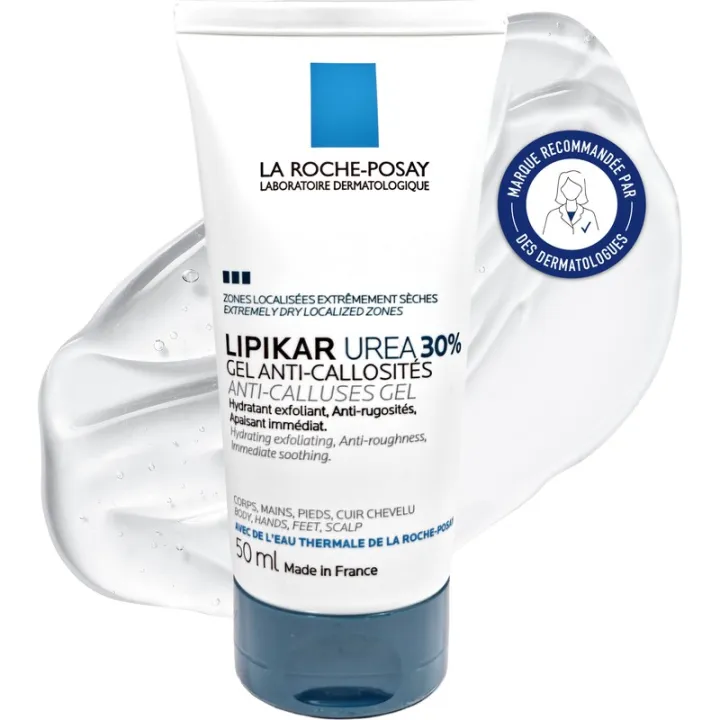
Lipikar Urea 30% Anti-Callus Gel is a clear gel formulated with 30% urea, combined with niacinamide (vitamin B3) and glycerin. It is intended for localized areas of extreme dryness, where the skin has thickened to the point of becoming hard and rough. At this concentration, urea does more than just moisturize: it softens the stratum corneum and helps remove accumulated dead skin cells. It is one of the most concentrated formulas among our creams for dry feet and rough heels.
Its main purpose is to target areas where calluses form. This gel exfoliates very dry areas prone to corns and calluses: thickening heels, the soles of the feet, the base of the big toe, and the palms of the hands that are stressed by tools or handles. Exfoliation occurs chemically, through urea, without rubbing or sanding the skin.
As a moisturizing exfoliant, the gel also combats roughness: the skin gradually regains a smoother, more supple texture, and niacinamide adds a soothing effect to the formula. After 28 days of twice-daily application, 88% of the 91 people surveyed found their rough areas to be less rough (self-assessment). The gel has been tested on sensitive skin.
It can be used on four areas: the body, hands, feet, and scalp —including rough elbows and knees, hands damaged by gardening or DIY projects, heels hardened by walking, and dry, localized patches on the scalp. Its gel texture spreads easily, even on small areas.
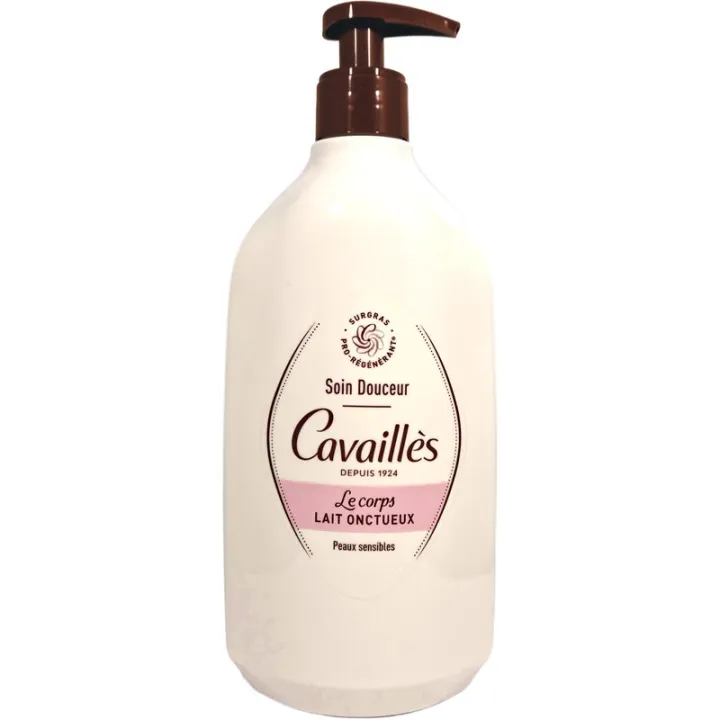
This concentrated gel is reserved for areas that need it, while the rest of the body requires gentler daily care. For this, we recommend Cavaillès Corps Lait Onctueux Body Lotion, formulated for sensitive skin. Its ultra-nourishing base with sweet almond oil helps preserve the hydrolipidic film across the entire skin surface, ensuring that the 30% urea remains confined to the heels, elbows, or hands—where it’s needed most.
How do you apply this urea exfoliating gel?
Directions for Use
Apply topically once or twice a day to very dry and rough areas.
Share your feedback on the usage instructions and dosage of Lipikar Urea 30% Anti-Callus Gel with our partner “Verified Reviews” after your purchase.
Precautions
- For adults and adolescents 15 years of age and older only.
- For external use only. Do not swallow.
- Do not apply to the face. Avoid the eye and lip areas. In case of contact with the eyes, rinse immediately and thoroughly with clean water.
- If you have diabetes, poor circulation in the legs, or loss of sensation in the feet, do not treat corns or calluses on your feet yourself: consult your doctor or a podiatrist before applying this gel to your feet, and inspect your feet daily.
- Do not apply to broken or irritated skin, open cracks, wounds, or burns: high-concentration urea may cause tingling and a burning sensation in these areas.
- Do not apply between the toes, where the skin remains moist and delicate.
- Do not use this product in combination with any other exfoliating product on the same area, such as a scrub, a treatment containing fruit acids or salicylic acid, or another urea-concentrated treatment.
- Urea promotes the absorption of products applied to the same area. If this area is being treated with a topical medication, consult your doctor or pharmacist before using this gel.
- A painful corn, a callus that bleeds, cracks, or changes color, thick, red, or itchy patches, or persistent dandruff on the scalp require medical attention.
- If redness, burning, or itching persists after application, discontinue use and rinse with clean water.
- Keep the tube tightly closed and away from heat. Use within 12 months after opening. Keep out of reach of children.
What are the ingredients in this gel for rough skin?
Ingredients
Aqua / Water / Eau, Urea, Caprylic/Capric Triglyceride, Hydroxyethylpiperazine Ethane Sulfonic Acid, Glycerin, Propanediol, Pentylene Glycol, Niacinamide, Sclerotium Gum, Ammonium Polyacryloyldimethyl Taurate, Triacetin, Sodium Hydroxide, Caprylyl Glycol, Xanthan Gum.
Packaging
50 ml tube.
Our Expert Advice on Lipikar Urea 30% Anti-Callus Gel
A callus is not a skin defect: it is the skin’s response to repeated pressure or friction, such as from shoes that are too tight, uneven weight distribution, or a tool used daily. The gel thins the callus; it does not remove the underlying cause. If nothing changes regarding footwear or pressure distribution, the callus will reform within a few weeks. And for people with diabetes or those with reduced sensation in their feet, foot care takes precedence over everything else in this guide.
Before you begin, examine the area closely. A callus dotted with small black spots—one that’s painful when pinched on the sides rather than when pressed on, or that disrupts the skin’s natural lines—may indicate a plantar wart: this gel won’t make it go away, and you should consult a pharmacist. At the counter, we also see customers applying too much product in an attempt to speed up the process. Consistency is more important: apply a thin layer to clean, dry skin and let it absorb before putting on socks.
FAQ
Can I apply Lipikar Urea 30% Anti-Callus Gel all over my body?
No. Lipikar Urea 30% Anti-Callus Gel is a topical treatment intended only for extremely dry and thickened areas: heels, elbows, knees, hands, and dry patches on the scalp. At 30%, urea has an exfoliating effect that is not necessary for skin that is simply dry, without calluses or significant roughness.
Can I use Lipikar Urea 30% Anti-Callus Gel on my scalp?
Yes. The scalp is one of the areas for which Lipikar Urea 30% Anti-Callus Gel is intended, just like the body, hands, and feet. Its clear gel texture allows you to apply it directly to dry, localized patches by parting the hair, without spreading it over the entire head.
Can I use Lipikar Urea 30% Anti-Callus Gel for an extended period?
There is no specified maximum duration for using Lipikar Urea 30% Anti-Callus Gel. It should be used as long as the affected areas remain thick and rough. Once the skin has softened, applications can be spaced out at a frequency sufficient to prevent calluses from reforming.