0
Menu
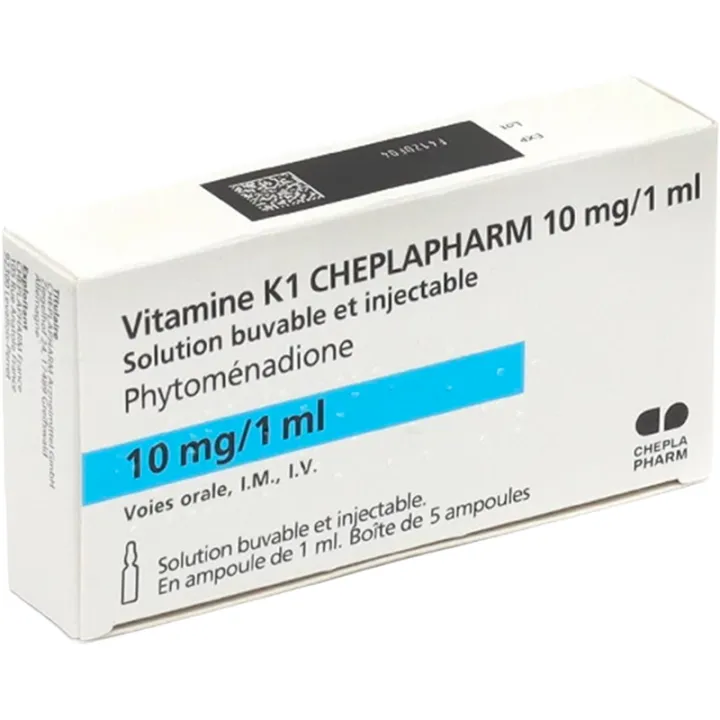
Vitamin K1 Cheplapharm 10mg/1ml 5 phials
Over-the-counter medication

Vitamin K1 Cheplapharm 10mg/1ml 5 phials

Brand : OCP OCP

Vitamin K1 Cheplapharm 10mg/1ml helps prevent and treat bleeding due to vitamin K deficiency. Drinkable or injectable form, suitable for adults and children, on prescription.

€9.62 EXCL. VAT €9.82 INCL. VAT
Replenishment in progress Pre-order Secure payment
Reference : 3400930038055
You must be logged in to add this product to a list. Customer login
See delivery conditions

Our doctors of pharmacy advise you

Coalgan Double Action Bleeding Wick Coalgan Double Action Bleeding Wick
€4.39
Shipped within 24h
Pileje D3 Biane Vitamin D3 30 Capsules Pileje D3 Biane Vitamin D3 30 Capsules
€9.99
Shipped within 24h
Bausch+Lomb Bloxang Hemostatic Sponges Box of 4 Bausch+Lomb Bloxang Hemostatic Sponges Box of 4
€6.99
Shipped within 24h
Coalgan Stop Bleeding Powder 8 g Coalgan Stop Bleeding Powder 8 g
€4.71
Shipped within 24h
Nutri&Co Vitamin D Plant 15 ml Nutri&Co Vitamin D Plant 15 ml
€19.90
Shipped within 24h
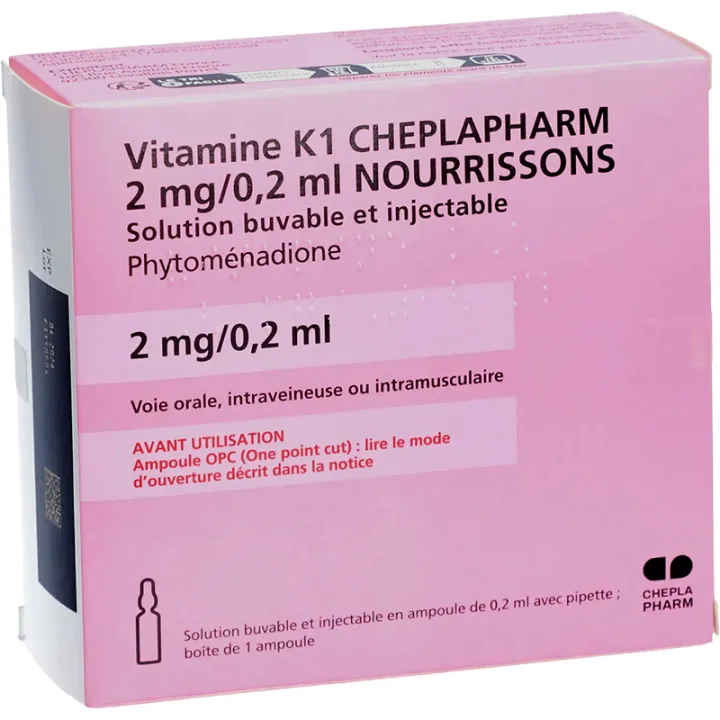
Vitamin K1 Cheplapharm 2mg/0,2ml Infants 1 Ampoule Vitamin K1 Cheplapharm 2mg/0,2ml Infants 1 Ampoule
€9.82
Add to cart
Shipped within 24h

When should Vitamine K1 Cheplapharm 10mg/1ml be used to prevent bleeding?

Vitamin K plays a central role in the body's natural blood clotting mechanisms. When the body lacks it, blood can have greater difficulty forming a stable clot, increasing the risk of bleeding. Vitamin K1 Cheplapharm 10mg/1ml provides a directly usable form of vitamin K1, called phytomenadione, to help your body regain balanced hemostatic function.

Coagulation can be compared to a construction site where several workers have to work together. Without vitamin K, some essential workers are missing, slowing down or preventing the construction of the "plug" that stops bleeding. By providing this vitamin, you help the body to put these workers back on the job and restart the coagulation chain.

This medicine is used in adults and children alike, to treat and prevent hemorrhage due to vitamin K deficiency. It is used when the body does not produce enough vitamin K, or when its use is disturbed, notably in certain medical contexts or associated treatments.

Its primary action is to support coagulation balance and prevent bleeding linked to vitamin deficiency. It thus helps maintain functional hemostasis, essential for limiting blood loss and promoting normal recovery.

Thanks to its oral or injectable form, this medication can be adapted to different clinical situations, according to the doctor's advice. It is a reliable solution for promoting the proper functioning of the hemostatic system and supporting patients at risk of deficiency.

For warnings, precautions and contraindications, please refer to the Vitamine K1 Cheplapharm 10 mg/1ml leaflet.

In addition, vitamin K1 is also available in another dosage, more suitable for infants: vitamin K1 Cheplapharm 2mg/0,2ml. This alternative makes it possible to adapt intake precisely to age and needs, creating a coherent synergy of management.

How to use this product

Dosage and duration of treatment vary according to the patient's age, pathology, route of administration and biological results. Always ask your doctor for advice before use.

For oral administration, use a syringe: after opening the ampoule, tap the top to dispense the liquid. Hold the ampoule with the white dot facing upwards, protect it with a compress and press backwards to open it. Draw up the prescribed quantity with a needle-free syringe, instill the contents into the mouth, then rinse out.

Injections should only be administered by a doctor or nurse.

In case of overdose, contact your doctor immediately.

Give your opinion on the advice for use and dosage of Vitamine K1 Cheplapharm 10mg/1ml with our partner Avis Vérifiés after your purchase.

Precautions

  • Allergy to vitamin K
  • Peanut allergy
  • Soy allergy
  • G6PD deficiency or family history of G6PD deficiency
  • Do not use if ampoule is cloudy or has two phases
  • Inform your doctor and pharmacist of any other treatment in progress (risk of temporary resistance to VKAs).
  • Pregnancy and breast-feeding: use only on medical advice.

What is the composition of this medicine to support coagulation?

Phytomenadione 10.00 mg; Other ingredients: Glycocholic acid, Soya lecithin, 25% hydrochloric acid, Sodium hydroxide, Water for injection (for 1 ampoule of 1 ml).

Packaging :

box of 5 x 1 ml ampoules. Available at the best price from our online pharmacy.

Our expert advice on Vitamine K1 Cheplapharm 10mg/1ml to prevent bleeding

To optimize the efficacy of your treatment, follow the prescribed dosage precisely and take your doses at regular intervals. In the case of associated anticoagulant treatment, biological monitoring is often necessary to adjust doses and maintain a safe balance.

FAQ

Is Vitamin K1 Cheplapharm 10mg/1ml fast-acting?
Yes, phytomenadione can be rapidly used by the body to boost vitamin K-dependent coagulation factors.

Can this product be used in children?
Yes, it is indicated for both adults and children, with dosage adapted to age and weight.

Can it be combined with other treatments?
Yes, but it is essential to inform your doctor and pharmacist to avoid any interaction, particularly with anticoagulants.

Pharmacovigilance Report an adverse drug reaction(s)

Download PDF leaflet

NOTICE

ANSM - Updated on : 22/04/2025

Product name

VITAMIN K1 CHEPLAPHARM 10 mg/1 ml, oral and injectable solution

Phytomenadione

Sidebar

Please read this leaflet carefully before using this medicine, as it contains important information for you.

Always use this medicine exactly as your doctor or pharmacist has instructed you.

- Keep this leaflet. You may need to read it again.

- Ask your pharmacist for any advice or information you may need.

- If you experience any side effects, talk to your doctor or pharmacist. This also applies to any side effects not mentioned in this leaflet. See section 4.

- You should contact your doctor if you do not feel any improvement or if you feel less well.

What does this leaflet contain?

1. What is VITAMIN K1 CHEPLAPHARM 10 mg/1 ml, oral and injectable solution and what is it used for?

2. What do I need to know before taking VITAMIN K1 CHEPLAPHARM 10 mg/1 ml, solution for oral use and injection?

3. How do I use VITAMIN K1 CHEPLAPHARM 10 mg/1 ml, solution for injection?

4. What are the possible side effects?

5. How to store VITAMIN K1 CHEPLAPHARM 10 mg/1 ml, solution for oral use and injection?

6. Package contents and other information.

1. WHAT IS VITAMIN K1 CHEPLAPHARM 10 mg/1 ml, oral and injectable solution AND WHAT IS IT USED FOR?

Pharmacotherapeutic class - ATC code: ANTI-HEMORRAGICS / VITAMIN K and OTHER HEMOSTATICS (B02BA01: blood, hematopoietic organs)

This drug is recommended for the treatment and prevention of vitamin K deficiency hemorrhage in adults and children.

2. WHAT DO I HAVE TO KNOW BEFORE USING VITAMIN K1 CHEPLAPHARM 10 mg/1 ml, solution for oral and injectable use?

Never use VITAMIN K1 CHEPLAPHARM 10 mg/1 ml, oral and injectable solution:

- if you are allergic to the active substance (phytomenadione) or to any of the other ingredients listed in section 6;

- if you are allergic to larachide or soy, due to the presence of soy lecithin.

IF IN DOUBT, ASK YOUR DOCTOR OR PHARMACIST.

Warnings and precautions

Talk to your doctor or pharmacist before using VITAMIN K1 CHEPLAPHARM 10 mg/1 ml.

Do not use this medicine if the contents of the ampoule have become cloudy or show two phases of separation.

You should inform your doctor if you (or a family member) suffer from glucose-6-phosphate dehydrogenase deficiency, as there is a risk of hemolysis (destruction of red blood cells) with vitamin K1.

NEVER LEAVE IN THE REACH OF CHILDREN.

IF IN DOUBT, ASK YOUR DOCTOR OR PHARMACIST.

Other medicinal products and VITAMIN K1 CHEPLAPHARM 10 mg/1 ml, oral and injectable solution

Tell your doctor or pharmacist if you are taking, have recently taken or may take any other medicines.

Pregnancy and breast-feeding

This medicine should only be used on the advice of your doctor.

Ask your doctor or pharmacist for advice before taking any medicine.

Driving and use of machinery

Vitamin K1 has no or negligible effect on the ability to drive vehicles and operate machinery.

VITAMIN K1 CHEPLAPHARM 10 mg/1 ml, solution for oral use and injection contains sodium and soya lecithin.

This medicine contains less than 1 mmol (23 mg) sodium per ampoule (2.64 mg sodium per 1 ml ampoule), i.e. it is essentially "sodium-free".

If you are allergic to larachide or soy, do not use this medicine (see section 2 "Never use VITAMIN K1 CHEPLAPHARM 10 mg/1 ml, solution for injection and drinking").

3. HOW TO USE VITAMIN K1 CHEPLAPHARM 10 mg/1 ml, oral and injectable solution

Dosage

Dosage and rate of administration of vitamin K1 vary according to age, indications, route of administration and results of laboratory tests.

Method of administration

Oral :

Oral administration of VITAMIN K1 CHEPLAPHARM 10 mg/1 ml, oral and injectable solution can be performed using a syringe as follows:

Open ampoules:

image001.png

Caution :

Open the ampoule with a compress (or equivalent).

"Tap the top of the ampoule to draw out the liquid. Then grasp the ampoule, with the white dot facing upwards and facing you. Cover the top of the bulb with the compress and place your thumb on the white spot. The bulb can be easily opened by applying pressure towards the back, as shown in the diagram".

Draw up the required volume from the ampoule using a syringe fitted with its needle; then remove the needle from the syringe and inject the contents directly into the mouth; rinse mouth afterwards.

For low doses, your doctor may recommend using ampoules of Vitamin K1 CHEPLAPHARM 2 mg/0.2 ml NOURRISSONS oral and injectable solution.

Injection:

Any intravenous administration should be carried out by your doctor and/or nurse.

Frequency of administration

As prescribed by your doctor.

Duration of treatment

As prescribed by your doctor.

If you have taken more VITAMIN K1 CHEPLAPHARM 10 mg/1 ml, oral and injectable solution than you should have

In case of overdose, contact your doctor immediately.

If you forget to take VITAMIN K1 CHEPLAPHARM 10 mg/1 ml, solution for oral use and injection

Not applicable.

If you stop taking VITAMIN K1 CHEPLAPHARM 10 mg/1 ml, solution for oral use and injection

Not applicable.

4. WHAT ARE THE POSSIBLE SIDE EFFECTS?

As with all medicines, this product may cause undesirable effects, but these do not always occur in everyone.

- Intramuscular: risk of hematoma (bruising) or bleeding disorders; exceptionally, thickening of the skin at the injection site.

- Intravenous: possible allergic reaction.

- All routes: due to the presence of soy lecithin, risk of hypersensitivity reactions (anaphylactic shock, urticaria).

IF YOU NOTICE ANY SIDE EFFECTS NOT LISTED IN THIS LEAFLET, OR IF ANY SIDE EFFECTS BECOME SERIOUS, PLEASE TELL YOUR DOCTOR OR PHARMACIST.

Reporting side effects

If you experience any side effects, please tell your doctor or pharmacist. This also applies to any side effects not mentioned in this leaflet. You can also report adverse reactions directly via the national reporting system: Agence nationale de sécurité du médicament et des produits de santé (ANSM) and the network of Centres Régionaux de Pharmacovigilance - Website: https://signalement.social-sante.gouv.fr/...

By reporting adverse reactions, you contribute to providing more information on drug safety.

5. HOW TO CONSERVE VITAMIN K1 CHEPLAPHARM 10 mg/1 ml, oral and injectable solution?

Keep out of sight and reach of children.

Do not use this medicine after the expiration date shown on thecarton. The expiry date refers to the last day of the month.

Store at a temperature not exceeding 25°C, protected from light.

After opening: use immediately.

Do not dispose of in the sewage system or with household waste. Ask your pharmacist to dispose of any medicines you no longer use. This will help protect the environment.

6. CONTENTS AND OTHER INFORMATION

What VITAMIN K1 CHEPLAPHARM 10 mg/1 ml, oral and injectable solution contains

- The active substance is :

Phytomenadione........................................................................................................ 10.00 mg

For one 1 ml ampoule

- The other components are :

Glycocholic acid, soy lecithin, 25% hydrochloric acid, sodium hydroxide, water for injection.

What VITAMIN K1 CHEPLAPHARM 10 mg/1 ml, oral and injectable solution is and what it contains

This medicine is available as an oral and injectable solution in 1 ml ampoules. Boxes of 3, 5, 6, 10, 25 and 30 ampoules.

Not all presentations may be marketed.

Marketing authorization holder

CHEPLAPHARM ARZNEIMITTEL GMBH

ZIEGELHOF 24

17489 GREIFSWALD

GERMANY

Marketing authorization holder

Cheplapharm France

68 Rue Marjolin

92300 Levallois-Perret

Manufacturer

CHEPLAPHARM ARZNEIMITTEL GMBH

ZIEGELHOF 23-24

17489 GREIFSWALD

GERMANY

Product names in member states of the European Economic Area

Not applicable.

The last date on which this leaflet was revised was :

[to be completed subsequently by the holder]

< {MM/YYYY}>< {month/YYYY}.>

Other

Detailed information on this drug is available on the ANSM (France) website.

VIDAL DE LA FAMILLE

VITAMIN K1 CHEPLAPHARM

Updated on June 20, 2019
Drug family : Antihaemorrhagic

Indications

This medicine contains natural vitamin K1. This vitamin is involved in the formation of blood clots, enabling the body to fight haemorrhage. It is normally supplied by the diet, and deficiencies only occur in very specific situations: intestinal disease which reduces its absorption, prolonged intake of certain powerful antibiotics, oral anticoagulants.

It is used in the treatment and prevention of haemorrhage in newborns and haemorrhage due to vitamin K deficiency (caused by certain drugs or intestinal disease).

Presentations

VITAMIN K1 CHEPLAPHARM 2 mg/0.2 ml infant: solution for drinking and injection; box of 1 ampoule of 0.2 ml and 1 pipette graduated at 1 mg and 2 mg
Optional prescription - 65% reimbursable - Price: € 5.06
VITAMIN K1 CHEPLAPHARM 10 mg/ml: oral and injectable solution; box of 5 x 1 ml ampoules
Optional prescription - 65% reimbursable - Price: €4.99

Prices do not include dispensing fees.

Composition

p ampp amp
Phytomenadione (vitamin K1)2 mg10 mg
Soy lecithin++

Warning

Do not use this medicine without medical advice.

Precautions should be taken in cases of G6PD deficiency.

Drug interactions

Inform your doctor if you are taking an oral anticoagulant.

Fertility, pregnancy and breast-feeding

This product does not contain any substance known to be toxic during pregnancy or breast-feeding, but should not be used without medical advice.

Directions for use and dosage

This drug may be administered orally or by injection (intramuscular or intravenous).

For oral administration: use the pipette supplied with the ampoule for the 2mg/0.2ml solution, or a syringe with needle for the 10mg/ml solution. Break the neck of the ampoule and draw up the solution with the pipette or syringe. The contents of the pipette are emptied directly into the mouth. If using a syringe, remove the needle before emptying the contents into the mouth.

If administered by injection: the solution must not be mixed with other drugs.

Usual dosage :

2 mg/0.2 ml solution:
  • Neonates:
    • healthy newborns (with no known risk of bleeding): 1 dose of 1 mg by injection at birth, or 1 dose of 2 mg orally at birth, to be repeated once between the child's4th and 7th days, and a second time at 1 month of age (the3rd dose is not necessary for babies fed exclusively by bottle);
    • at-risk newborns and premature babies weighing over 2.5 kg: 1 dose of 1 mg by injection at birth. Subsequent doses are determined according to coagulation.
    • premature babies under 2.5 kg: 1 dose by injection at birth. The quantity injected depends on the child's weight. Subsequent doses are determined according to coagulation.
10 mg/ml solution:
  • Adults:
    • 1 to 5 ampoules per day, depending on the severity of vitamin K deficiency;
    • in expectant mothers treated with enzyme inducers, to prevent hemorrhage in the newborn: 1 to 2 vials per day for 15 days prior to the expected date of delivery.

Advice

In the event of regurgitation by the infant at the time of intake or in the hours following, an additional dose should be administered. Ask your doctor for advice.

Protect from light.

Possible side effects

Allergic reaction due to the presence of soy lecithin.

In case of intramuscular (IM) injection: risk of hematoma or bleeding at the injection site.

In case of intravenous injection: allergic reaction (rash, angioedema, etc.).

LEXICON

antibiotic

Substance capable of blocking the multiplication of certain bacteria or killing them. The spectrum of an antibiotic is the set of bacteria on which the product is usually active. Unlike bacteria, viruses are not sensitive to antibiotics. The first antibiotics were extracted from fungal cultures: penicillium (penicillin), streptomyces (streptomycin). Today, they are produced by chemical synthesis. Antibiotics are divided into families: penicillins, cephalosporins, macrolides, tetracyclines (cyclins), sulfonamides, aminoglycosides, lincosanides, phenicoles, polymyxins, quinolones, imidazoles and others.

Inappropriate use of antibiotics can encourage the emergence of resistance: use antibiotics only when prescribed by a doctor, respect their dosage and duration, and do not give or advise another person to take an antibiotic you have been prescribed.

See article: Antibiotic families

anticoagulant

A drug that prevents blood from clotting, thus preventing the formation of clots in blood vessels.
Anticoagulants are mainly used to treat or prevent phlebitis and pulmonary embolism, particularly after surgery. They are also used to prevent the formation of clots in the heart during rhythm disorders such as atrial fibrillation, or in patients with artificial heart valves.
There are three categories of anticoagulants:

  • direct oral anticoagulants (DOACs), which specifically block certain enzymes involved in coagulation, such as thrombin or factor Xa. Their use usually requires no blood monitoring.
  • anti-vitamin K (AVK) drugs, which block the action of vitamin K, and whose effectiveness must be regularly monitored by a blood test known as INR.
  • injectable anticoagulants, derived from heparin. Their use requires regular measurement of blood platelets.

Anticoagulants should not be confused with antiaggregants such as aspirin, which fight blood clots by a different mechanism and do not have the same indications.

See article: Anticoagulant treatments

deficiency

Deficiency usually involving nutrients, vitamins, minerals, etc. A diversified diet is the best way to prevent deficiencies.

rash

Appearance of pimples or patches on the skin. These lesions may be caused by food or medication, and may reflect an allergy or toxic effect. Many viruses can also cause rashes: rubella, roseola and measles are the best known.

G6PD

Abbreviation for glucose-6-phosphate dehydrogenase, an enzyme normally present in red blood cells. Its congenital absence (deficiency) is responsible for a disease called favism; it prohibits the use of certain drugs.

hematoma

Abnormal accumulation of blood inside the body.

See article: Hematoma and ecchymosis

hemorrhage

Loss of blood from an artery or vein. A hemorrhage can be external or internal and go unnoticed.

IM

Abbreviation for intramuscular.

enzyme inducer

The liver, the body's chemical factory, is responsible for the elimination or destruction of many drugs.

Certain substances stimulate the hepatic enzymes that perform this elimination function. These substances are enzyme inducers, and their consumption can reduce the blood concentration of drugs sensitive to their action, diminishing or even canceling their effect. Increasing the dosage of the drug in question can often compensate for the effect of taking an enzyme inducer, but the risk of ineffectiveness sometimes leads us to advise against combining them. This is the case with oral contraceptives ("pills"), which may lose their efficacy if combined with regular use of an enzyme inducer.

The risk is mentioned in the Drug Interactions section when a drug's action is likely to be significantly altered by the intake of an enzyme inducer.

The main enzyme inducers are generally drugs themselves:

  • anti-epileptics (anticonvulsants): carbamazepine, phenobarbital, phenytoin, primidone ;
  • anti-tuberculosis: rifabutin, rifampicin;
  • antifungal: griseofulvin.

Other substances may have an enzyme-inducing effect:

  • St. John's wort, a plant contained in certain preparations;
  • tobacco and alcohol.
intramuscular

Injection of a drug into a muscle, usually in the buttock. The effect of the drug, which only gradually enters the bloodstream, is delayed but prolonged. The skin must be disinfected beforehand, as this deep injection exposes it to the risk of abscess. Painful injections depend above all on the nature of the product used. This route of administration is contraindicated for haemophiliacs and people on anticoagulant therapy, as it exposes them to the risk of buttock haematoma.

Abbreviation: IM.

intravenous

Injection of a drug into a vein, usually at the elbow, after disinfecting the skin. In the case of direct intravenous injection using a syringe, the effect of the medication is immediate but brief. Infusion, on the other hand, enables continuous, controlled administration of the active substance, diluted in a vial of serum.

Abbreviation: IV.

soy lecithin

Lecithins are lipids (fats) which have the particularity of allowing the mixing of fats and water (forming an emulsion). For example, egg yolk is essentially composed of lecithins, whose properties are put to good use in making mayonnaise. Lecithin extracted from soya (E422) is used as an excipient (a component with no therapeutic activity) in certain drugs. Some people are allergic to lecithins (including those in egg yolks) and may react to those contained in these medications.

infant

Child aged between one and 30 months. A child less than one month old is a newborn.

newborn

A child less than one month old.

Quincke

Allergic reaction generally affecting the face. Quincke's edema is characterized by swelling that can be spectacular. The eyelids are often the first to be affected. In rare cases, when the swelling reaches the throat, respiratory problems may occur and urgent treatment is required.

allergic reaction

Reaction caused by the body's hypersensitivity to a drug. Allergic reactions can take a variety of forms: urticaria, angioedema, eczema, measles-like rash and so on. Anaphylactic shock is a generalized allergic reaction that causes a sudden drop in blood pressure.

See article: Can you be allergic to drugs?

vitamin

A substance essential for growth and proper functioning of the body. Vitamin requirements are normally covered by a varied diet. In developed countries, only vitamin D deficiency in young children or elderly people with little exposure to sunlight justifies systematic supplementation. Intake in excess of requirements, particularly through medication, can lead to overdosage and various disorders (mainly vitamins A and D).

See article: Vitamins.

route
  • The route used to administer drugs: oral, sublingual, subcutaneous, intramuscular, intravenous, intradermal, transdermal.
  • A set of hollow organs through which air (respiratory tract), food (digestive tract), urine (urinary tract), bile (biliary tract), etc. can pass.

Advice from our naturopaths

The role of homeopathy in bleeding The role of homeopathy in bleeding

Hemorrhages are blood suffusions of variable abundance by solution of continuity of one or more vascular envelopes, which can interest all the organs: soft parts, bones, mucous membranes and viscera, following various mechanisms: Trauma: accidental or surgical wounds, contusions that can produce bruises, hematomas or effusions in the peelable spaces, bone fractures, ruptured viscera, post-abortion haemorrhages. Diseases with erosion of the mucous membranes: peptic…

Read the article on the blog
Homeopathy in acute haemorrhoidal accidents Homeopathy in acute haemorrhoidal accidents

Homeopathy offers gentle, naturalsolutions for many health problems, including acute haemorrhoidal accidents. This article guides you through the different homeopathic approaches to effectively relieve the painful symptoms of haemorrhoids. We'll explore specific remedies adapted to different cases, along with dietary and hygiene advice for holistic management of your well-being. Find out how homeopathy can help you regain comfort and serenity…

Read the article on the blog
Hemorrhagic rectocolitis Hemorrhagic rectocolitis

Haemorrhagic rectocolitis is a chronic inflammatory bowel disease (or IBD). IBD is a group of diseases that affect the gastrointestinal tract. What is RH? This severe inflammation produces tiny sores called ulcers on the wall of the colon. In fact, the inflammation generally starts in the rectum and spreads upwards. However, it can affect the whole colon. In haemorrhagic rectocolitis,…

Read the article on the blog
Natural Health Advice