What is EcoIdées Xylitol Birch Sugar used for?
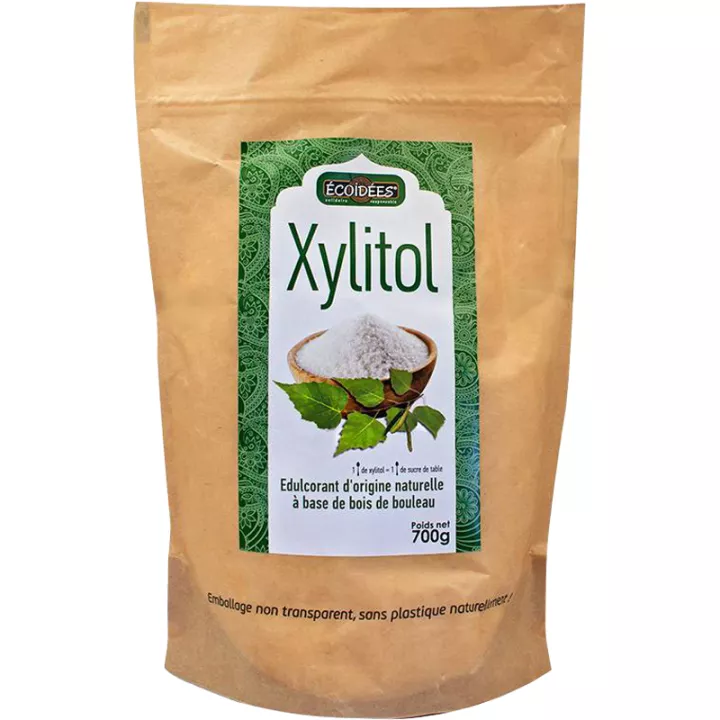
EcoIdées Xylitol Birch Sugar 700g is a sweetener widely used by people with diabetes or those looking to control or reduce their blood sugar levels.
It is natural and made from birch wood, specifically hemicellulose. It is 100% natural and does not require any extraction or processing with chemical solvents, unlike aspartame.
Xylitol is available in 250-gram or 700-gram packets, which you can find under “Quantity.”
Low in Calories and Non-Cariogenic
EcoIdées Birch Sugar Xylitol is a low-calorie sweetener and the only non-cariogenic, non-acidifying sugar. With its very low glycemic index, it is recommended for people who want to avoid sugar intake while still satisfying their sweet tooth. Unlike traditional sugar, xylitol does not promote tooth decay and does not affect the pH of the mouth, making it an ideal choice for optimal dental health.
Easy to use, Xylitol Birch Sugar can be used as a sugar substitute in a variety of recipes, whether sweet or savory. Add it to your hot or cold beverages, baked goods, desserts, sauces, and marinades for a delicious sweet taste without the drawbacks of traditional sugar. Its sugar-like texture also makes it a practical choice for cooking and baking.
Oral Health Benefits
In addition to its metabolic health benefits, xylitol is beneficial for oral health. It helps prevent cavities by reducing the amount of bacteria in the mouth and neutralizing harmful acids. By regularly incorporating Xylitol Birch Sugar into your diet, you can help maintain good oral hygiene and protect your tooth enamel.
We also offer CaloriLight Fat Blocker from Forté Pharma, a laboratory specializing in natural health, at the best price in our online pharmacy.
How should you use this sugar?
Xylitol has a very low glycemic index of 7 to 8, compared to 75 for refined sugar and 65 for brown sugar.
It therefore does not cause blood sugar spikes, which is beneficial for peoplewith diabetes.
Xylitol is the only product that carries the “good for your teeth” label on chewing gum packages because it protects teeth from cavities by not raising the pH level in the mouth—a factor necessary for the growth of cavity-causing bacteria.
Xylitol is used just like white sugar; in terms of taste, one teaspoon of xylitol equals one teaspoon of table sugar.
However, it expands by 30% when cooked, so you need to use 70 grams of xylitol for every 100 grams of sugar.
Precautions for use:
- Caution regarding pets: Xylitol can be toxic to dogs; be sure to keep the product out of their reach.
- Consume in moderation: Although Ecoidées Xylitol Birch Sugar is a natural sweetener, excessive consumption may have a laxative effect in some people. It is recommended to start with small amounts and gradually increase the amount according to your preferences.
Share your feedback on the usage instructions and dosage of Ecoidées Xylitol Birch Sugar with our partner, Verified Reviews, after your purchase.
What is xylitol made of?
Completely free of GMOs, pesticides, gluten, and chemical residues, including solvents.
EcoIdées Xylitol Birch Sugar 700g has not been subjected to any sterilization or ionizing radiation and contains no allergens.
Xylitol is purified through crystallization, and our product contains no additives of any kind.
“Biosagesse” xylitol is imported from Finland.
Packaging:
700g bag
Is xylitol suitable for people on a low-carb diet?
Yes, xylitol is an ideal choice for people on a low-carb diet, as it has a very low glycemic index and does not affect blood sugar levels. It can be used as a sugar substitute in a variety of recipes while helping to control carbohydrate intake.
Does xylitol taste similar to sugar?
Yes, xylitol tastes very similar to sugar, without the unpleasant aftertaste associated with some artificial sweeteners. Its crystalline texture and natural sweetness make it a perfect substitute for sugar in many recipes.
Is xylitol suitable for people with diabetes?
Yes, xylitol is suitable for people with diabetes because it does not affect blood sugar levels and has a very low glycemic index. However, it is always recommended to consult a healthcare professional before introducing new sweeteners into the diet of people with diabetes.