When should you choose Urgo Callus Bandages?
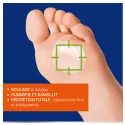
A callus is a localized thickening of the stratum corneum of the epidermis. It most often appears on the sole of the foot, particularly in areas that bear heavy pressure. It can also form on the palm of the hand. Unlike a corn, which is generally smaller and has a central core, a callus forms a larger, more diffuse area.
Its formation is a protective reaction of the skin. When the skin is subjected to repeated friction or excessive pressure, it increases its production of keratin. The outer layer gradually thickens to better withstand mechanical stress. Over time, this buildup of hard skin can become uncomfortable or painful when walking.
Ill-fitting shoes, a foot deformity, or uneven weight distribution can contribute to its development. If the pressure persists, the pain may alter the way a person walks and shift the load to other areas of the foot. A medical consultation is necessary in cases of redness, oozing, severe pain, or difficulty walking.
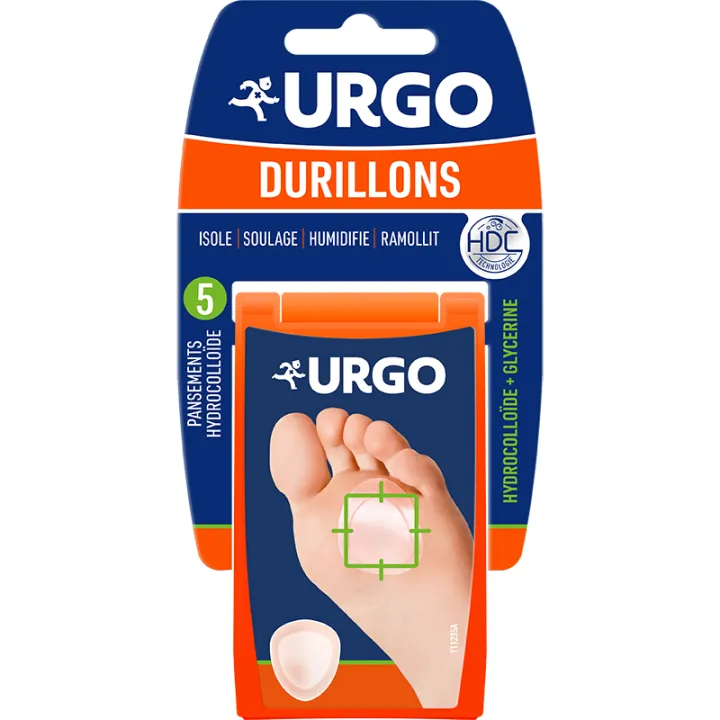
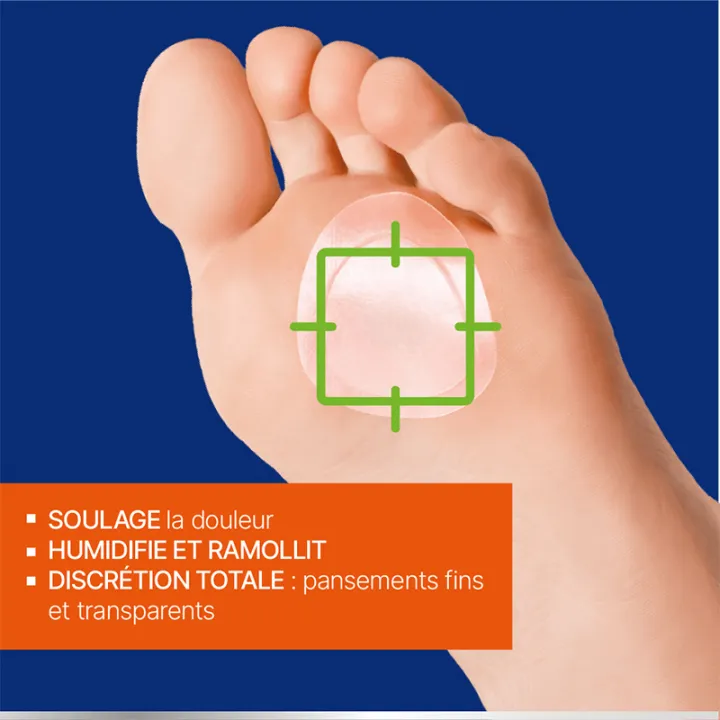
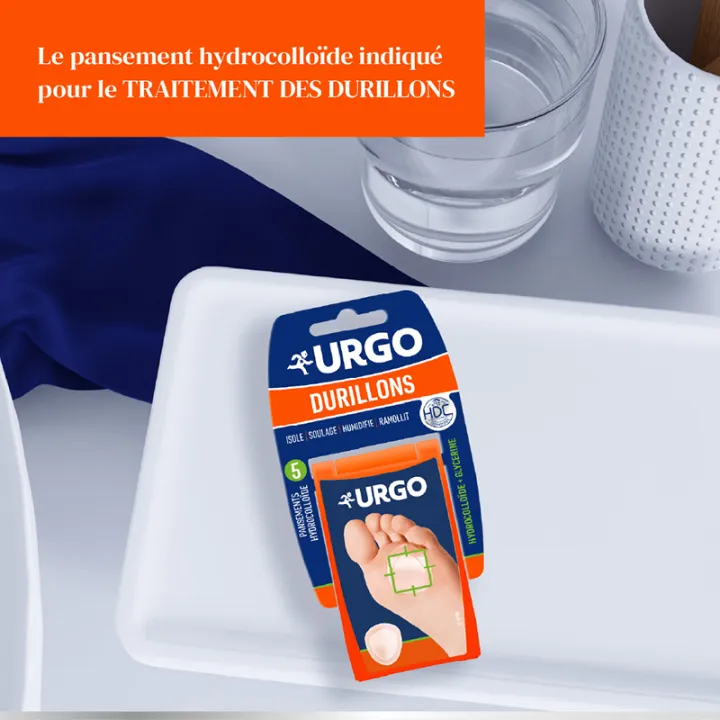
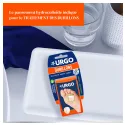
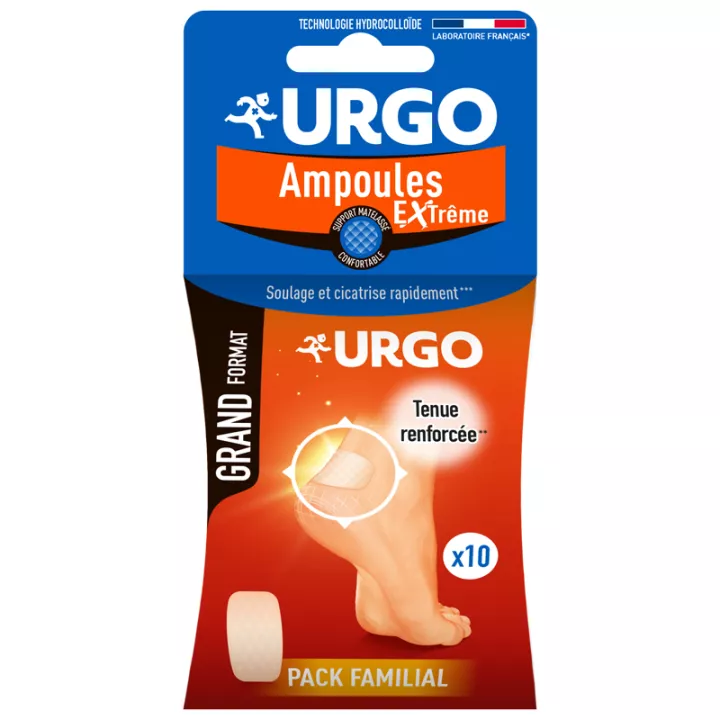
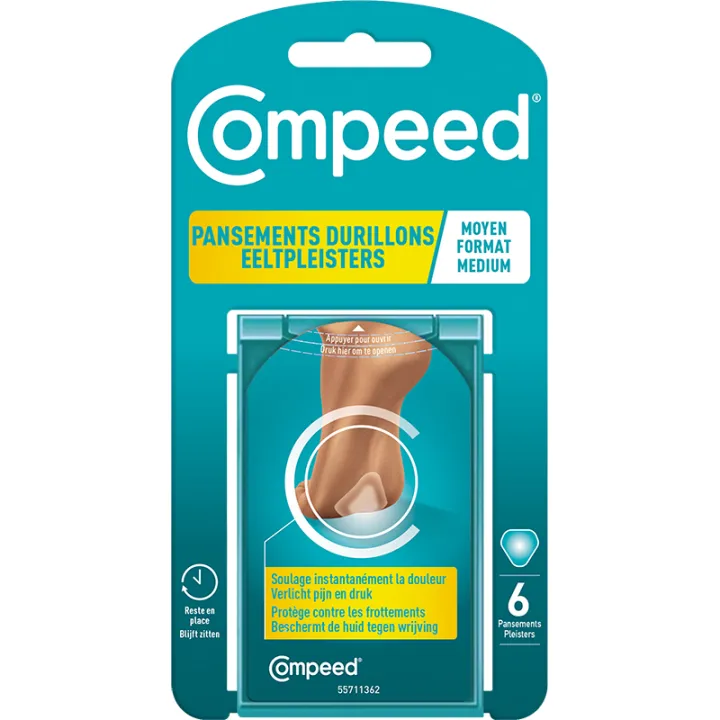
Urgo Durillon is designed to protect calluses located under the arch of the foot. Its shape helps distribute pressure on the thickened area and reduce the friction that causes discomfort.
Its hydrocolloid base, combined with glycerin, maintains a moist environment that gradually softens the hardened skin. This emollient action facilitates the natural removal of the callus while forming a protective barrier against mechanical irritation.
Before application, the skin must be thoroughly cleaned and dried, free of any cream or oil. The patch should be centered over the callus and replaced according to the instructions for use. To prevent recurrence, it is essential to identify the cause of friction or pressure and, if necessary, seek advice from a podiatrist.
We also offer Urgo Corn Protection at the best price in our online pharmacy.
How should these bandages be used?
- Remove the protective liners from the bandage, taking care not to touch the adhesive side with your fingers.
- Apply the bandage to clean, dry skin, positioning the pressure-relieving pad directly over the callus.
- It is recommended to wait until the Urgo Callus Patch peels off on its own.
- Once the bandage has come off, for best results, remove any excess softened skin from the affected area and then apply a new bandage if necessary.
Precautions for Use
- Single-use only
- Never cut an Urgo Callus Treatment bandage.
- Not recommended for use on wounds, mucous membranes, or damaged or irritated skin (risk of infection)
- Not recommended for use on feet with peripheral arterial disease
- Do not leave on the callus for more than 2 to 3 days (risk of infection)
- Do not use these bandages for more than 30 consecutive days (risk of irritation)
- Medical device for general public use
- Do not swallow
- Keep out of reach of children
- Store at room temperature (25°C) in a dry place.
What are its ingredients?
Composition
Hydrocolloid and glycerin
Packaging
Box of 5 gel bandages, size 4.5 cm x 5 cm.
Our naturopathic tips for preventing calluses
A callus often recurs when the pressure or friction causing it persists. Therefore, choose shoes that are wide enough, flexible, and shaped to fit your feet, along with socks that minimize friction. After showering, dry your feet thoroughly, especially between the toes. Regularly moisturize dry areas with an appropriate product, but do not apply it before applying the patch.
Do not use a razor blade, scissors, or callus-removing products without professional advice. If the callus returns, becomes painful, or affects your gait, consult a podiatrist. If you have diabetes, arteritis, or reduced sensation in your feet, seek medical advice first.
Frequently Asked Questions
How long can I keep an Urgo Callus Bandage on?
It is recommended to wait for the bandage to come off on its own, but do not keep it on for more than two to three days. Treatment should not exceed 30 consecutive days.
Can I cut a Urgo Callus Bandage to fit my foot?
No. The bandage must never be cut. Its pressure-relieving pad must be positioned directly over the callus to properly protect the affected area.
Can I apply Urgo Durillon to damaged skin?
No. It must not be applied to a wound, mucous membrane, or damaged or irritated skin. It is also contraindicated in cases of arterial foot disease. If you have diabetes or a circulatory disorder, seek medical advice before use.