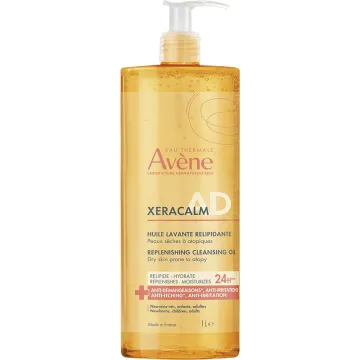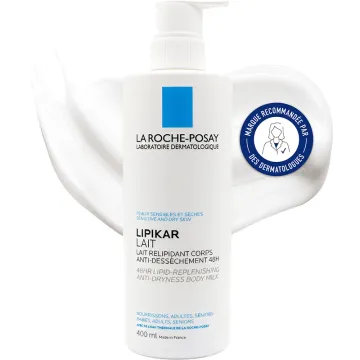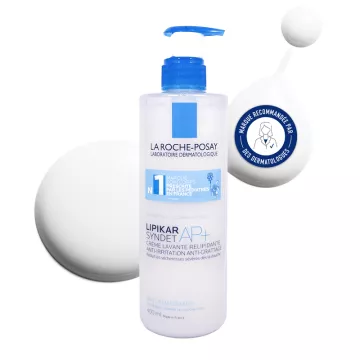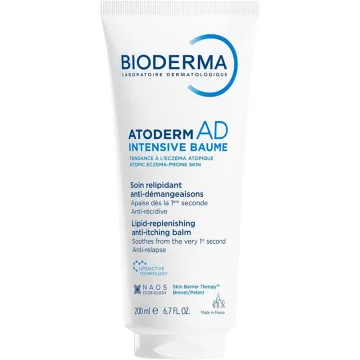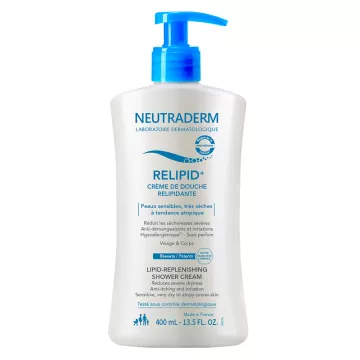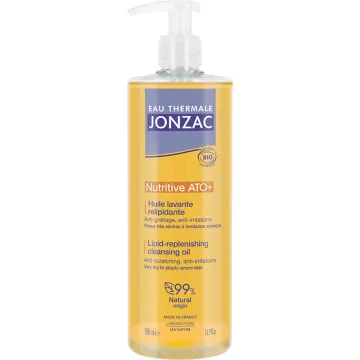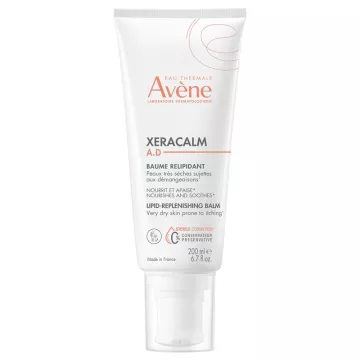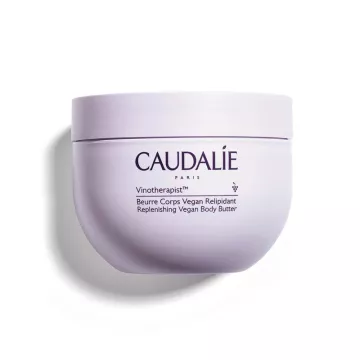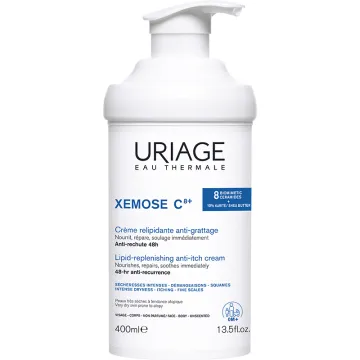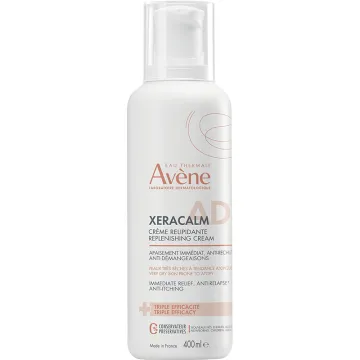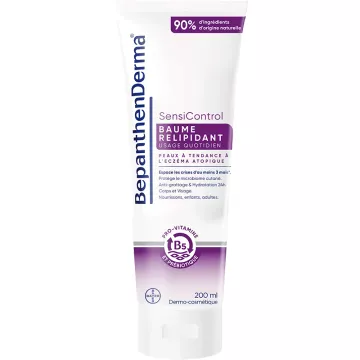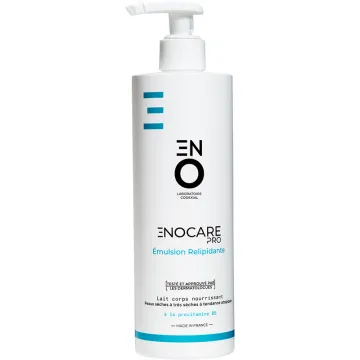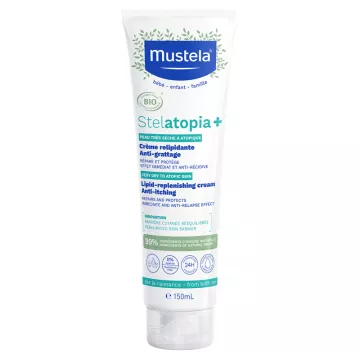
A lipid-replenishing cream is a cosmetic product formulated to help restore the skin’s natural lipids.
This type of product is specifically designed for dry to very dry skin, including skin prone to atopic conditions, to strengthen the skin barrier and reduce dehydration.
Its nourishing texture provides long-lasting comfort to skin weakened by external aggressors (cold, wind, heating, hard water).
It is part of a targetedmoisturizing routine for the most demanding skin types and should ideally be incorporated under the guidance of a professional for atopic skin.
Lipid-replenishing creams offer several cosmetic benefits for dry or sensitive skin:
For confirmed skin conditions (atopic dermatitis, eczema), the lipid-replenishing cream remains a complementary comfort treatment, never a medical treatment. Dermatological follow-up is essential.
A lipid-replenishing cream contains lipid-rich ingredients such as ceramides, essential fatty acids, and cholesterol, which mimic the composition of the skin’s natural lipids.
These components support the skin’s barrier function, help retain moisture, and limit the penetration of external irritants.
Ceramides play a particularly important role in the cohesion of cells in the stratum corneum and the skin’s overall resilience.
This cosmetic mechanism supports the skin microbiome and improves the tolerance of even the most sensitive skin to repeated contact (hard water, soaps, friction).
The main difference lies in the composition and purpose of the two products.
A moisturizing cream primarily provides water and humectants (hyaluronic acid, glycerin) that lock moisture into the skin.
A lipid-replenishing cream focuses on restoring the skin’s lipids to strengthen the protective barrier and limit water loss.
Lipid-replenishing creams are therefore particularly suitable for very dry, dehydrated, or atopic-prone skin, where a simple moisturizer is insufficient.
Lipid-replenishing creams are particularly suitable for several skin types:
People with sensitive skin particularly appreciate hypoallergenic formulas that are fragrance-free and free of allergenic preservatives.
For eczema, atopic dermatitis, psoriasis, or other chronic skin conditions: a prior dermatological consultation is essential.
For optimal effectiveness, apply the lipid-replenishing cream to clean, slightly damp skin after cleansing.
The residual moisture helps lock in water and enhance the penetration of the lipid-based active ingredients.
Use gentle, circular motions, focusing on particularly dry areas (elbows, knees, legs) or areas that feel uncomfortable.
Apply morning and evening as part of yourskincare routine, or follow your dermatologist’s specific recommendations if you have a skin condition.
An effective lipid-replenishing cream combines several active ingredients known for their skin tolerance and affinity:
Many lipid-replenishing creams are specifically formulated for the face and adapted to the thinner skin in this area.
Choose a product explicitly labeled “for the face” to avoid a texture that’s too occlusive on areas prone to oiliness (T-zone, sides of the nose).
For sensitive or acne-prone skin, opt for non-comedogenic, dermatologically tested formulas.
If you have moderate to severe acne, consult a dermatologist before adding a new moisturizing cream to your routine.
Lipid-replenishing creams may be suitable for children with dry or atopic skin, provided you choose a product specifically formulated for this age group.
For infants and young children (under 3 years old), a prior consultation with a pediatrician or dermatologist is strongly recommended.
Opt for hypoallergenic formulas that are fragrance-free and denatured alcohol-free, and have been tested under pediatric supervision.
Also check out our selection of natural skincare products for children, suitable for even the youngest and most sensitive skin.
Choosing the best lipid-replenishing cream depends on your skin type, age, and any skin conditions you may have.
For healthy skin that’s simply dry, opt for hypoallergenic, fragrance-free formulas that have been dermatologically tested.
If you have a skin condition (atopic dermatitis, eczema, psoriasis), always consult a dermatologist or your primary care physician to find a product that’s perfectly suited to your needs.
Always check the product’s INCI list to identify any known allergens, especially if you have reactive skin.