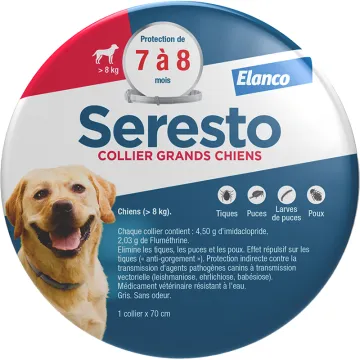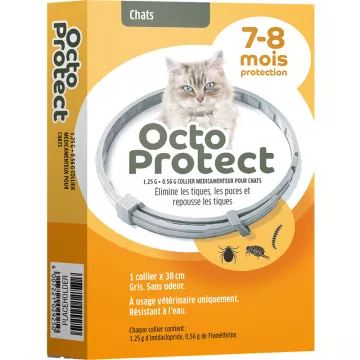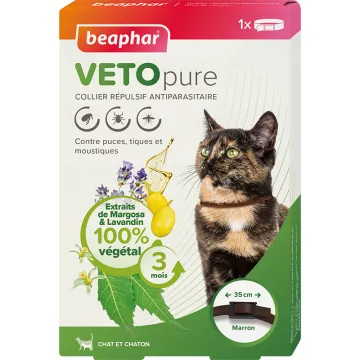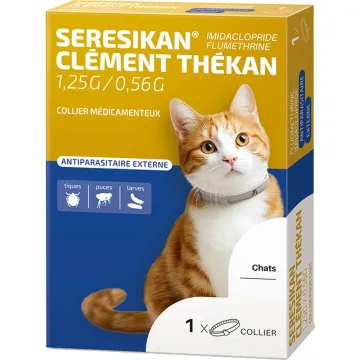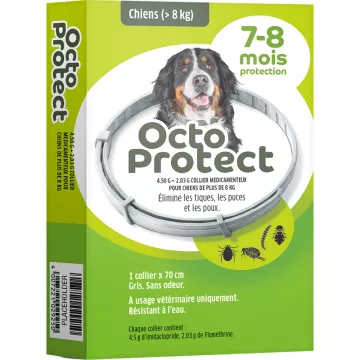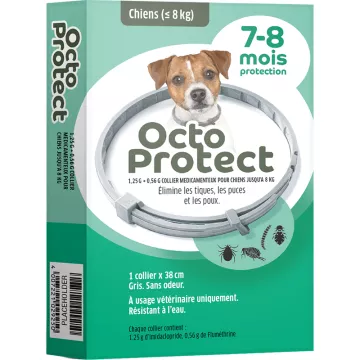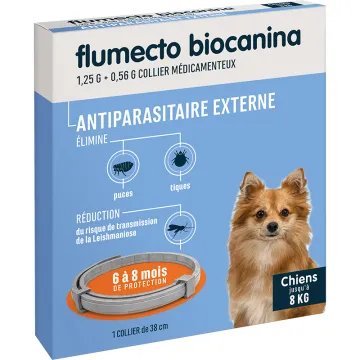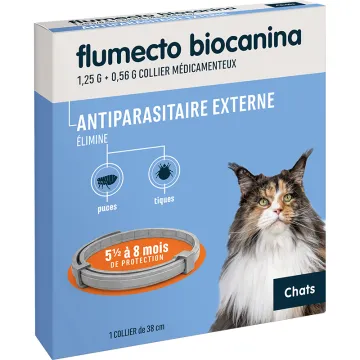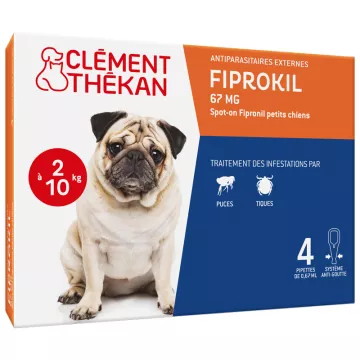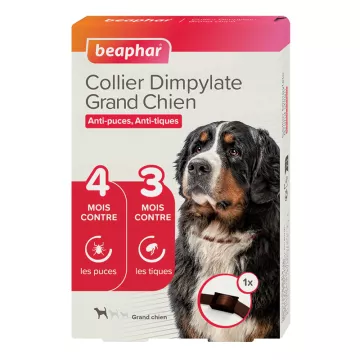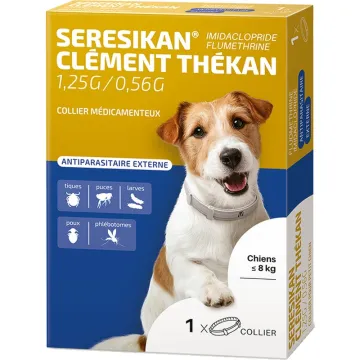
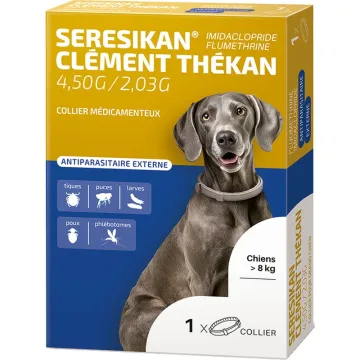
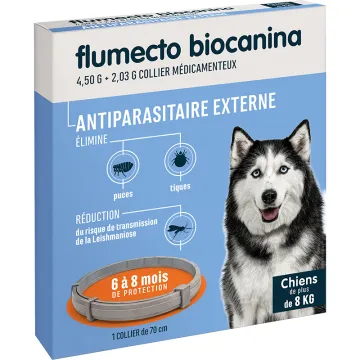
The terms “repellent collar” and“parasite-control collar” refer to distinct modes of action. A repellent collar works through olfactory repellency—it keeps insects away without killing them (using essential oils such as geraniol, citronella, and lavender). A pest control collar contains an active insecticide that kills fleas, ticks, or lice upon contact with the animal or after it is secured. Some collars combine both modes of action—remote repellency and lethal contact. The most comprehensive antiparasitic formulas combine an adulticide (which quickly kills adult insects) and, in some cases, a larvicide (which prevents the development of eggs and larvae in the animal’s immediate environment). As with any treatment against biting insects and arthropods, effectiveness depends as much on the quality of the product as on its proper use.
Several classes of insecticides are used in veterinary anti-parasitic collars, with varying durations of effectiveness and ranges of activity:
Natural collars (geraniol, neem, lavender) last 1 to 3 months and work primarily by repelling pests. These differences in duration are important for planning when to replace them and preventing bites during periods of high parasite activity.
Cats are particularly sensitive to certain insecticides. High-concentration pyrethroids (permethrin, cypermethrin) are absolutely contraindicated in cats—their liver metabolism, which lacks glucuronidase, cannot break them down, leading to rapid neurotoxic accumulation. Flumethrin, on the other hand, can be used on cats in formulations specifically calibrated for this species, at concentrations much lower than those used on dogs. In a household with both dogs and cats, a dog wearing a permethrin collar should not sleep next to a cat or be licked by one. If residues are accidentally ingested during grooming, digestive problems may occur—consult your veterinarian immediately.
Collars come in several lengths suited to the animal’s size (kitten/cat, small dog < 8 kg, chien moyen 8-25 kg, grand chien >, 25 kg). Using the wrong size reduces effectiveness or creates a risk of excessive skin contact. The duration of protection should correspond to the season and lifestyle: an active hunting dog from April to November will benefit from a long-lasting collar (8 months); a sedentary indoor dog may only need seasonal protection that is renewed as needed. The collar must be replaced on the expiration date even if no parasites are visible. Concurrent internal parasitic infections (worms often transmitted by fleas) require supplemental deworming.
The flea and tick collar is part of a comprehensive protection regimen. It can be combined with a spot-on treatment to cover areas not protected by the collar (hindquarters, flanks). However, certain combinations are not recommended to avoid overdose—particularly the combination of two organophosphate products (dimpylate collar + dimpylate spot-on). Treating the environment remains essential in cases of confirmed infestation. Regular treatment for intestinal parasites (deworming) complements this protection—fleas ingested during grooming can transmit tapeworms (Dipylidium caninum). Regular monitoring of the animal remains essential even when a collar is in place.
A flea collar at the end of its protective period is generally not visible to the naked eye—the polymer matrix may appear intact even though the active ingredient has been depleted. The only reliable way to ensure that the protection is still active is to strictly adhere to the expiration date indicated on the packaging. Indirect signs of ineffectiveness may serve as a warning: the presence of live fleas on the animal despite the collar, or the discovery of ticks attached in areas far from the collar (normal) or in its immediate vicinity (a sign of depletion). Certain conditions of use (frequent swimming, heavy sweating) may reduce the effective duration of protection. Regularly inspect the skin where the collar comes into contact with the animal—erythema, alopecia, or localized pruritus may indicate contact irritation, warranting removal of the collar and a veterinary consultation. Environmental contaminants (including parasites and their eggs) persist for a long time in the home—maintaining vigilance regarding the animal’s environment always effectively complements the use of the collar.