Peaceful sleep refers to sleep free from inner turmoil—without rumination, without nighttime fears, and without residual emotional tension that keeps the body in a state of diffuse alertness. It is an emotional quality distinct from deep sleep (N3 architecture) or rapid eye movement (REM) sleep (sleep latency). People who lack it may fall asleep quickly but wake up feeling a sense of nighttime heaviness, having vivid dreams, or with a tense neck and jaw. Achieving peaceful sleep depends more on emotional relaxation in the evening than on purely sedative substances.
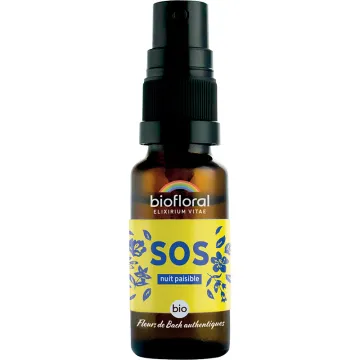
Bach flower essences specifically target the emotional aspect of sleep. “Peaceful Night” formulas combine several of them depending on the dominant emotional state:
When taken as a sublingual spray (2–4 sprays before bedtime), their effect on inner calm is noticeable without drug interactions or the risk of dependence. Lactium (hydrolyzed alpha-S1 casein, a GABA-A modulator) effectively complements these remedies when anxiety is accompanied by physical tension or palpitations.
An organic sleep grog is both a therapeutic agent and a powerful sensory ritual: the warmth of an evening drink, the act of preparation, and the aroma of the herbs signal to the brain that night is beginning, triggering a positive association with bedtime. The classic blend combines linden (sedative flavonoids), lemon verbena (calming iridoids), orange blossom (mild anxiolytic linalool), lemon balm, and lavender or linden honey. A few drops of red mandarin essential oil diluted in honey add an aromatherapeutic dimension—its excellent safety profile makes it the essential oil of choice for children. A digestive spasm caused by nighttime anxiety can be relieved by adding a few drops of Roman chamomile essential oil to this blend.
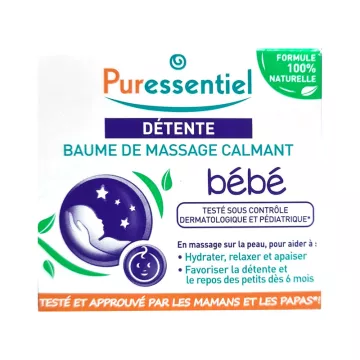
An infant’s sleep is naturally very rich in REM sleep (50% compared to 20% in adults) but can be soothed by regular sensory rituals. Soothing baby massage balm (sweet almond oil, ultra-diluted lavender, chamomile, and calendula) is applied to the tummy, back, and feet after the evening bath—the massage stimulates the parasympathetic nervous system and reduces cortisol levels in infants. According to pediatric studies, a regular bedtime massage routine significantly improves the duration and quality of nighttime sleep. Homeopathic oral remedies (chamomile, passionflower, and valerian in granules or drops) are suitable starting at 1 month of age and have no side effects.
Peaceful sleep is fostered as much by the environment as by the body. Diffusing soothing essential oils in the bedroom 20 to 30 minutes before bedtime—lavender, marjoram, and ylang-ylang, without camphor or menthol for babies—creates an olfactory atmosphere that positively influences the onset of sleep. Soft, warm lighting in the 60 to 90 minutes before bedtime reduces nervous system arousal. A lukewarm bath (38–39°C for adults, 37°C for babies) 1 to 2 hours beforehand helps lower the core body temperature, which is essential for falling asleep. Soothing products suited to each age—creams, balms, floral waters—are valuable allies in establishing a consistent bedtime routine.
Lasting, peaceful sleep depends on the regularity of the signals sent to the brain. The same bedtime routine every night, at the same time, gradually trains the brain to associate these actions with sleep—an effect that takes hold in 2 to 4 weeks and strengthens over time. This routine can include a warm herbal tea, 5 to 10 minutes of journaling to let go of worries about the next day, applying balm to the temples or wrists, followed by 5 minutes of abdominal breathing or cardiac coherence. For babies, the same principle applies: a bath, a massage, dim lighting, and a lullaby at the same time every evening. Infant colic, the leading cause of nighttime restlessness before 4 months of age, requires specific management so that these rituals can be fully effective.