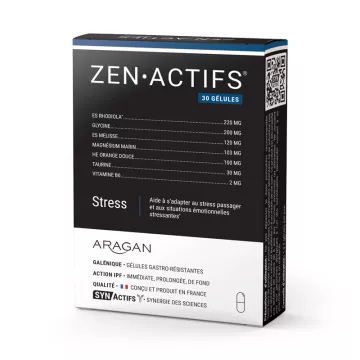
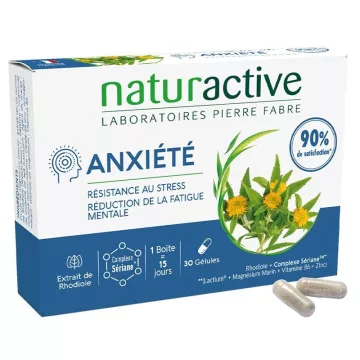
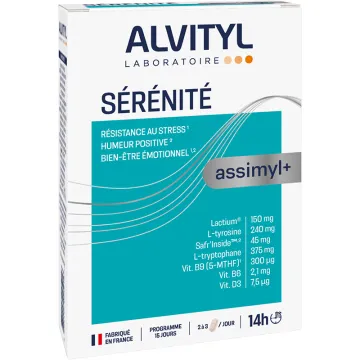
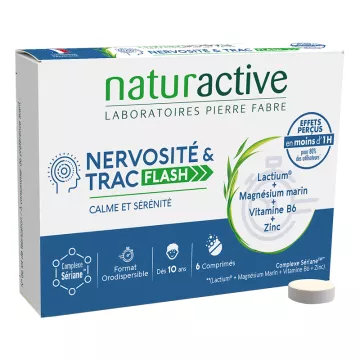
Lactium is a patented bioactive ingredient derived from an enzymatic hydrolysate of alpha-S1 casein from cow’s milk. Its active ingredient is a decapeptide (a sequence of 10 amino acids) called α-casozepine, which exerts a modulatory effect on the GABA-A receptors in the central nervous system—the same receptors targeted by anxiolytic benzodiazepines, but with a much gentler action and no risk of dependence. Its mechanism of action replicates the naturally soothing effect of breast milk on infants after feeding, an effect observed as early as the 1990s and whose molecular basis was identified by French researchers.
Lactium reduces the physiological response to stress by modulating the secretion of cortisol (the stress hormone) and by decreasing hyperactivity of the sympathetic nervous system. Unlike pharmaceutical anxiolytics, it causes neither daytime drowsiness, nor dependence, nor a rebound effect upon discontinuation. Several randomized, double-blind clinical studies have demonstrated its effectiveness on physiological markers of stress (salivary cortisol, heart rate, blood pressure) and on subjective symptoms of anxiety, irritability, and stress-related sleep disturbances.
Lactium is indicated for episodes of acute or chronic stress, functionalanxiety (without a diagnosed severe anxiety disorder), and stress-related sleep disturbances (difficulty falling asleep, waking up during the night). It is particularly suitable for periods of work-related burnout, exams, major life transitions, or any situation causing prolonged nervous tension.
The usual dosage is 150 to 300 mg/day of standardized Lactium, taken once daily, preferably in the evening or 30 to 60 minutes before an anticipated stressful situation. A course of at least 4 weeks is recommended for a lasting effect on chronic stress; occasional use is possible for situational stress. Important precautions: Contraindicated in cases of confirmed allergy to milk proteins (caseins) or severe lactose intolerance—check the product’s ingredients based on its formulation. Do not use as a substitute for prescribed medical treatment for severe anxiety disorders or diagnosed depression.
Lactium can be effectively combined with several complementary active ingredients to enhance its effects as needed: