What is a muscle injury, and what are its main types?
A muscle injury refers to any injury affecting muscle fibers, their sheaths (fascia), or their tendon attachments—whether caused by direct trauma or overuse. Our sports wellness and muscle comfort line offers active ingredients tailored to each type of injury.
- Muscle contusion: direct impact without tearing—intramuscular or subcutaneous hematoma—common in contact sports (soccer, rugby, martial arts)
- Muscle strain: excessive stretching without macroscopic tear (Grade 1)—a pulling pain—see our page on muscle strains
- Tear (Grade 2–3 strain): partial or complete rupture of muscle fibers—cracking sound, hematoma, functional impairment—see our page on muscle strains
- Traumatic ossifying myositis: a rare complication of repeated contusions—calcification within the muscle—should be considered if pain and a persistent hard mass are present after a contusion
- Diagnosis by MRI (tear) or ultrasound (contusion, hematoma)—standard X-rays do not show muscle injuries
How should one manage a muscle injury?
Management in the first few hours determines the total recovery time—the same principles apply to different types of injuries, with variations depending on severity.
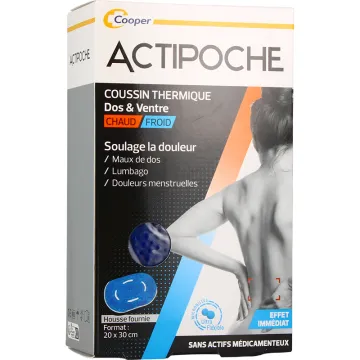
- POLICE Protocol: Protection (rest) → Optimal Loading (early, gradual loading starting on Days 2–3) → Ice (15–20 minutes, never applied directly to the skin) → Compression (elastic bandage) → Elevation (raising the limb)
- Contusion: immediate ice + compression + topical arnica—do not massage within the first 48 hours (risk of spreading the hematoma)
- Grade 2–3 tear: medical consultation with MRI — criteria for surgical intervention if complete rupture
- Do not use NSAIDs for the first 72 hours: they inhibit the initial inflammatory phase necessary for muscle healing to begin
- Signs requiring urgent medical attention: very large hematoma + hard compartment + paresthesia (compartment syndrome) — surgical emergency
Which natural active ingredients support recovery from muscle injuries?
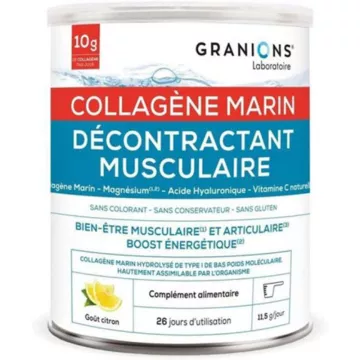
Several natural active ingredients accelerate the various phases of muscle healing—the inflammatory phase, repair, and remodeling. Find these formulas in our sports wellness line.
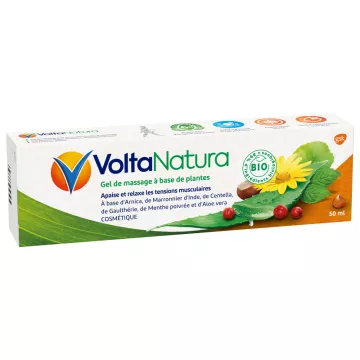
- Arnica montana: the ultimate remedy for bruises and contusions — available as a gel or cream to be applied starting on Day 1 around the injured area (not directly on an open wound) — stimulates the resorption of bruises
- Omega-3 (EPA/DHA): help regulate the resolution of the inflammatory phase—promote higher-quality muscle healing
- Proteins and BCAAs: building blocks for repairing damaged fibers — intake of 1.5–2 g/kg/day during the repair phase
- Vitamin C + zinc: cofactors for healing and collagen synthesis — 10–15 mg of zinc per day + 500 mg of vitamin C per day
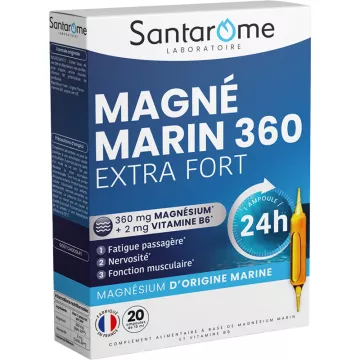
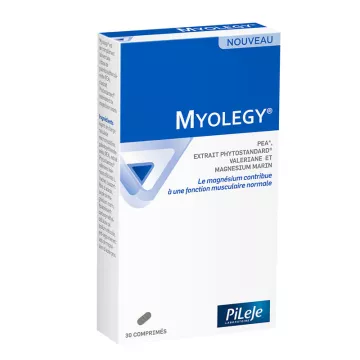
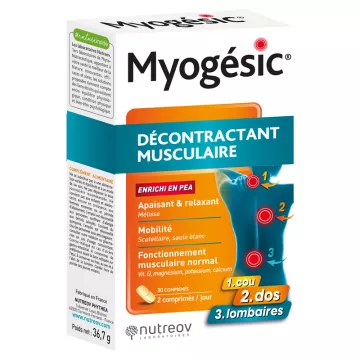
- Magnesium: reduces reflex muscle spasms in the peripheral muscles surrounding the injured area — 300–400 mg/day
How should rehabilitation and return to activity be organized after a muscle injury?
- Phase 1 (Days 1–3): protection + ice + relative unloading — only pain-free activities (swimming for lower limbs, walking for upper limbs)
- Phase 2 (Days 4–14): Progressive optimal loading — physical therapy: passive then active mobilization, therapeutic ultrasound, defibrillation massage — pain-free isometric muscle strengthening
- Phase 3 (Days 15–return to sports): progressive eccentric strengthening — light running if lower limbs are affected — criteria for return to sports: strength ≥ 90% of the healthy side, full range of motion, specific movement without pain
- Shockwave therapy: accelerates vascularization and collagenous healing — recommended by the physical therapist starting on Days 10–15
- Our line of sports compression products: support bands and sleeves for the gradual return-to-sport phase