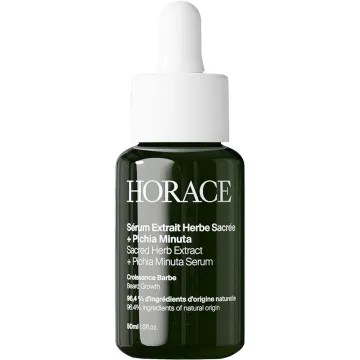
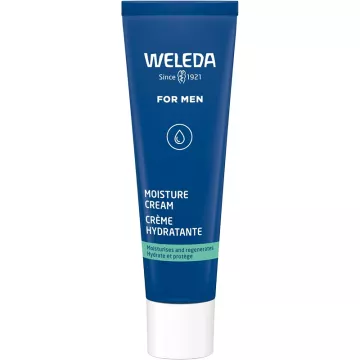
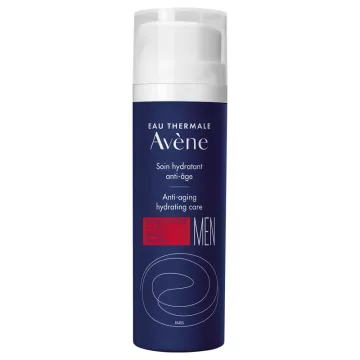
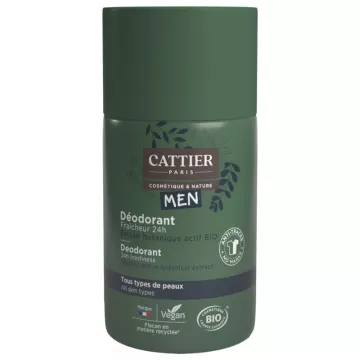
Men’s skin has distinct biological characteristics that warrant specific formulations in men’s skincare products:
As structural lipids that make up 50% of the intercellular cement, ceramides (ceramide 1, 3, 6-II) are the cornerstone of the skin’s lipid barrier. Daily shaving mechanically erodes the ceramides in the stratum corneum, increasing TEWL (trans-epidermal water loss) by 15 to 30% after each shave. Topical supplementation (0.01 to 0.1% in a moisturizer) restores corneocyte cohesion within 4 to 8 hours. Their synergy with hyaluronic acid and cholesterol replicates the natural intercorneocyte cement—a biomimetic approach superior to humectants alone.
An endogenous fat-soluble antioxidant, coenzyme Q10 sees its concentration in the skin decrease by 25% between the ages of 20 and 40. It recycles oxidized vitamin E in keratinocytes, activates COL1A1 gene transcription (type I collagen) in fibroblasts, and protects against UVA damage. Effective topical concentration: 0.01 to 1% in a lipid-based formula. Its synergy with vitamin B3 (niacin → endogenous niacinamide) has been documented in anti-aging serums for men: B3 stimulates mitochondrial NAD+, which supports cellular production of CoQ10.
A key active ingredient in men’s eye care products, topical caffeine (1–3%) acts on the two main mechanisms. Its vasoconstrictive effect on peri-orbital microvessels reduces blood stasis and the bluish appearance of vascular dark circles—as documented in vivo by laser Doppler. Its inhibition of phosphodiesterase increases cAMP in peri-orbital adipocytes, activating local lipolysis and reducing suborbital fat pads, according to clinical studies. Its anti-inflammatory properties (NF-κB inhibition) protect against orbital oxidative stress.
Activated charcoal (specific surface area of 500 to 1,500 m²/g) adsorbs, through a purely physical mechanism, sebum, pollution residues (PAHs, heavy metals), skin bacteria, and toxins from enlarged pores—without disrupting the microbiome. By removing the contents of open comedones, it reduces the appearance of enlarged pores. Formulations suited for men’s skin: purifying masks (1–3%), foaming cleansers (0.5–1%). Use 1–2 times a week—daily use may dry out combination skin.
A tree containing 90 nutrients (Moringa oleifera), moringa provides internal nutrition (5 to 15 g/day of powder) including zinc, iron, magnesium, vitamins C, A, and E, as well as all essential amino acids—nutrients essential for keratinogenesis and collagen production. Its oil (72% oleic acid) is lightweight and non-comedogenic—ideal for men’s facial serums. Its isothiocyanates are Nrf2 inducers, activating the synthesis of glutathione and skin superoxide dismutase, in a documented synergistic effect with vitamin C.