What is a protective mask, and how does it work?
A protective mask is a device designed to filter airborne particles and microorganisms and to limit the spread of droplets emitted by the wearer.
It is generally made from several layers of filtering materials (nonwoven fabric, polypropylene) that capture particles while allowing the user to breathe comfortably through the respiratory tract.
There are several categories based on the level of protection: surgical masks (European standard EN 14683), FFP2 and FFP3 masks (standard EN 149), and washable cloth masks (standard AFNOR SPEC S76-001 in France).
These should not be confused with cosmetic face masks (face masks, hair masks), which are beauty products and not respiratory protective devices.
What are the different types of masks available on the market?
Several types of protective masks are designed for different uses:
- Surgical masks (Types I, II, IIR): EN 14683 standard, used in medical settings and by the general public; protection against droplets emitted by the wearer, with filtration varying by type (95–98% bacterial filtration).
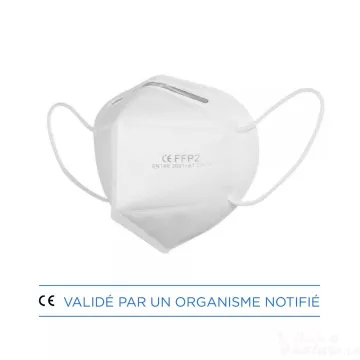
- FFP2 masks: EN 149 standard, filter at least 94% of aerosols and fine particles; European equivalent of the U.S. N95; intended for use in high-risk occupational settings or by at-risk individuals.
- FFP3 masks: filter at least 99%; intended for professional use and highly exposed environments.
- Washable cloth masks: AFNOR SPEC S76-001 standard (France); provide a barrier against emitted droplets; reusable when washed at 60°C.
- Valve masks: comfortable for exhaling, but not recommended for collective protection (exhaled air is not filtered).
How do you choose the right mask for your needs?
The choice of a protective mask depends on its intended use:
- Daily use and public transportation: Type II surgical mask or certified fabric mask for extended comfort.
- Epidemic season (colds, flu): Surgical mask or FFP2, depending on the level of risk.
- Contact with a vulnerable loved one (immunocompromised, elderly): FFP2 masks are often recommended.
- Air pollution, pollen allergies: anti-pollution masks with appropriate filters; see also our advice on allergies.
- Comfort and fit: essential for effectiveness—the mask must fit snugly against the face without any side leaks.
- Certifications: Check for the European standard (EN 14683 or EN 149).
Integration into overall dailyhygiene: masks, handwashing, and social distancing are complementary.
What are the best practices for wearing masks?
To maximize the effectiveness of a protective mask, follow these best practices:
- Proper fit: The mask must cover the nose, mouth, and chin, and fit snugly on the sides and over the nose (with a nose clip for applicable models).
- Hand hygiene: Wash your hands with soap and water or use an alcohol-based hand sanitizer before and after handling the mask.
- Do not touch the front of the mask while wearing it; do not lower it below the chin or hang it around your neck.
- Replacement: Disposable masks should be replaced every 4 to 6 hours or as soon as they become damp, soiled, or damaged; cloth masks should be washed at 60 °C after each day of use.
- Storage: Store washable masks in a clean bag, away from moisture, until the next use.
Infants under 2 years of age: Wearing a mask is not recommended due to the risk of choking and difficulty breathing.
What is the lifespan of a surgical mask?
A surgical mask is designed for single use and should not be worn for more than 4 to 6 hours.
It must be replaced as soon as it becomes damp (breathing saturates the fabric), visibly soiled, or damaged.
Moisture significantly reduces the mask’s effectiveness by compromising the integrity of the filtering material.
For prolonged or repeated use, rotate through several masks throughout the day and store cloth masks in a clean bag between washes at 60°C.
How can you test the effectiveness of a cloth mask?
To evaluate the effectiveness of a cloth mask, there are several reliable and proven criteria:
- Compliance with the AFNOR SPEC S76-001 standard in France: ensures adherence to specific specifications (filtration, breathability, fit).
- Number of layers: at least 2 to 3 layers of different fabrics for effective filtration.
- Fabric type: a combination of tightly woven cotton and synthetic fibers (polypropylene, polyester); must withstand washing at 60 °C.
- Fit: Complete coverage of the nose, mouth, and chin, with no gaps at the sides and no slipping.
- Breathability: no difficulty breathing normally, nor excessive fogging of properly fitted glasses.
Never perform a “flame test” while wearing a mask: risk of fabric ignition, burns, or fire. Refer to official certifications.
Do valve masks protect against viruses?
Valve masks make it easier to exhale and are comfortable for the wearer, but they are not suitable for public health protection.
The valve allows exhaled air to escape without filtration: if the user is carrying a virus, droplets may be released into the surrounding air.
In situations where preventing transmission is essential (public transportation, medical settings, contact with vulnerable individuals, during outbreaks), a mask without a valve is preferable.
Valve masks remain useful, however, in certain professional settings where protection is one-way (protecting the wearer only, for example, in dusty environments).
Can a surgical mask be disinfected and reused?
Surgical masks are designed for single-use only and are not intended to be disinfected or reused.
French health authorities (ANSM, Haute Autorité de Santé) have ruled out disinfection methods (heat, UV) because they degrade the filter materials and compromise the mask’s effectiveness.
For repeated use, opt for cloth masks certified to AFNOR SPEC S76-001, which are designed to withstand several dozen wash cycles at 60°C.
In the workplace or for at-risk individuals, follow the specific recommendations of your occupational health physician or primary care physician.
How should you properly dispose of a protective mask?
Proper disposal of disposable face masks is essential to prevent secondary contamination:
- Wash your hands with soap and water or use a hand sanitizer before removing the mask.
- Avoid touching the front of the mask (which may be contaminated).
- Remove the mask by the straps or elastic bands, without touching the outer surface.
- Fold it in half (with the contaminated side on the inside) and place it in a sealed bag.
- Dispose of the bag in a closed household trash can.
- Wash your hands again after discarding the mask.
For washable cloth masks, follow the manufacturer’s instructions for washing (usually at a minimum of 60°C), drying, and ironing.