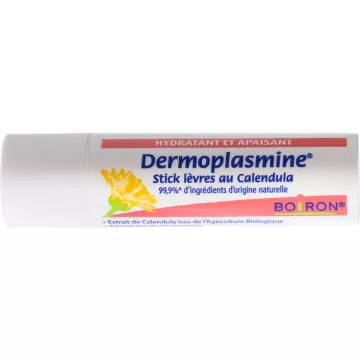
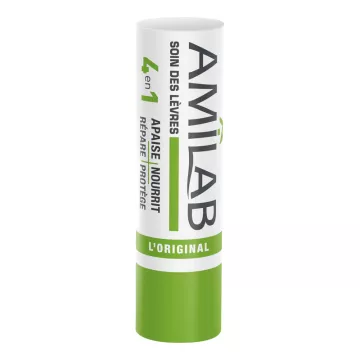
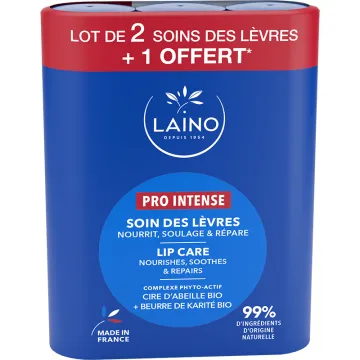
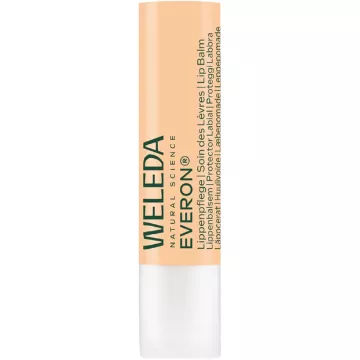
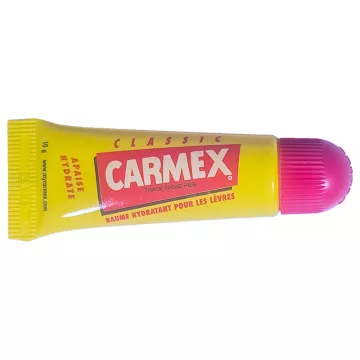
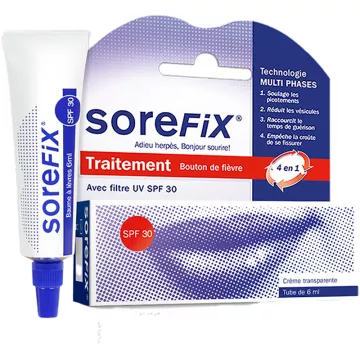
What is a lip repair treatment, and when do you need it?
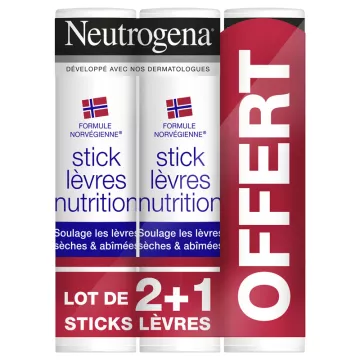
A lip repair treatment is a concentrated formula designed for situations where your usual lip balm is no longer enough: very dry, cracked, or painful lips, or lip tissue weakened by cold, wind, or medical treatments (retinoids, chemotherapy). Unlike a daily protective lip balm, a lip repair treatment contains higher concentrations of active ingredients—dexpanthenol, lanolin, and petroleum jelly—which are intended to rebuild the damaged skin barrier and support healing. Specialized treatments for severe chapping and dry lips are available in the store.
The lip mucosa lacks sebaceous glands—it relies entirely on external care to maintain its integrity. When damaged, its epithelial cells require specific active ingredients: powerful occlusives to prevent water loss, reparative emollients to restore suppleness, and healing agents to accelerate cell regeneration.
- Signs that it’s time to switch to a repair treatment: lips that feel constantly tight despite using lip balm—visible or painful cracks at the corners of the mouth—continuous peeling for several days in a row—itching or a burning sensation—irritation after applying makeup
- Special cases requiring an intensive repair treatment: isotretinoin treatment (Roaccutane—systematic, intense drying of the mucous membranes)—chemotherapy (lip mucositis)—sports at high altitudes or in extreme weather conditions—older adults (thinner mucous membranes that regenerate less frequently)
- Difference between a balm and a repair treatment: a balm protects and moisturizes for daily maintenance—a repair treatment heals and rebuilds—the two are complementary, not interchangeable
What active ingredients make a good lip repair product?
The most effective repair formulas are based on a few key active ingredients at therapeutic concentrations. Dexpanthenol (the active form of provitamin B5) is the gold standard healing agent for mucous membranes: it stimulates keratinocyte proliferation, accelerates re-epithelialization, and reduces inflammation—it’s the key ingredient in Bepanthen creams. Lanolin (wool fat) is the occlusive agent most similar to human sebum—providing intense and long-lasting hydration. Petrolatum ensures maximum occlusion, ideal for nights of intensive repair.
Hyaluronic acid in premium formulas deeply hydrates and contributes to a slight plumping effect. Argan oil, rich in unsaturated fatty acids and vitamin E, nourishes and protects against oxidative stress. Aloe vera provides immediate hydration and has soothing properties for irritated mucous membranes.
- Vegan alternatives to animal-derived ingredients: lanolin (animal-derived) → candelilla wax or carnauba wax + castor oil (same occlusive effect) — mango butter or cocoa butter instead of lanolin for plant-based formulas — jojoba oil is technically a liquid wax, ideal for vegan formulas because its structure is similar to sebum — vegan certifications (Vegan Society, EVE Vegan) guarantee the absence of animal-derived ingredients
- Ingredients to avoid in a repair cream: alcohol (dehydrates the already weakened mucous membrane) — fragrances and essential oils that irritate damaged skin — menthol (the cooling effect masks the healing process and dries out the skin) — synthetic dyes
- Effective natural remedies to use as a supplement: Manuka honey (MGO ≥ 250) applied for 10 minutes—antibacterial and a natural humectant—pure aloe vera gel—virgin coconut oil—these homemade remedies can support healing between applications of the lip repair balm
How should you apply a lip repair balm for optimal results?
Applying it at night is most effective: the lips are not exposed to any external stimuli (eating, talking, or exposure to the elements), and the active ingredients work uninterrupted for 6 to 8 hours. Apply a generous layer—thicker than a regular balm—focusing on the corners of the mouth and chapped areas. Exfoliate your lips once a week (fine sugar + honey, 30-second circular massage) to remove dead skin cells and improve the penetration of active ingredients—do not exfoliate on open or painful cracks.
- Complete routine for damaged lips: morning—a light layer of repair balm before sun exposure—daytime—protective lip balm with SPF if exposed to the sun—evening—gentle oil-based makeup removal followed by a generous layer of leave-on repair balm
- Under lipstick: Apply the repair treatment 10 minutes before applying makeup—allow it to absorb—a slightly occlusive base improves the appearance of lipstick on dry lips and smooths out fine lines—do not apply too much product (it causes the color to slide off)
- Expected results: improved hydration and comfort from the very first applications — reduction of cracks in 3 to 5 days with morning and evening application — if there is no improvement after 10 days of intensive treatment, consult a dermatologist to rule out contact dermatitis or a fungal infection