Why do lips get dry, and what are the main causes?
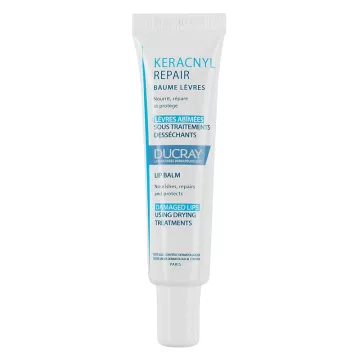
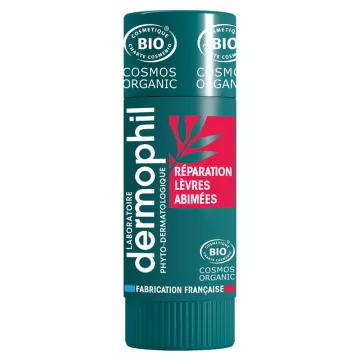
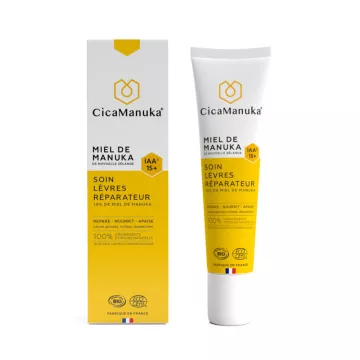
Dry lips result from an imbalance between water loss from the lip mucosa and its ability to regenerate. Without sebaceous glands to naturally lubricate them, lips depend entirely on external care and internal hydration. Harsh weather conditions—cold, wind, dry indoor air, and summer UV rays—accelerate water evaporation from the mucous membrane. There are specialized treatments for chapped and severely damaged lips, and concentrated lip repair products are available in the store.
Among the most common habits that contribute to dryness are: licking your lips (saliva contains digestive enzymes that irritate and dry out the lips rather than moisturize them), breathing through your mouth at night, and using balms containing menthol or camphor, which provide immediate relief but worsen dryness over the long term.
- Climatic and environmental causes: cold and wind (vasoconstriction + accelerated evaporation), indoor heating (air humidity drops below 30%), summer UV rays (photodegradation of the mucous membrane), altitude (drier air and more intense UV radiation)
- Drug-related causes: oral retinoids (isotretinoin—intense and systematic drying of the mucous membranes), antihistamines (xerostomia worsens lip dryness), diuretics, certain antidepressants, hormonal treatments
- Dermatological causes to rule out: angular cheilitis (cracks at the corners of the mouth—often caused by candidiasis or a deficiency in iron, vitamin B2, or zinc), contact dermatitis (allergy to a cosmetic ingredient—fragrance, dye, propolis—diagnosed via patch test), labial psoriasis, lichen planus
- General dehydration: less than 1.5 L of water per day—the lips are among the first areas to show signs of dehydration, well before other tissues
What ingredients should you choose to moisturize dry lips?
An effective treatment for dry lips combines three complementary families of active ingredients. Occlusives form a protective film that reduces water loss: beeswax, shea butter, petroleum jelly. Emollients soften and nourish the mucous membrane: sweet almond oil, argan oil (rich in unsaturated fatty acids and vitamin E), and jojoba oil. Humectants draw water into the cells: glycerin, honey, and hyaluronic acid. Panthenol (provitamin B5) plays a special role: it stimulates cell regeneration and reduces inflammation—ideal for lips that are healing.
- Ingredients to avoid on dry lips: alcohol (dehydrates), menthol and camphor (dry out the lips over time despite the immediate sensation), artificial fragrances (risk of allergy on weakened mucous membranes), exfoliating acids (AHAs, BHAs—irritating to thin, already dry mucous membranes)
- Effective natural remedies: Manuka honey (humectant and antibacterial; leave on for 5 minutes) — pure aloe vera gel (immediate soothing effect) — virgin coconut oil (light emollient, apply at night) — weekly sugar and olive oil scrub (exfoliates dead skin cells and improves absorption of active ingredients — do not use if lips are chapped)
- Essential oils to use with caution: true lavender (Lavandula angustifolia) — soothing and restorative properties — must be diluted to 1–2% in a vegetable oil (jojoba or sweet almond) before any application to the lips — a patch test is essential beforehand — pure essential oils should never be applied directly to the lip mucosa
How does diet affect dry lips?
Certain nutritional deficiencies manifest specifically on the lips. A deficiency in vitamin B2 (riboflavin) causes cheilitis with cracks at the corners of the mouth and inflammation of the lips. Iron deficiency (low ferritin levels even in the absence of anemia) is frequently associated with chronic dry lips and recurrent canker sores. Zinc deficiency slows the healing of mucous membranes. Vitamin C, a cofactor in collagen synthesis, is essential for the health of the lip mucosa.
- Foods that protect the lips: citrus fruits, kiwi, bell peppers (vitamin C) — meats, legumes, pumpkin seeds (iron and zinc) — dairy products, eggs, green vegetables (vitamin B2) — walnuts, almonds, vegetable oils (essential fatty acids and vitamin E) — fatty fish (anti-inflammatory omega-3s)
- Internal hydration: 1.5 to 2 liters of water per day — alcoholic and caffeinated beverages worsen overall dehydration and thus lip dryness — bicarbonate-rich mineral waters slightly alkalize the oral environment
When should you see a dermatologist for dry lips?
Dry lips that typically respond to standard care within 5 to 7 days do not require a doctor’s visit. However, certain signs warrant medical attention: lips that remain dry or chapped despite 10 days of proper, intensive care; persistent or recurring cracks at the corners of the mouth (suggesting candidal angular cheilitis or a deficiency); lesions that do not heal; red or white patches on the mucous membrane, bleeding, or a history of cosmetic allergies.
- Useful tests to request from your doctor: ferritin (iron deficiency even without anemia), vitamins B12 and B2, zinc, and a complete blood count (CBC)—these simple tests identify nutritional deficiencies that contribute to chronic dry lips
- Warning signs not to be ignored: a lesion that does not heal within 14 days—with irregular or hardened edges—and is painless—these signs may indicate a precancerous lesion and require immediate medical attention
- Complementary care: Use a protective lip balm during the day and a concentrated repair treatment at night to address both protection and repair— lip contour care rounds out the routine