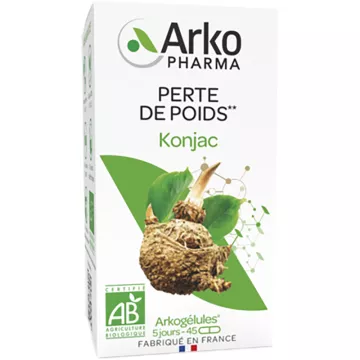
Konjac (Amorphophallus konjac) is an Asian tuber whose root is rich in glucomannan, a soluble fiber with exceptional gelling properties—it can absorb up to 50 times its volume in water. This unique viscosity sets konjac apart from other dietary fibers: when it comes into contact with water in the stomach, it forms a voluminous gel that slows gastric emptying. Konjac is sold in powder form, as capsules, or as ready-to-cook pasta or vermicelli (“shirataki noodles”), the latter of which are virtually calorie-free.
Glucomannan has a regulated European health claim: it contributes to weight loss as part of a low-calorie diet, at a dose of 3 g per day divided into three 1-g doses taken with one to two large glasses of water before meals. The mechanism is purely physical: the gel formed in the stomach increases the feeling of fullness and naturally reduces the amount of food consumed at the next meal. Konjac has no direct effect on fat metabolism; its weight-loss effect depends entirely on adherence to the associated low-calorie diet and adequate hydration with each dose.
Glucomannan also slows the intestinal absorption of carbohydrates and fats, which moderates the postprandial glycemic response and helps maintain normal cholesterol levels as part of a balanced diet. This action usefully complements a comprehensive approach to managing blood sugar or cholesterol. For people with diabetes who are on medication, konjac should be taken at a different time from their medications and monitored, due to the risk of changes in blood sugar levels.
The choice of form depends on the intended use:
In all cases, you should always take it with one to two large glasses of water, 30 minutes before a meal, to allow the gel to form properly before reaching the esophagus.
Konjac stands out for having the highest viscosity among the soluble fibers used in weight-management supplements, making it the gold standard for pure mechanical satiety. Other weight-management ingredients work through different mechanisms and can be combined synergistically to support complementary goals. Cinnamon and chromium are commonly combined with konjac to support carbohydrate metabolism as part of a comprehensive weight management approach. For digestive comfort, konjac also supports healthy bowel function thanks to its fiber content.
Konjac requires strict precautions due to its strong gelling properties:
Consult a healthcare provider if you are currently taking diabetes or cholesterol-lowering medications.