This content is intended for informational purposes only and has been reviewed by Dr. Arnaud, Ph.D. in Pharmacy. This article is not a substitute for individualized medical advice. In the event of severe pain, visible deformity, fever, an open wound on the knee, or an inability to bear weight, consult a doctor immediately or go to the emergency room. Sources: French National Authority for Health (HAS), French National Agency for Medicines and Health Products Safety (ANSM), French National Institute of Health and Medical Research (Inserm).
What are the main causes of knee pain?
Knee pain is one of the most common reasons for seeking medical care. Several causes often occur together:
- Ligament injuries: sprains, tears (ACL, PCL, collateral ligaments), frequently sports-related.
- Meniscal injuries: traumatic in young people, degenerative after age 40.
- Knee osteoarthritis (gonarthrosis): wear and tear of the articular cartilage, a major source of chronic pain after age 50.
- Tendon disorders: patellar tendinopathy or goosefoot tendinopathy, common among athletes.
- Patellar syndrome: poorly localized anterior pain, common among runners.
- Bursitis: inflammation of the periarticular bursae.
- Inflammatory arthritis (rheumatoid, psoriatic, microcrystalline): requires specific medical management.
- Repetitive microtrauma: common in cases of mechanical overload, excess weight, or misalignment.
General joint pain can also affect the knee as part of systemic rheumatic conditions.
How can you recognize the symptoms of a knee problem?
Symptoms vary depending on the cause:
- Localized or diffuse pain, mechanical (during activity) or inflammatory (at rest and at night).
- Swelling (intra-articular effusion).
- Stiffness, especially upon waking (“morning stiffness”) or after a prolonged period of inactivity.
- Sensations of cracking, catching, or joint locking.
- Instability or a feeling of the joint giving way while walking.
- Limited range of motion.
- Limping, difficulty going up or down stairs.
A detailed analysis of the symptoms (location, triggers, timing, radiation, and associated signs) guides the diagnosis.
What are the treatment options for knee pain?
Treatment depends on the cause. As a first-line approach, conservative treatments are preferred:
- Relative rest: reduce stress on the knee without completely immobilizing it (a knee that remains immobile for too long becomes stiff).
- Ice during the acute phase (15 to 20 minutes several times a day, never directly on the skin).
- Elevating the limb to limit swelling.
- Pain relievers: acetaminophen as a first-line treatment, adhering to recommended doses (liver toxicity can occur at doses exceeding ANSM guidelines).
- NSAIDs (ibuprofen, topical ketoprofen, in particular): use as directed by a pharmacist for short periods (generally 3 to 5 days); avoid in cases of gastrointestinal, renal, or cardiovascular conditions, or during pregnancy, as recommended.
- Physical therapy: a key component in most cases (mobility, strengthening of the quadriceps and stabilizing muscles, therapeutic education).
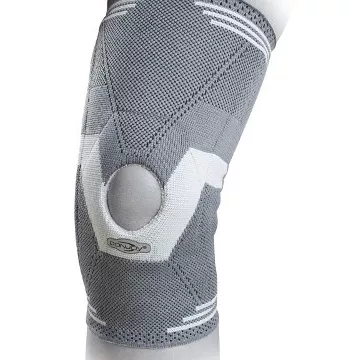
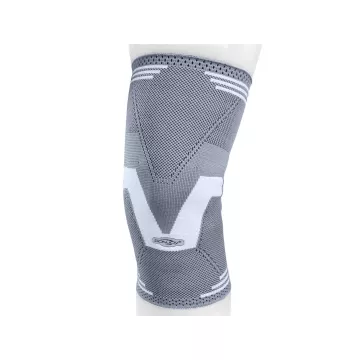
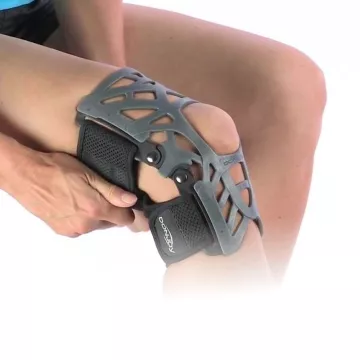
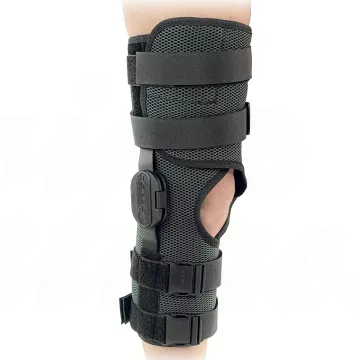
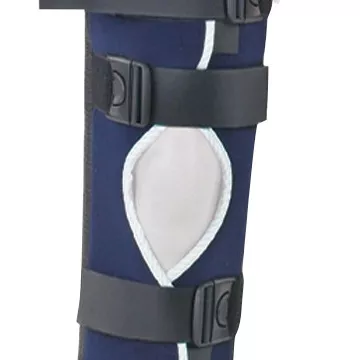
- Orthopedic devices: custom knee brace, orthotics, canes if needed.
- Injections (intra-articular corticosteroids, hyaluronic acid as indicated): medical procedures performed by a rheumatologist or a trained physician.
- Surgery as a last resort: arthroscopy for certain meniscal tears, ligament reconstruction (ACL), total or unicompartmental knee replacement in advanced knee osteoarthritis.
The HAS has published specific recommendations for the management of knee osteoarthritis, which place adapted physical activity and physical therapy at the center of treatment, ahead of long-term medication or surgical options.
Is knee surgery often necessary?
Knee surgery is performed only after conservative treatments have failed or in the presence of structural injuries requiring repair (ACL tear in a young athlete, unstable meniscal tear, advanced, disabling knee osteoarthritis). Current techniques include:
- Arthroscopy for certain targeted meniscal or cartilage injuries.
- ACL reconstruction, more common in young athletes or patients with high joint demands.
- Knee replacement (total or unicompartmental) for advanced knee osteoarthritis with significant functional impairment.
The decision is made in consultation with the orthopedic surgeon following a comprehensive evaluation, and postoperative rehabilitation is critical to the outcome.
How can knee problems be prevented?
Several preventive measures are effective:
- Regular but moderate physical activity, with gradual progression.
- A thorough warm-up before exercise and gentle stretching afterward.
- Strengthening the quadriceps, hamstrings, and stabilizing muscles (core, glutes).
- Shoes appropriate for the activity, and orthotic insoles if you have foot alignment issues.
- A healthy body mass index: every extra kilogram increases mechanical stress on the knee and acceleratesosteoarthritis.
- Avoid repeated impacts on hard, unpadded surfaces.
- Stay hydrated and maintain a balanced diet.
Which sports increase the risk of knee injuries?
Sports involving sudden changes in direction, jumps, pivots, and abrupt stops put greater strain on the knee structures:
- Soccer, basketball, handball, rugby, and American football.
- Downhill skiing (particularly ACL tears).
- Tennis, badminton, and other racquet sports.
- Trail running, high-mileage running.
- Combat sports involving dynamic footwork.
Prevention involves structured training, adhering to recovery periods, proprioceptive exercises, and wearing appropriate equipment. Ligament pain and tendon injuries (particularly patellartendinitis ) are the most common sports-related conditions.
How is a knee injury diagnosed?
The diagnosis of a knee injury is based on:
- Patient history: mechanism of injury (rotation, varus/valgus, direct impact), progression, and functional symptoms.
- Physical examination: specific tests (Lachman, drawer tests, McMurray, meniscal and ligament signs), assessment for effusion.
- Additional imaging as indicated: standard X-rays (bones, osteoarthritis), MRI (ligaments, menisci, cartilage, tendon structures), ultrasound (tendons, bursitis, effusions).
These tests enable an accurate diagnosis and the development of an appropriate treatment plan.
What natural remedies can relieve knee pain?
Several complementary approaches can help improve comfort, though they are not a substitute for medical care:
- Applying heat packs to chronic pain (stiffness, muscle spasms) or cold packs to acute flare-ups (swelling, inflammation).
- Gentle self-massage of the periarticular muscles.
- Glucosamine and chondroitin supplements: Although extensively studied in knee osteoarthritis, their effectiveness remains debated in the literature and international guidelines. The HAS, in its latest statements, considers their clinical benefit to be modest. Discuss this with a doctor or pharmacist.
- Omega-3, dietary antioxidants, harpagophytum, turmeric: used as supplements, with caution regarding drug interactions (particularly anticoagulants) and individual contraindications.
- Gentle, age-appropriate physical activity (walking, biking, swimming, water aerobics).
No supplement is a substitute for a medical diagnosis or prescribed treatment.
When should you see a doctor for knee pain?
A medical consultation is necessary in the event of:
- Intense pain that persists for more than a few days despite simple measures.
- Significant swelling or swelling that appears suddenly.
- Inability to put your foot on the ground or bend your knee.
- Instability, buckling, or a sensation of locking.
- Visible deformity of the knee.
- Associated fever, widespread redness, warmth (suspected septic arthritis: emergency).
- Open wound communicating with the joint: absolute emergency.
- Significant medical history (anticoagulants, immunosuppression, joint replacement, known cancer).
In cases of severe trauma, unbearable pain, marked loss of function, or suspected septic arthritis, go to the emergency room immediately.
What recent advances have there been in knee treatment?
Several developments have improved care in recent years:
- Less invasive arthroscopic surgeries, shorter hospital stays, and easier recovery.
- New-generation joint replacements, sometimes using robotic assistance to optimize positioning.
- Platelet-rich plasma (PRP) injections: used for certain tendinopathies and osteoarthritis; still undergoing scientific evaluation, with mixed levels of evidence. A specialized medical procedure, generally not covered by insurance.
- Cell therapies (mesenchymal stem cells): still largely in the experimental stage or in clinical research, available only in controlled medical settings. Exercise caution regarding unregulated commercial offerings.
- Better-structured supervised rehabilitation and secondary prevention programs.
All these approaches should be evaluated on a case-by-case basis with a medical specialist, within a defined ethical and scientific framework.
When to Seek Medical Attention? Any severe, persistent knee pain accompanied by fever, significant swelling, an inability to bear weight, or an open wound requires prompt medical attention. If you have symptoms suggestive of septic arthritis (fever, a red, warm, and very painful knee), go to the emergency room immediately.
Sources: HAS — recommendations on knee osteoarthritis and meniscal tears; ANSM — proper use of NSAIDs and pain relievers; Inserm — reports on osteoarthritis and joint disorders.