0
Menu

Mental Burnout: Natural Solutions to Calm the Mind

Filter
Number of products : 17
Sort
Sort
Close
ZelaCEO Boiron Surmenage Stress 3 Tubes homeopathic granules ZelaCEO Boiron Surmenage Stress 3 Tubes homeopathic granules
€8.99
Shipped within 24h
KALIUM PHOSPHORICUM 6DH homeopathic granules Boiron KALIUM PHOSPHORICUM 6DH homeopathic granules Boiron
€2.99
Shipped within 24h
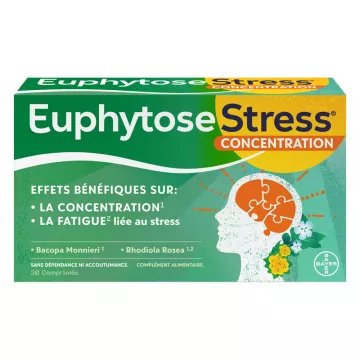
EuphytoseStress Concentration 30 tablets EuphytoseStress Concentration 30 tablets
€11.69
Shipped within 24h
Cognisciences Stimulation Cérébrale Santé-Verte 60 tablets Cognisciences Stimulation Cérébrale Santé-Verte 60 tablets
€19.29
Shipped within 24h
Vitamin'22 Specific Homme 60 capsules Vitamin'22 Specific Homme 60 capsules
€10.95
Shipped within 24h
Lehning Kali Phos Complex 100 Intellectual Overwork Lehning Kali Phos Complex 100 Intellectual Overwork
€12.95
Shipped within 24h
Natures Plus Mega Stress 60 tablets Long-lasting action -20% Natures Plus Mega Stress 60 tablets Long-lasting action
€23.12 €28.90
Shipped within 24h
Léro DNV Stress Sommeil 30 capsules Léro DNV Stress Sommeil 30 capsules
€12.59
Shipped within 24h
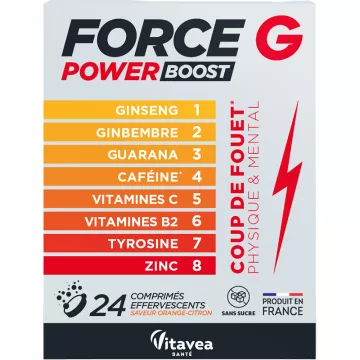
Vitavea Force G Power Boost 24 Effervescent Tablets Vitavea Force G Power Boost 24 Effervescent Tablets
€8.99
Shipped within 24h
Forté Pharma Vitalite 4g Senior, 20 Ampoules Forté Pharma Vitalite 4g Senior, 20 Ampoules
€18.35
Shipped within 24h
Byomag Connect Memory Concentration 60 Capsules Byomag Connect Memory Concentration 60 Capsules
€12.49
Shipped within 24h
Solaray Ashwagandha Extract 470 mg 60 capsules Solaray Ashwagandha Extract 470 mg 60 capsules
€41.45
Shipped within 24h
Herbalgem Energem Surcharge Mentale bio 30 ml Herbalgem Energem Surcharge Mentale bio 30 ml
€15.79
Shipped within 24h
Homeopathic Kit to treat intellectual overwork and burn-out -€1.53 Homeopathic Kit to treat intellectual overwork and burn-out
€22.32 €23.85
Shipped within 24h

What is mental exhaustion, and how does it differ from burnout?

Intellectual exhaustion refers to a state of excessive mental fatigue resulting from prolonged cognitive overload—tight deadlines, constant multitasking, and constant pressure to perform. It differs from burnout in that it is more limited in scope and generally reversible: intellectual exhaustion specifically affects cognitive functions (concentration, memory, decision-making) and resolves within a few weeks with rest and proper time management, whereas burnout is a more comprehensive syndrome involving long-term emotional, physical, and mental exhaustion, often requiring more structured intervention. Unmanaged intellectual overload, however, is a documented risk factor for the development of full-blown burnout—hence the importance of recognizing it early.

The most characteristic signs include:

  • A gradual decline in concentration on tasks that are usually handled with ease
  • Working memory problems (frequent forgetfulness, difficulty following complex lines of reasoning)
  • Increased irritability in response to demands and interruptions
  • A decline in motivation for projects that were previously stimulating
  • A feeling of having a “cluttered mind” that persists even outside of work hours

What causes mental burnout, and how can it be prevented?

The triggers of mental burnout are often cumulative: a heavy cognitive workload without sufficient rest, chronically tight deadlines, constant multitasking imposed by digital tools (notifications, constant interruptions), and a failure to delegate secondary tasks. Technology plays an ambivalent role—it generates interruptions that fragment attention and increase mental load, but when used wisely, it can also support organization and recovery through time-management tools or guided meditation.

Prevention relies on several concrete strategies that can be applied in daily life:

  • Cognitive time management: Group similar tasks together rather than constantly switching contexts, which is particularly draining on attentional resources
  • Regular breaks: Micro-breaks of 5 to 10 minutes every hour allow the brain to recover some of its cognitive resources
  • Realistic prioritization: Identify tasks that are truly urgent and delegate or postpone whatever can be
  • Digital detox: Turn off non-essential notifications during periods of focused work
  • Work-life balance: Set aside time for mental recovery outside of work, free from additional cognitive demands

Which natural supplements support cognitive recovery?

Ginkgo biloba (standardized EGb 761 extract—well-established use according to the EMA) improves cerebral microcirculation and supports concentration and working memory—contraindicated in patients on anticoagulant or antiplatelet therapy. Bacopa (standardized bacosides) is a nootropic with a gradual onset of action, particularly suited to supporting long-term memory, with effects becoming apparent after 4 to 8 weeks of regular use. Rhodiola (an adaptogen—rosavins and salidroside) specifically reduces cognitive fatigue related to work-related stress and restores motivation—to be taken in the morning; contraindicated in cases of bipolar disorder.

From a micronutritional perspective, magnesium bisglycinate (300 mg/day) supports neuronal cellular energy production and reduces nervous hyperexcitability, while omega-3 EPA-DHA (1 to 3 g/day—EFSA claim) are essential structural components of neuronal membranes that determine the speed of synaptic transmission. Vitamin B12 and the B-complex vitamins are essential for neurotransmitter synthesis, which is often compromised during prolonged cognitive overload. A regular sleep schedule of 7 to 9 hours remains the cornerstone of cognitive recovery—it is during deep sleep that the brain consolidates learning and eliminates accumulated metabolic waste. If burnout persists despite these measures, a medical or psychological consultation is recommended to assess the risk of progression to a more severe condition.