What is human scabies, and how is it spread?
Human scabies is a skin infestation caused by the mite Sarcoptes scabiei var. hominis—a microscopic ectoparasite that burrows tunnels (grooves) into the superficial layers of the stratum corneum to lay its eggs. The immune response (delayed hypersensitivity to the mite’s proteins) causes the characteristic itching. Antiparasitic treatments are available in the antiparasitic product line, and practical advice can be found on the infested areas page.
- Transmission: prolonged direct skin-to-skin contact (≥ 10–15 minutes) — necessary for the mite to be transferred from one person to another — household members, sexual partners, unprotected caregivers — indirect transmission is possible but less common (bedding, clothing) because the sarcoptic mite survives for 72 hours outside the human body
- Typical symptoms: intense itching, predominantly at night (the first and earliest symptom) — scabies burrows (thin, sinuous, grayish lines 5 to 15 mm long—pathognomonic) — pruritic lesions (papules, vesicles, pustules) — secondary scratching lesions (excoriations, scabs) — infants and young children: possible involvement of the scalp, face, and soles of the feet
- Preferred sites: the spaces between the fingers and toes, wrists, inner sides of the arms and forearms, armpits, navel, waistline, genitalia in men, and areolas in women — the face and scalp are spared in immunocompetent adults
- Incubation period: 3 to 4 weeks during primary infestation (first exposure) — only 24 to 48 hours during reinfestation (memory immune response)
How should scabies be treated, and how should the environment be decontaminated?
Treatment is essential for all close contacts at the same time, including those who are asymptomatic—otherwise, reinfection is certain.
- 5% permethrin cream (standard topical treatment): apply to the entire body from the neck to the toes—repeat on day 8—leave on for 8 to 12 hours—rinse thoroughly—infants and children: include the scalp, face, and behind the ears
- Benzyl benzoate (Ascabiol lotion): topical alternative—1 to 3 applications according to protocol—contact time 24 hours—irritating; use with caution on broken skin—the exact protocol must be strictly followed according to the package insert
- Oral ivermectin (200 μg/kg): by prescription only — used for severe cases, in group settings, or in cases of treatment failure or intolerance to topical therapy — two doses on Day 1 and Day 8
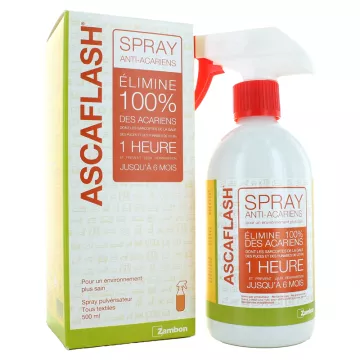
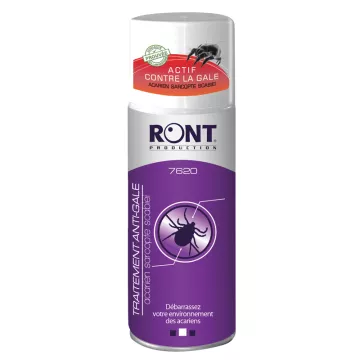
- Environmental decontamination: wash bedding, clothing, and towels at 60 °C or treat with an acaricide (acaricide spray or airtight bag for at least 72 hours for items that cannot be washed) — air out and vacuum bedding, sofas, and carpets
- Post-treatment itching: Itching may persist for 2 to 4 weeks after complete eradication of the mites—this is a residual immune reaction —Aloe vera gel and soothing creams containing Centella asiatica relieve persistent itching — oral antihistamines as directed by a doctor — do not repeat the scabies treatment without medical advice (risk of toxicity)
What are the specific forms and precautions?
- Norwegian scabies (crusted scabies): a hyperinfestative form seen in immunocompromised individuals (HIV, blood disorders, prolonged corticosteroid therapy, advanced age) — hyperkeratotic crusts covering the entire skin surface containing thousands of mites — highly contagious, even through brief or indirect contact — requires strict isolation + oral ivermectin + concurrent topical treatment + enhanced decontamination — hospitalization is often necessary
- Infant scabies: palmoplantar involvement (scabies nodules on the soles of the feet and palms) — irritability and sleep disturbances — certain topical treatments are contraindicated before 2 months of age (ivermectin) or 1 month of age (permethrin) — pediatric consultation is essential
- Sarcoptic scabies in animals: caused by a different species (Sarcoptes scabiei var. canis) — may cause temporary itching in humans, but the mite does not reproduce on human skin — treat the infested animal to prevent repeated reexposure
- Caregivers: wear gloves when applying treatments—wash protective clothing separately—mandatory reporting in the event of an outbreak (nursing homes, hospital wards) according to ARS protocols
- Seek medical attention immediately if: diagnostic uncertainty—child < 2 months or infant—immunocompromised patient—suspected Norwegian scabies—no improvement after 2 properly administered treatment courses