What is the gallbladder, and what role does it play in digestion?
The gallbladder is a small, pear-shaped organ (7–10 cm, capacity 30–50 mL) located beneath the right lobe of the liver. It stores and concentrates the bile produced by the liver (up to ×10) before releasing it into the duodenum during the digestion of fats. Our line of detox supplements naturally supports hepatobiliary health. For specific conditions, see our pages on gallstones and biliary insufficiency.
- Bile storage and concentration: the gallbladder receives bile from the liver (250–1,000 mL/day) — concentrates it × 5 to × 10 through water reabsorption — releases the concentrated bile into the duodenum upon the arrival of dietary fats (CCK signal)
- Role in fat digestion: bile acids emulsify lipids → making them accessible to pancreatic lipase → facilitating absorption in the small intestine — essential for the absorption of fat-soluble vitamins A, D, E, and K
- Hormonal regulation: cholecystokinin (CCK), secreted by the small intestine, triggers contraction of the gallbladder and opening of the sphincter of Oddi—which is why biliary pain often occurs after a high-fat meal
- Composition of bile: water (97%) + bile acids + cholesterol + bilirubin + phospholipids + electrolytes — the balance of these components is crucial to prevent crystallization (gallstones)
- Liver and gallbladder: The liver continuously produces bile—the gallbladder acts as a regulatory reservoir—without the gallbladder, bile flows continuously into the duodenum → see the post-cholecystectomy section
Gallbladder Disorders: Symptoms and Diagnosis
- Biliary colic: intense acute pain in the right upper quadrant radiating to the right shoulder or back — occurs 30–60 minutes after a fatty meal — lasts 30 minutes to 4 hours — accompanied by nausea and vomiting — triggered by the migration of a gallstone into the cystic duct
- Acute cholecystitis: inflammation of the gallbladder due to gallstone obstruction — fever + persistent right upper quadrant pain (≠ colic that subsides) + tenderness on palpation — positive Murphy’s sign — urgent hospitalization + antibiotics + cholecystectomy within 72 hours
- Angiocholitis: infection of the biliary tract (Charcot’s triad: fever, jaundice, and right upper quadrant pain) — absolute medical emergency → call 15 — emergency endoscopic biliary drainage (ERCP)
- Obstructive jaundice: stone in the common bile duct → obstruction → bilirubin in the blood → yellow skin and eyes + dark urine + pale stools → urgent evaluation
- Diagnosis: abdominal ultrasound (initial test, 95% sensitivity for stones > 2 mm) — complete blood count (CBC) + CRP + liver function tests (ALT, AST, GGT, bilirubin) — Biliary MRI (bili-MRI) for the bile ducts — ERCP if there is a stone in the common bile duct
Cholecystectomy and life after gallbladder removal
- Laparoscopic cholecystectomy: removal of the gallbladder via laparoscopy (3–4 small incisions) — standard procedure — Average hospital stay of 1 day — Return to normal activities in 5–10 days — The gallbladder is not necessary for normal daily life
- Life after cholecystectomy: bile flows directly and continuously from the liver to the duodenum — fat digestion is possible but less efficient with very fatty meals — postprandial diarrhea is common in the first few weeks (continuous bile flow irritates the colon)
- Postoperative diet: 5–6 small, low-fat meals per day for the first 4–6 weeks — gradual reintroduction of fats — avoid large, very fatty meals permanently — post-cholecystectomy bile insufficiency: supplementation with vitamins A, D, E, K as needed
- Post-cholecystectomy syndrome: 10–15% of patients continue to experience postprandial pain or chronic postoperative diarrhea — evaluation for biliary reflux + cholangiography to rule out a residual stone in the common bile duct
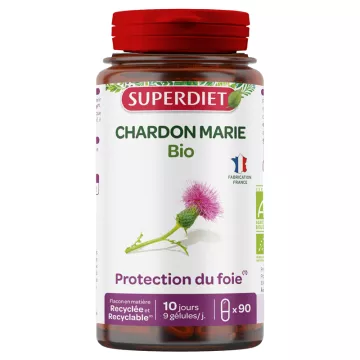
- Natural remedies to support post-cholecystectomy recovery: mild digestive tonics (artichoke in low doses, without potent cholagogues) + milk thistle (hepatoprotective) + lipase digestive enzymes — see our detox and weight loss line
Prevention of biliary disorders and a protective diet
- Protective foods: soluble fiber (oats, apples, legumes) → binds excess bile acids — coffee (reduces the risk of gallstones by 20–30%) — nuts — olive oil (triggers regular gallbladder emptying → prevents stasis) — bitter vegetables (artichoke, chicory)
- Foods to limit: excessive saturated fats (fatty meats, processed meats, whole-fat dairy products, fried foods) → increase cholesterol saturation in bile — refined sugars → promote gallstone formation
- Gradual weight loss: obesity multiplies the risk of gallstones by 2–3 — weight loss that is too rapid (> 1.5 kg/week) is paradoxically lithogenic (massive mobilization of hepatic cholesterol) → never fast abruptly
- Bioavailableturmeric: mild choleretic + hepatobiliary anti-inflammatory — Contraindicated if gallstones are known (risk of migration) — Preventive in the absence of confirmed gallstones — 500 mg/day with meals
- Silent (asymptomatic) gallstones: generally do not require treatment — ultrasound monitoring every 1–2 years — seek immediate medical attention if right upper quadrant pain or fever develops — see our page on gallstones