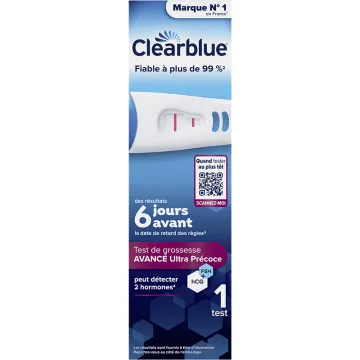
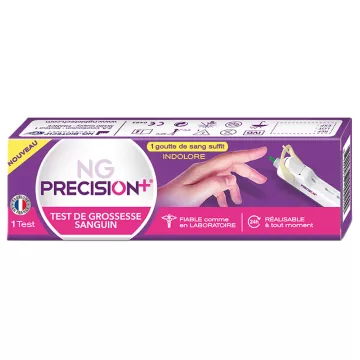
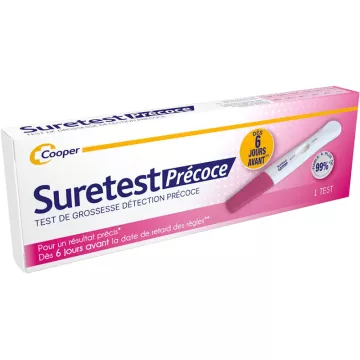
To find out if you’re pregnant, there are several reliable signs and methods you can use. Early symptoms include a missed period, morning sickness, breast tenderness, and unusual fatigue. However, these symptoms vary from woman to woman and can be misleading. The most reliable method is still a pregnancy test. Urine tests available at pharmacies are highly accurate when used correctly. For definitive and early confirmation, a blood test at your doctor’s office or a lab can detect pregnancy as early as 10 days after fertilization.
It is recommended to take a urine pregnancy test starting on the first day of a missed period. These tests detect human chorionic gonadotropin (hCG), a hormone produced by the embryo after implantation and present in urine from the very beginning of pregnancy. A test taken too early—before your period is late—may result in a false negative, as the hCG level is still too low to be detected. For more reliable results, wait a few more days if you’re unsure, or opt for a quantitative blood test, which detects much lower concentrations of hCG.
The most commonly reported early symptoms include a missed period, nausea (often in the morning but possible at any time), breast tenderness or pain, severe fatigue, sudden food cravings or aversions, and more frequent urination. Some women also experience mild pelvic cramps or notice light implantation bleeding around the 6th to 12th day after fertilization. These signs vary in intensity, do not appear in all expectant mothers, and may resemble premenstrual symptoms—which is why it’s important to confirm them with a test. Learn more about pregnancy and its stages.
Several situations can lead to an incorrect result. False positives are rare: they can occur after a recent miscarriage (hCG persists for several weeks), while taking certain fertility treatments containing hCG, or in cases of rare conditions such as a molar pregnancy or certain tumors. False negatives are much more common: the test was taken too early, the urine was too diluted, the test was used incorrectly or had expired, or the result was read after the recommended time window. To minimize these errors, use your first morning urine (which is more concentrated), follow the instructions carefully, and read the result within the recommended time window.
Yes, pregnancy is still possible even with a negative test result, especially if the test is taken too early. If your symptoms persist or if your period does not start within the next few days, take another test 3 to 5 days later using your first morning urine. If you still have doubts—such as a prolonged delay in your period, pronounced signs of pregnancy, or a particularly irregular menstrual cycle—consult a healthcare professional. A blood test will accurately measure your hCG levels, and a clinical examination, possibly supplemented by an ultrasound, will confirm or rule out pregnancy.
Online pregnancy tests in the form of questionnaires are in no way a substitute for a urine or blood test. They can suggest a statistical probability based on your symptoms, but they are unable to detect the hCG hormone, the only reliable biological marker of pregnancy. For an accurate and reliable result, always use a urine test purchased at a pharmacy or consult a healthcare professional. Pharmacy tests are rigorously tested, CE-marked, and are over 99% accurate starting on the first day of a missed period when used correctly.
There are two main types of pregnancy tests. Urine tests, sold over the counter at pharmacies, qualitatively detect the presence of hCG in urine. Easy to use at home, they provide a result in just a few minutes. Blood tests, which are either prescribed or performed in a laboratory, come in two types: qualitative (presence or absence of hCG) and quantitative (precise measurement of hCG levels in mIU/mL). The quantitative blood test detects pregnancy earlier (as early as Day 10 after fertilization), allows for monitoring changes in hCG levels in cases of uncertainty (early pregnancy, miscarriage, ectopic pregnancy), and serves as the gold standard in cases of unusual symptoms. Pregnant women then receive structured medical care.
In France, several healthcare organizations offer free or subsidized access. Family planning and education centers (CPEF), free information, screening, and diagnostic centers (CeGIDD), certain family planning clinics, and community organizations offer free tests, particularly for minors, people without insurance, or those in precarious situations. A blood test prescribed by a doctor is reimbursed at 70% by the national health insurance program, and at 100% starting in the 6th month of pregnancy. Contact your CPAM, your local health center, or call 3919 for guidance, depending on your situation.
The best time to take a urine pregnancy test is in the morning, right after waking up. Morning urine generally has a higher concentration of hCG, which maximizes the chances of getting an accurate result, especially in the first few days after a missed period. If you can’t take the test upon waking, limit your fluid intake for the 2 to 3 hours beforehand so as not to dilute your urine. Also, follow the incubation time specified in the instructions—not too short (invalid result) and not too long (appearance of false-positive evaporation lines).
Several factors can affect the reliability of a pregnancy test. The timing of the test is crucial: taking a test too early often results in a false negative. Urine that is highly diluted due to excessive fluid intake can also skew the result. The test may be expired, improperly stored, or used incorrectly (reading taken outside the time window). More rarely, certain medications containing hCG (fertility treatments) can cause false positives, as can certain rare medical conditions (molar pregnancy, secretory tumors). To minimize these interferences, follow the instructions carefully, check the expiration date, and choose a recent test purchased during your fertility journey from a healthcare professional.
Certain physical signs may suggest pregnancy—a gradual increase in uterine size, changes in the cervix, breast tenderness, and darker areolas—but a clinical examination alone is never sufficient to confirm early pregnancy. A urine or blood test remains essential for biological confirmation. A pelvic ultrasound, typically performed starting in the 6th or 7th week of amenorrhea, visualizes the gestational sac, the embryo, and cardiac activity, allowing for precise dating of the pregnancy and verification of its intrauterine location. These additional tests are ordered by a doctor or midwife as part of prenatal care.
After a positive result, make an appointment as soon as possible with a general practitioner, gynecologist, or midwife. The first prenatal visit should ideally take place before the end of the first trimester (before 12 weeks of amenorrhea). The healthcare provider will confirm the pregnancy with an hCG test, order the required serological tests (toxoplasmosis, rubella, hepatitis, HIV), review your medical history, and tailor your care plan. An ultrasound to determine the gestational age will be scheduled. They will also check your folic acid supplementation, which should be continued until the 12th week. The earlier care begins, the better the health of the mother and baby will be protected—including during the preconception phase for future pregnancies.