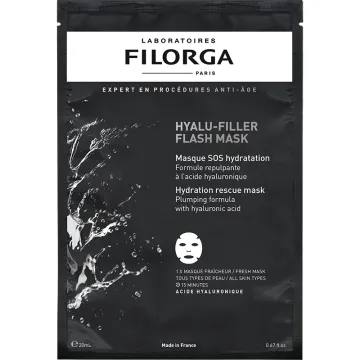
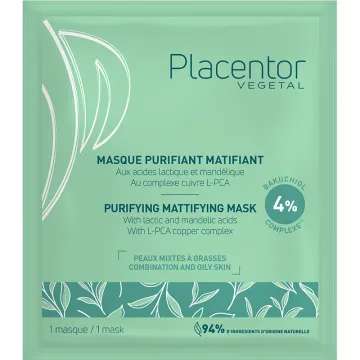
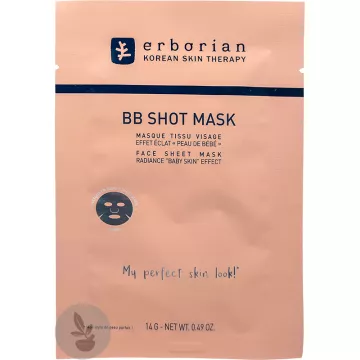
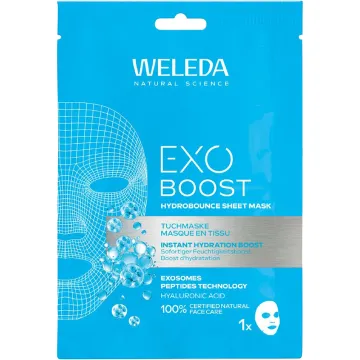
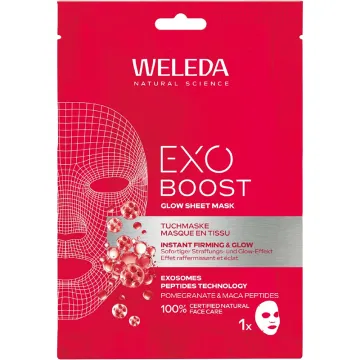
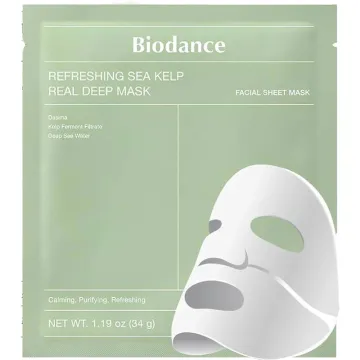
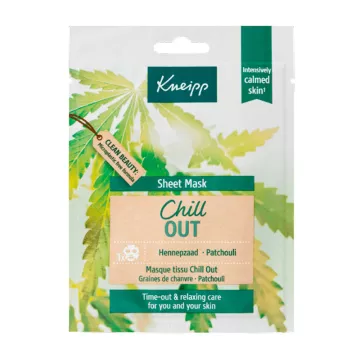
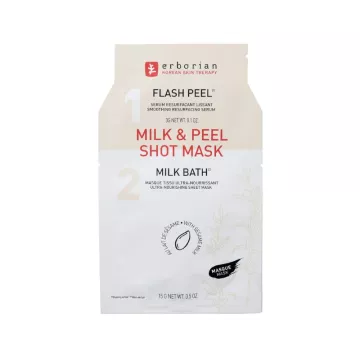
A cloth mask is a facial treatment pre-soaked in active serum, designed to perfectly conform to the contours of the face.
Typically made from natural fibers (cotton, microfiber, bio-cellulose), these masks are infused with hydrating, soothing, or revitalizing agents designed to address various skin needs.
Their main cosmetic benefit: promoting deep hydration and effective penetration of active ingredients thanks to the extended application time.
They can be incorporated into a skincare routine from time to time for an immediate feeling of freshness and skin comfort.
To maximize the benefits of a sheet mask, start by cleansing your face to remove impurities and excess oil.
Gently apply the mask, aligning the openings with your eyes, nose, and mouth, and smooth it out so it adheres well to the skin.
Leave it on for the time recommended by the manufacturer, usually between 15 and 20 minutes (no longer, as it may have the opposite effect once dry).
Remove the mask, then gently pat your face to help the remaining serum absorb; rinsing is generally not necessary.
The active ingredients to look for in a sheet mask vary depending on your skin’s needs.
For intense hydration: hyaluronic acid, glycerin, aloe vera, or panthenol.
To minimize the appearance of blemishes: activated charcoal or white clay, which have purifying and absorbent properties.
To boost radiance: antioxidants such as vitamin C or green tea extract. Store vitamin C products away from light to preserve their stability.
Sheet masks can be suitable for most skin types, provided they have a formula tailored to the skin type.
Dry or dehydrated skin should opt for masks rich in hydrating and nourishing agents (hyaluronic acid, glycerin).
Oily or blemish-prone skin should opt for balancing masks (clay, charcoal, niacinamide).
Sensitive skin should look for masks free of synthetic fragrances and denatured alcohol, enriched with soothing active ingredients (aloe vera, chamomile, panthenol).
Using a sheet mask is generally well tolerated when done in moderation.
For most skin types, one to two applications per week are sufficient to achieve visible results without overburdening the skin.
Those with sensitive or reactive skin may want to space out applications further (once every 10 to 15 days), especially for masks with concentrated active ingredients.
Listen to your skin’s needs and adjust the frequency based on how well your skin tolerates the product and the season.
To preserve the effectiveness of a sheet mask, store it in a cool, dry place, away from direct light and temperature fluctuations.
Temperature fluctuations and exposure to air can alter the composition of the active ingredients infused into the fabric.
Keep the mask in its original airtight packaging until use to preserve the integrity of the ingredients.
Some masks can be placed in the refrigerator before use for an enhanced cooling effect, which is especially appreciated in the summer or during hot weather.
Regular use of sheet masks can provide several visible cosmetic benefits over time.
Improved hydration and apparent suppleness of the skin, visible reduction of superficial fine lines, and a complexion that appears more even and radiant.
The antioxidant ingredients and peptides found in certain formulas visibly help the skin resist environmental stressors.
Sheet masks remain a complementary part of a complete daily skincare routine (cleanser, serum, moisturizer, SPF) and do not replace it.
It is not recommended to reuse a sheet mask.
These products are designed for single-use only: once the serum has been absorbed, the product’s effectiveness is exhausted.
Reuse also carries a risk ofirritation or microbial contamination, as bacteria from the skin can transfer to the fabric after the first use.
To minimize the environmental impact, choose brands committed to using recyclable packaging or biodegradable cellulose fabrics.
Cloth masks are generally well tolerated, but certain precautions are necessary.
Hypersensitive or allergy-prone skin may react to specific ingredients (fragrances, preservatives, plant extracts).
Always check the INCI list and perform a patch test on the inside of your elbow 48 hours before first use.
If you have a chronic skin condition (active eczema, rosacea, atopic dermatitis), consult a dermatologist before introducing this type of product.
The choice of a sheet mask depends on your skin type and your skincare goals.
Dehydrated skin: masks containing hyaluronic acid, glycerin, or moisturizing fruit extracts.
Skin prone to breakouts: clay, activated charcoal, niacinamide; dull complexion: vitamin C, niacinamide, fruit extracts rich in AHAs (photosensitizing—use SPF 30 or higher the following day).
Choose brands that are transparent about their ingredients, and take user reviews into account, as well as any recommendations from your dermatologist.