Good vision is about more than just a prescription number. It includes visual acuity (sharpness of detail), contrast sensitivity (shades of gray), color vision, light adaptation (transition from light to dark), and peripheral vision. These five components depend on different structures—cone and rod photoreceptors, optic nerve ganglion cells, and the retinal pigment epithelium—and deteriorate at different rates as we age. Targeted nutrition can slow this decline across multiple dimensions simultaneously.
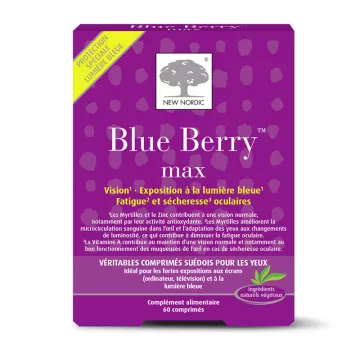
Night vision depends on rhodopsin—the light-sensitive pigment in retinal rods that regenerates after exposure to light. The anthocyanins in blackcurrants and blueberries (160–320 mg/day of standardized extract) accelerate this regeneration after photobleaching, reducing the time it takes to adapt to darkness. These properties were documented in British Royal Air Force pilots during World War II. Contemporary clinical studies confirm an improvement in mesopic vision after 4 weeks of supplementation.
Vitamin B5 (pantothenic acid) acts as a cofactor for coenzyme A in retinal ganglion cells—which is involved in the synthesis of visual neurotransmitters and the energy metabolism of the optic nerve. A deficiency causes eye strain and accommodation disorders. Taurine (200–500 mg/day), the free amino acid most concentrated in the mammalian retina, modulates retinal ion channels, protects photoreceptors from phototoxicity, and maintains the structural integrity of the outer segments of the cones and rods.
Less well known for its eye-health benefits,stinging nettle (Urtica dioica) provides a complete combination of minerals—silica, iron, zinc, magnesium, and B vitamins. Its zinc acts as a cofactor for retinol dehydrogenase in the retinal pigment epithelium (conversion of vitamin A to retinal for rhodopsin); its magnesium improves vasodilation of the retinal capillaries. As part of a 3-month regimen, it provides comprehensive nutritional support for vision, complementing more targeted active ingredients.
Retinal ganglion cells—whose axons form the optic nerve—have one of the highest mitochondrial densities in the body. Carnitine (L-acetylcarnitine, 500–1,000 mg/day) transports fatty acids into the mitochondria of these cells, improving their ATP production and resistance to oxidative stress. Studies in glaucoma models show dose-dependent protection—particularly beneficial for maintaining visual field quality and contrast sensitivity after age 50.
Diet is the foundation of long-term eye health. Foods rich in carotenoids (spinach, kale, red bell peppers, corn for lutein and zeaxanthin), omega-3 DHA (fatty fish twice a week), zinc (oysters, red meat, legumes), and antioxidant vitamins (C, E, beta-carotene) constitute the most well-documented diet for eye health. Polyphenols from blackcurrants, blueberries, and grapes round out this intake. For people whose diets are deficient in these micronutrients, targeted supplementation (such as AREDS2) is a well-documented alternative—one that should be discussed with an ophthalmologist or physician.