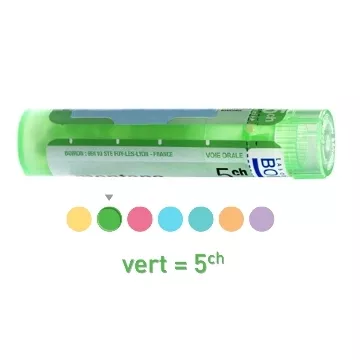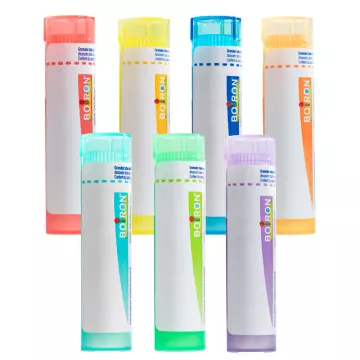
Eye strain is one of the classic indications in homeopathy. Ruta graveolens (common rue, 9 CH) is the reference remedy for accommodative asthenopia—fatigue of the ciliary muscles after prolonged reading or precision work, accompanied by frontal headaches and a burning sensation. Jaborandi (Pilocarpus jaborandi, 5 CH) acts primarily on ciliary spasm, characterized by a sensation of blurred vision after close-up work and reflex tearing. These remedies are used as a 3-week course of treatment—3 granules 3 times a day—alongside improvements in visual ergonomics.
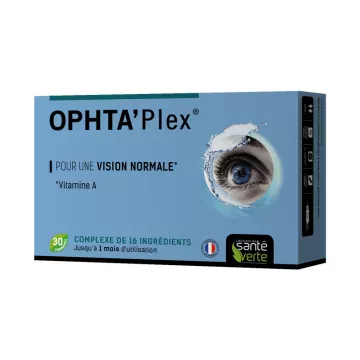
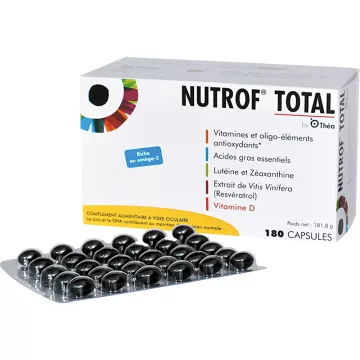
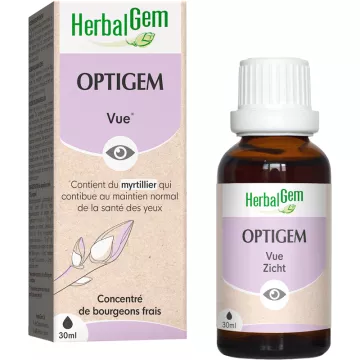
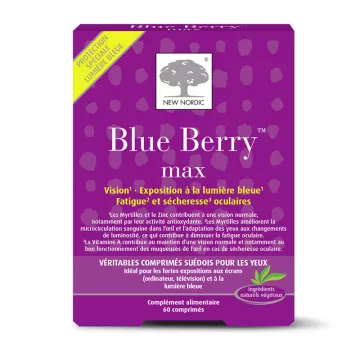
A new generation of supplements targets eye strain through the synergistic action of active ingredients. Nutrof Total contains lutein, zeaxanthin, DHA, vitamin E, and zinc—a formula inspired by the AREDS2 study on retinal protection. Ophta’Plex (Santé Verte) combines blueberry, blackcurrant, grape seeds, and B vitamins. Herbalgem Optigem GC12 combines gemmotherapy (blackcurrant and blueberry buds) with documented antioxidant properties. No single active ingredient provides the same benefits as the combination—a 3- to 6-month course of treatment is necessary to observe an effect on chronic eye strain.
Two lesser-known but relevant active ingredients for chronic eye strain. Carnitine (L-carnitine, 500–1,000 mg/day) transports long-chain fatty acids into the mitochondria of retinal ganglion cells—which have very high energy demands—and improves their resistance to eye strain in several animal studies. Lycopene (5–15 mg/day) is the most concentrated lipophilic antioxidant in the human lens—it neutralizes singlet oxygen radicals produced by photooxidation, protecting the lens from progressive opacification.
Resveratrol (100–300 mg/day) activates SIRT1 and Nrf2, reducing apoptosis in retinal cells exposed to intense blue light. Magnesium (300–400 mg/day) promotes relaxation of the ciliary muscle, which is in a state of chronic spasm among heavy screen users, and improves vasodilation of the capillaries supplying the optic disc. A deficiency in magnesium exacerbates the accommodation spasms responsible for near-vision eye strain.
Visual ergonomics remains the most effective preventive measure. The screen should be positioned 50–70 cm from the eyes, slightly below eye level (10–15°). The screen’s brightness should match the room’s ambient lighting to avoid constant contrast adaptation. The 20-20-20 rule (every 20 minutes, look 6 meters away for 20 seconds) relieves accommodation spasm. For chronically fatigued eyes, an eye exam is essential to rule out uncorrected ametropia.
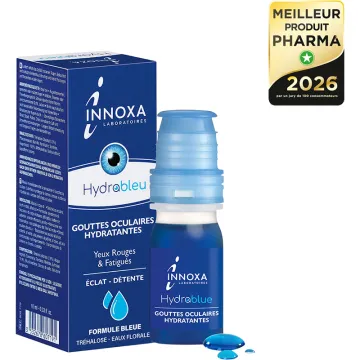
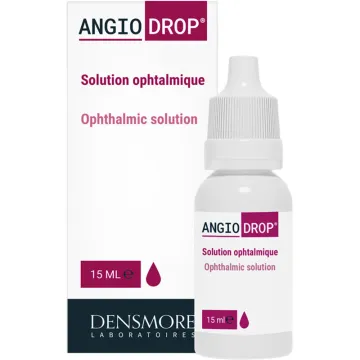
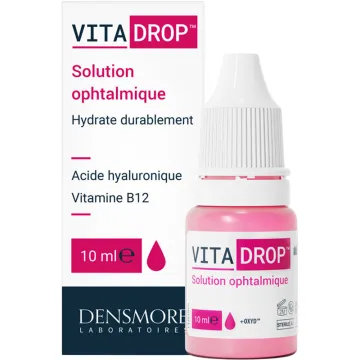
Vitamin B6 (pyridoxine, 25–50 mg/day) acts as a cofactor in the synthesis of neurotransmitters in the retina—particularly GABA (gamma-aminobutyric acid), which modulates the activity of amacrine and ganglion cells in visual signal processing. A deficiency can result in reduced contrast sensitivity and increased eye strain during tasks requiring precision. The Angiodrop and Vitadrop formulations incorporate B vitamins into an eye drop base to support the nutrition of the optic nerve through direct topical application.