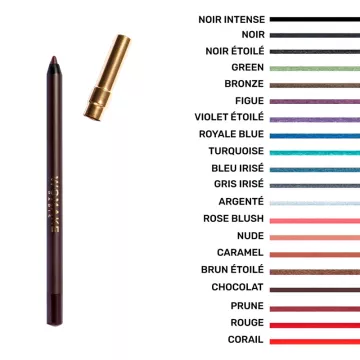
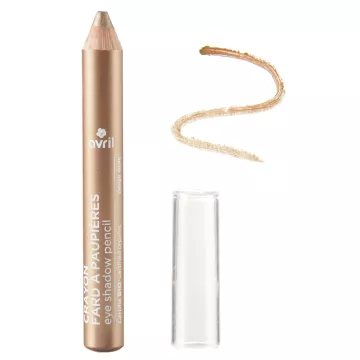
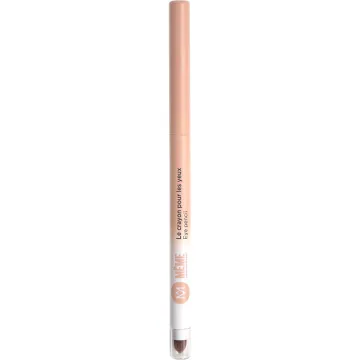
Eye pencils fall into three categories. Kohl is the richest and softest formula—its creamy texture makes it easy to apply to the inner eyelid (waterline) and blend naturally for a smoky effect. Pencil eyeliner is drier and harder—its firm tip allows for precise lines along the lash line. Contour pencil (stick eyeshadow) falls in between, making it ideal for the eyelids and brow bone. The common composition consists of a blend of waxes, oils, and mineral pigments—the wax-to-oil ratio entirely determines the product’s hardness and staying power.
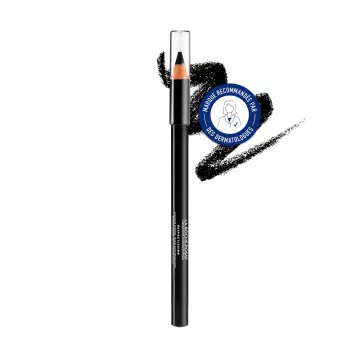
In gentle eye pencils for sensitive eyes (LRP Toleriane, Avène Couvrance), harsh synthetic waxes are replaced with plant-based waxes that have a low melting point. Macadamia oil (80% palmitoleic and oleic acids, zero comedogenic index) is the oil most similar to human sebum. It provides a creamy texture and smooth glide, reducing friction on the delicate eyelid—ideal for formulas that come into contact with the eyelid mucous membranes.
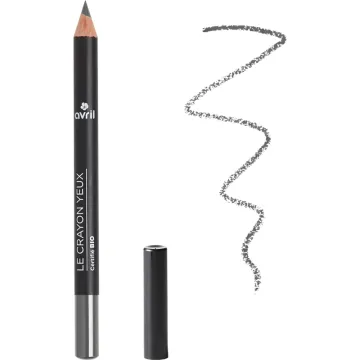
Certified organic pencils (Avril Organic Eye Pencil, Même) replace synthetic fats with well-documented plant-based active ingredients.Sea buckthorn oil (rich in carotenoids and natural vitamin E) protects the skin around the eyes upon contact with the product. Mango butter (40–50% stearic acid) melts upon contact with the eyelid for a smooth, creamy application. Its natural tocopherol content protects the formula from oxidation, extending its shelf life without the need for synthetic preservatives.
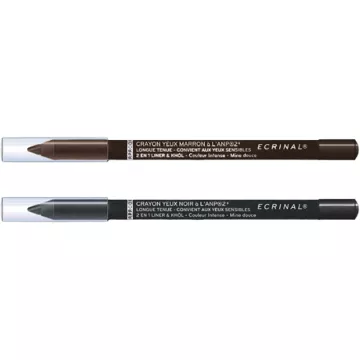
Ecrinal’s ANP 2+ Sensitive Eyes Makeup Pencil contains ANP 2+ (pantothenic acid anhydride), a bioavailable derivative of vitamin B5 that stimulates keratin synthesis in the ciliary bulbs with each application. Its fragrance-free formula, free of conventional preservatives and ophthalmologically tested on sensitive eyes and contact lens wearers, is recommended after eyelid surgery or in cases of chronic blepharitis. For people who have their vision checked regularly, a minimalist formula like this one is always preferable.
Application to the inner eyelid mucosa (waterline) is the area of greatest risk. Any product applied there migrates directly into the tear film—studies (Bhargava et al., 2013; Jones et al., 2011) show that kohl applied to the waterline reduces tear film break-up time (TBUT) and increases bacterial contamination of the tears. To minimize risks: choose formulas free of BHT, BHA, and heavy metals, and certified as safe for use on mucous membranes. Applying the product to the outer eye contour, away from the mucous membrane, better preserves the health of the tear film.
An eyeliner pencil that comes into contact with the eyelids and mucous membranes is a documented vector for bacterial contamination. Maximum shelf life after opening: 12 months for a standard pencil, 6 months for a soft kohl pencil (PAO indicated on the packaging). Sharpening the pencil before each use removes the exposed and contaminated surface layer—a practice recommended by dermatologists. Never share—there is a direct risk of transmitting viral and bacterial conjunctivitis. Eye pencils and mascaras should never be used during an active eye infection.