What is belching, and when does it become a problem?
Belching is the expulsion through the mouth of air accumulated in the stomach—a normal physiological phenomenon up to 3–4 belches per meal. Beyond that, it is referred to as excessive or pathological belching. This should be distinguished from aerophagia (excessive swallowing of air)—here, the focus is on the expulsion symptom itself. Our digestive comfort line offers appropriate carminative active ingredients.
- Normal mechanism: transient relaxation of the lower esophageal sphincter (LES) → expulsion of gastric air — helps reduce stomach distension — immediate relief
- Food-related belching: carbonated beverages (CO2 released directly into the stomach), eating too quickly, insufficient chewing, chewing gum, using a straw—see our page on bloating
- Belching associated with GERD: relaxation of the cardia (gastroesophageal sphincter) promotes both acid reflux and belching — see our page on stomachaches
- Alcohol: relaxes the lower esophageal sphincter — increases RTSOI — beer and sparkling wines = double effect (alcohol + gas)
- Behavioral supereructation: a rare but debilitating disorder—nearly continuous voluntary or involuntary belching—accumulation of air in the esophagus (not the stomach)—treatment involves speech therapy or speech-language pathology
Medical conditions associated with excessive belching
- GERD (gastroesophageal reflux disease): frequent belching + heartburn + regurgitation — lower esophageal sphincter dysfunction allows acid and air to rise → combined symptoms — PPIs under medical supervision
- Gastroparesis: slowed gastric emptying → gas buildup in the stomach → delayed postprandial belching — see our page on stomach pain
- Gastric ulcer / H. pylori gastritis: belching + epigastric pain + nausea — evaluation and antibiotic treatment if H. pylori is confirmed
- Food intolerances: lactose or fructose → fermentation + gastric gas → belching triggered 30 minutes to 2 hours after consuming the trigger food
- See a doctor if: persistent belching + dysphagia (difficulty swallowing) + weight loss + blood in the stool — to rule out esophageal or gastric conditions
Natural remedies and medications for belching
- Simethicone: anti-foaming agent — breaks down gas bubbles → coalescence → easier expulsion — reduces the frequency of postprandial belching — see our simethicone page
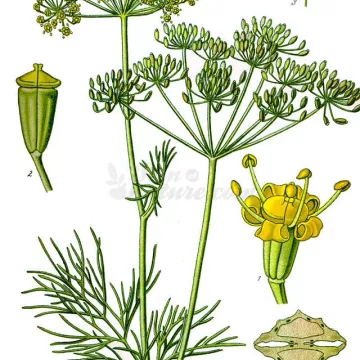
- Fennel tea (trans-anethole): carminative—facilitates the release of gas and reduces gastric distension → less bloating and belching—drink after meals
- Ginger tea: prokinetic — accelerates gastric emptying → less accumulation of air and gas — 1 cm of fresh root steeped for 10 minutes
- Peppermint (tea or essential oil): gastric antispasmodic — reduces spasms and bloating — use with caution in cases of severe GERD (also relaxes the cardia)
- Chew fennel or anise seeds after meals: effective traditional remedy — releases trans-anethole and carminative essential oils directly into the stomach
Posture, behaviors, and prevention
- Chew slowly (20–30 times): reduces air swallowed with food — eat meals in at least 20–30 minutes — avoid eating quickly on the go
- Maintainan upright posture during and after meals: prevents gastric compression that contributes to RTSOI — do not lie down for 2–3 hours after eating
- Avoid carbonated beverages and sparkling alcohol: replace with still water, herbal teas, or non-carbonated juices
- Stress management: anxiety → hyperventilation + repeated swallowing → swallowed air → belching — cardiac coherence, meditation, abdominal breathing
- Persistent behavioral supereructation: consult an ENT specialist and a speech-language pathologist — swallowing therapy — biofeedback is the gold-standard technique for esophageal belching